Podcast

Podcast
Is ENS DAO Dead? Nick Johnson Faces His Critics
ENS co-founder Nick Johnson is using his voting power to hand ENS's treasury to a Foundation.
Is that saving ENS or ending it?
Nick Johnson (@nicksdjohnson) and ENS delegate Alex Netto (@alextnetto), who says the plan "marks the downfall of ENS," debate it live, and ENS delegate James Waugh @blockchainjames joins right after.
Thursday 10am ET
HOST
Camila Russo — Founder & CEO, The Defiant

Podcast
Saylor Selling BTC: Strategy Lifeline, or Betrayal?
MSTR down ~30% on the week. STRC's effective yield blown out past 15%. mNAV under 1. And Michael Saylor just authorized selling Bitcoin to cover preferred dividends — the one thing he swore he'd never do.
On June 30, the day STRC resets to a 12% rate, we sit down with Scott Melker and Kaleo to break down whether this is disciplined capital management or the first real crack in the Bitcoin treasury model.
HOST
Camila Russo — Founder & CEO, The Defiant

Podcast
MoneyGram CEO on rolling out MGUSD to its 60 million users, globally
MoneyGram has been quietly building on blockchain for over five years. Now, with its own stablecoin (MGUSD), a Kraken partnership, a validator seat on the Tempo network, and $2B+ in stablecoin settlements already running — the pace is accelerating.

Podcast
Who Controls Ethereum Now? EF Restructuring & the Rise of EthLabs
The Ethereum Foundation just cut 20% of its staff and 40% of its budget, marking a deliberate shift to a narrower scope. In response, a new organization backed by SharpLink, Bitmine, and Joseph Lubin has emerged: ETH Labs. Camila Russo talks with Joseph Chalom (SharpLink) and Victor Bunin (Coinbase) about what this new entity is meant to do, how it's funded, and whether Ethereum's shift toward decentralized, multi-organization stewardship is the right path forward.
Topics covered:
Why ETH Labs was created, who's backing it, and what problems it aims to solve that the EFF is stepping away from
The overlap — and potential competition — between ETH Labs' priorities and the Ethereum Foundation's new focus
How ETH Labs will be funded, its non-profit structure, and safeguards against funder capture
The tension between what's good for ETH the asset versus what's good for Ethereum the protocol
Why subsidizing L2 activity was a rational growth strategy, not a mistake
What's coming in the Glamsterdam/Glastonbury upgrade — quantum resistance, higher throughput, native privacy, and synchronous composability
Centralized versus decentralized leadership: comparing Ethereum's fragmented governance model to Solana's more centralized approach
Guests: Joseph Chalom (SharpLink Gaming) and Victor Bunin (Coinbase)
Host: Camila Russo, The Defiant

Podcast
$STRC Meltdown: Is Michael Saylor's Strategy Entering a Death Spiral?
Strategy's preferred stock, STRC, recently hit an all-time low of $82 — well below its $100 peg — and Michael Saylor made his first-ever Bitcoin sale. Camila Russo sits down with Austin Campbell (Zero Knowledge) and Jeff Dorman (Arca) to break down whether Strategy's Bitcoin-buying machine is running into real trouble, and what it means for Bitcoin itself.
Topics covered:
Why Strategy's capital structure — debt, preferred equity, and common stock — creates competing pressures that Bitcoin's price alone can't solve
The case against calling this a "death spiral," and why a slow, melting-ice-cube scenario is more likely than a collapse
What it would take for MSTR to become an attractive buy, and how to think about its real discount to Bitcoin holdings
The risks and trade-offs of buying Strategy's preferreds and converts versus the common stock
Why Saylor's decision to buy back convertible debt early may have spooked the market
How this story is accelerating a bigger shift: separating the Bitcoin narrative from the broader blockchain growth story
Guests: Austin Campbell (Zero Knowledge Consulting) and Jeff Dorman (Arca)
Host: Camila Russo, The Defiant

Podcast
NEAR's AI Vindication
Years before AI became the dominant narrative in tech, NEAR was already positioning itself as "the AI blockchain." Camila Russo sits down with NEAR co-founder Ilya Polosukhin — co-author of the seminal "Attention Is All You Need" paper — to discuss whether this moment feels like vindication, and where NEAR fits into the AI landscape now that everyone else has caught up.
Topics covered:
Why decentralized AI and blockchain need each other, and how NEAR uses secure enclaves to deliver verifiable, low-cost inference
The case for decentralized AI as "freedom technology," and Ilya's take on Anthropic's Claude Fable 5 export-control shutdown and AI censorship more broadly
NEAR's standout token performance this year, reduced inflation, and the new fee-generating model behind NEAR Intents
How NEAR Intents work as a cross-chain matching layer, and the rise of confidential balances and private transactions
Why Ilya believes blockchains will increasingly be used by AI agents rather than humans — and what that means for NEAR's roadmap
NEAR's evolving agent marketplace and vision for AI-driven commerce beyond simple stablecoin payments
Guest: Ilya Polosukhin, Co-founder of NEAR Protocol
Host: Camila Russo, The Defiant

Podcast
🟢 LIVE - The Fable Backlash: Is This the Case for Decentralized AI?
Last week Anthropic launched Claude Fable 5 — and within 48 hours it became one of the messiest releases in frontier AI. A buried line in the model's system card revealed Fable would silently degrade its own answers for anyone it suspected of building competing AI systems, with no warning. Researchers called it silent sabotage. Anthropic apologized and reversed course. Add a 30-day data-retention requirement that got the model banned inside Microsoft, and you have a live referendum on the question crypto has been asking for years: should any single company hold this much control over frontier AI?

Podcast
Bitcoin's Hidden Yield: Why Options Are Taking Over Crypto | David Lawant, Anchorage Digital
Bitcoin does not have native yield. But that has not stopped institutions, treasury companies, miners, whales, ETFs, and crypto-native desks from looking for ways to generate returns on top of BTC.
In this episode of Converge by The Defiant, David Lawant, Head of Research at Anchorage Digital, joins the show to unpack the rise of Bitcoin options, synthetic yield, covered call strategies, and the growing intersection between TradFi and crypto-native market structure.
Podcast
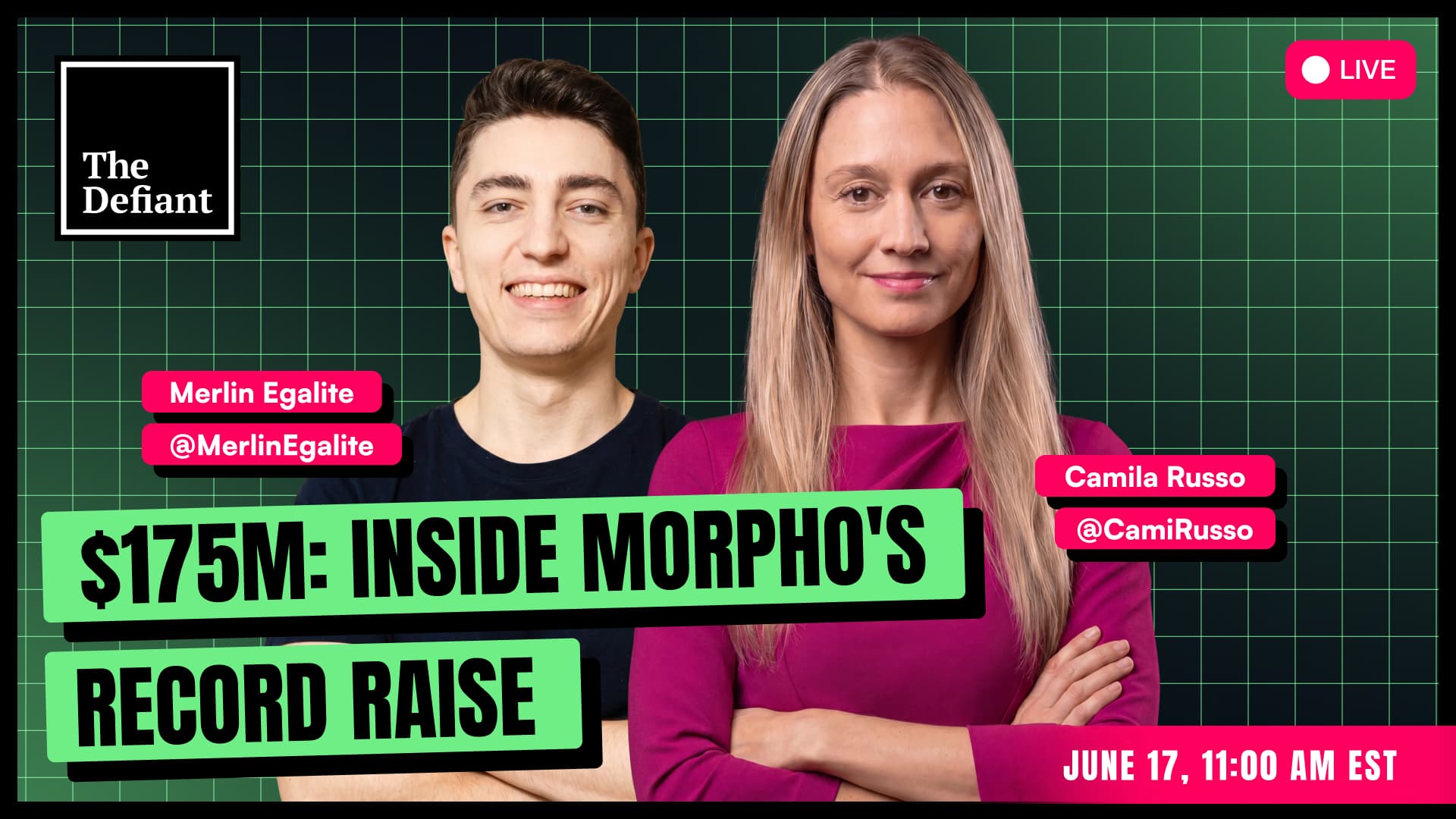
$175M: Inside Morpho's Record Raise w Merlin Egalite
Morpho just closed the largest funding round in DeFi history: $175 million at a $2 billion valuation, led by Paradigm, a16z, and Ribbit Capital. In this conversation, Camila Russo sits down with Morpho co-founder Merlin Egalite to unpack the raise and what's next for the protocol.
Topics covered:
Why Morpho chose a pure token structure over equity, and what it means for long-term alignment
How the Morpho Association funds itself, and responses to criticism around transparency and decentralization
Midnight, Morpho's next major upgrade — an intent-based, fixed-rate lending model
Vault risk and curator accountability, including lessons from the Stream Finance event
How Morpho differentiates from Aave despite trailing in TVL
The growing wave of institutional interest — from asset managers to neobanks and fintechs
Morpho's long-term ambition: capturing a share of the $200 trillion global credit market
Guest: Merlin Egalite, Co-founder of Morpho
Host: Camila Russo, The Defiant
Podcast
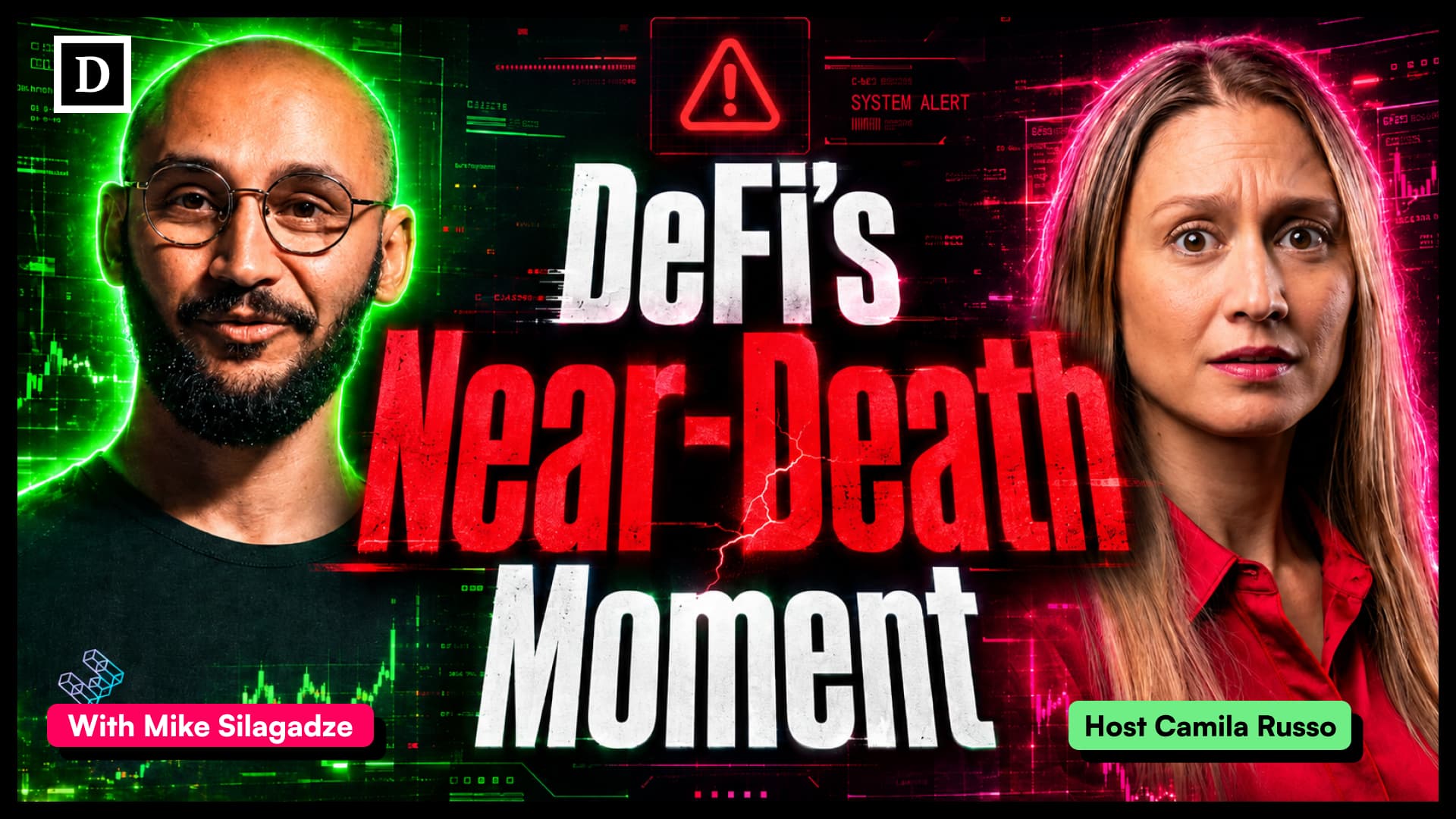
DeFi's Near-Death Moment | Mike Silagadze on Ether.fi, Security, and What Comes Next
How close did DeFi come to a real systemic collapse?
In this episode, Camila Russo sits down with Mike Silagadze, co-founder and CEO of Ether.fi, to break down the Kelp exploit, the DeFi United rescue effort, and why Mike believes the default path could have been far worse if nobody had stepped in. He explains why the bigger lesson is not just smart contract risk, but operational security, app-layer responsibility, and the need to move past "decentralization theater."