Advertisement

Podcast

The Defiant Podcast delivers insightful discussions on decentralized finance, featuring interviews with DeFi's top innovators and analysis of the latest trends shaping the financial blockchain landscape.

Top Stories
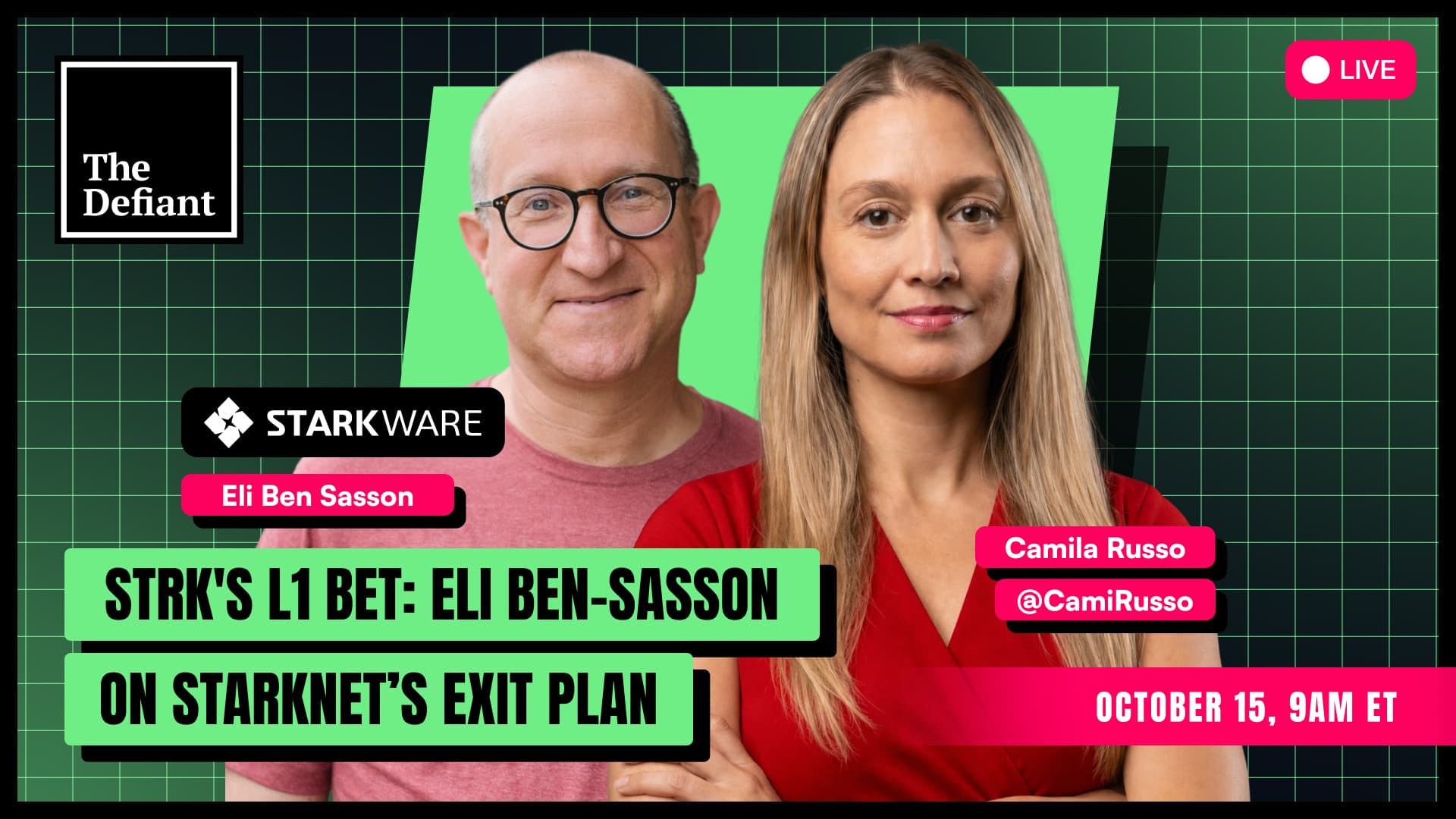
STRK’s L1 Bet: Eli Ben-Sasson on Starknet’s Exit Plan

STRK’s L1 Bet: Eli Ben-Sasson on Starknet’s Exit Plan

Starknet says it is “actively considering becoming an L1” — leaving Ethereum to become what it calls the first fully quantum-resistant network, with 2027 as the target. StarkWare co-founder and CEO Eli Ben-Sasson joins Camila Russo to explain the plan. The announcement came as a post on X on Oct. 8, with no governance proposal attached. STRK ran from $0.05 to $0.12 in five days and has since given back most of it. In the same week, StarkWare shipped Shadow Accounts, a privacy primitive that gives users a separate address per app, and launched OffMarket, a service for trading on Polymarket without linking positions to a public wallet. We get into: — What becoming an L1 actually means for Starknet, and what replaces Ethereum’s settlement guarantees — Who approves the move, and when a proposal goes to governance — Why Ben-Sasson thinks the quantum threat is “much closer than we think” — Where he lands in the “bunker mode” fight between Justin Drake, Vitalik Buterin and Yehuda Lindell — Why StarkWare is demoing ML-DSA signatures when Buterin named lattices as the next risk — Shadow Accounts, OffMarket, and building privacy on a counterparty that can switch you off — Starknet’s revenue, emissions, and whether an L1 changes the economics Guest: Eli Ben Sasson
Free newsletters

The Defiant Daily

Independent reporting on crypto and DeFi. The stories that matter, in your inbox.

Monday–Friday. Free. Unsubscribe anytime.

No PRO membership needed. Privacy policy

Explore all newsletters

Recent articles

STRK’s L1 Bet: Eli Ben-Sasson on Starknet’s Exit Plan

STRK’s L1 Bet: Eli Ben-Sasson on Starknet’s Exit Plan

Starknet says it is “actively considering becoming an L1” — leaving Ethereum to become what it calls the first fully quantum-resistant network, with 2027 as the target. StarkWare co-founder and CEO Eli Ben-Sasson joins Camila Russo to explain the plan. The announcement came as a post on X on Oct. 8, with no governance proposal attached. STRK ran from $0.05 to $0.12 in five days and has since given back most of it. In the same week, StarkWare shipped Shadow Accounts, a privacy primitive that gives users a separate address per app, and launched OffMarket, a service for trading on Polymarket without linking positions to a public wallet. We get into: — What becoming an L1 actually means for Starknet, and what replaces Ethereum’s settlement guarantees — Who approves the move, and when a proposal goes to governance — Why Ben-Sasson thinks the quantum threat is “much closer than we think” — Where he lands in the “bunker mode” fight between Justin Drake, Vitalik Buterin and Yehuda Lindell — Why StarkWare is demoing ML-DSA signatures when Buterin named lattices as the next risk — Shadow Accounts, OffMarket, and building privacy on a counterparty that can switch you off — Starknet’s revenue, emissions, and whether an L1 changes the economics Guest: Eli Ben Sasson
Ledger Was Hacked — Who Do You Trust With Your Keys Now?
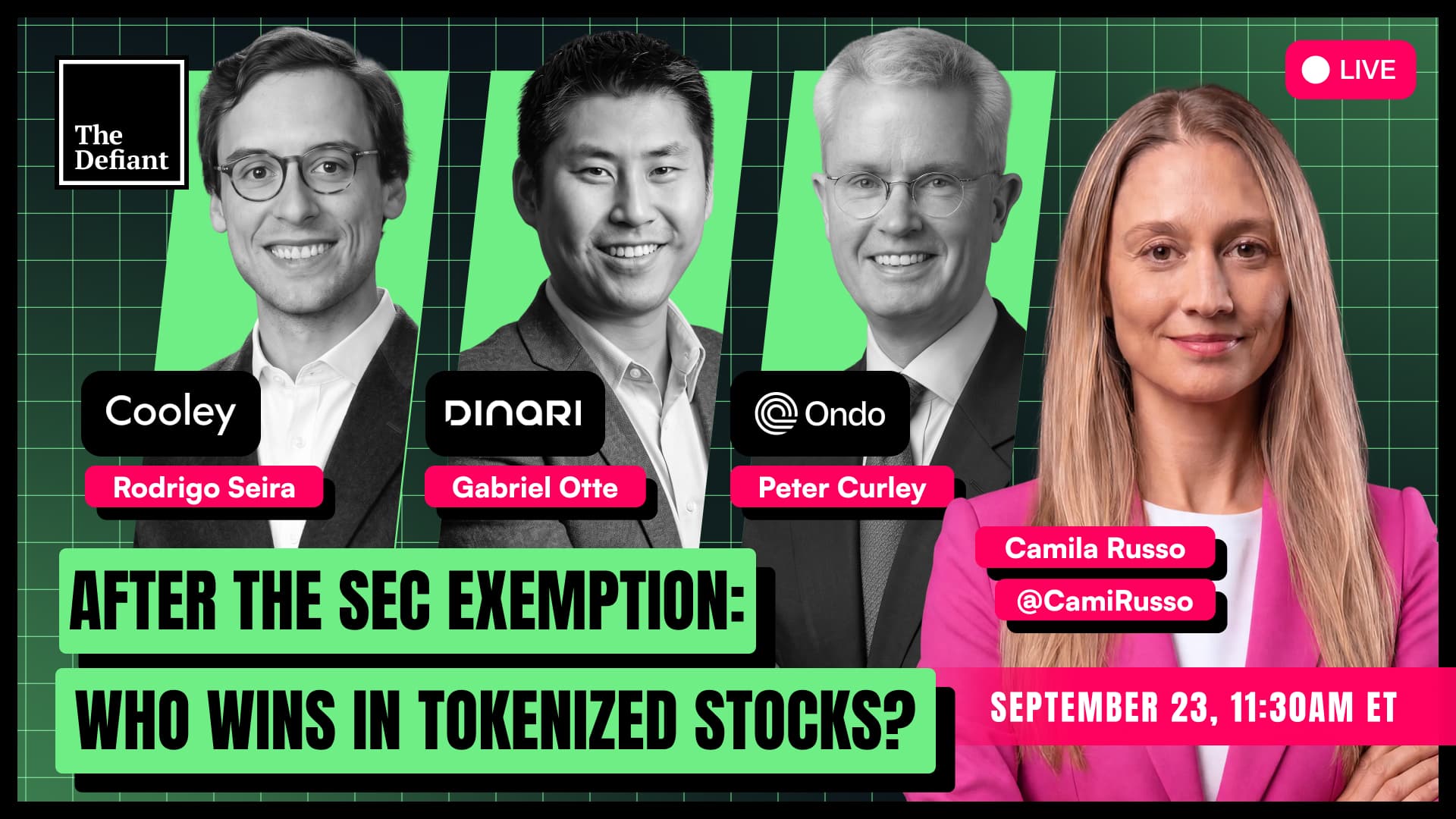
Ledger Was Hacked — Who Do You Trust With Your Keys Now?

The Defiant Livestream | Wednesday, Oct. 14, 1:00pm ET Up to $93M drained from more than 300 wallets, and the software was never touched. Ledger confirmed a physical implant inside signers sold through reseller CryptoBilis, reading recovery phrases off the screen at setup and sending them out over a mobile network. So the question stops being what happened and becomes who you trust. The vendor? The reseller? The sealed box? The device already sitting in your drawer? Yourself? Guest: Pablo Sabbatella (@PabloSabbatella), founder of Opsek (@opsek_io)
Synthetic vs. Direct Tokenized Stocks: Who Wins After The SEC Exemption?
Synthetic vs. Direct Tokenized Stocks: Who Wins After The SEC Exemption?

The SEC's exemption for tokenized equities has reopened the question every issuer has been working around: should a tokenized stock be a synthetic instrument that tracks the price, or a direct claim on the underlying share? Camila Russo sits down with the lawyers and builders shaping that answer. Rodrigo Seira, partner at Cooley, breaks down what the exemption allows and where the legal lines still sit. Gabriel Otte, co-founder of Dinari, and Peter Curley, head of global regulatory affairs at Ondo Finance, lay out how each model handles custody, investor rights, compliance, and access for non-U.S. users, and which structure is better placed to scale now that the rules have changed. 🗓 Live Wednesday, Sept 23, 11:30am ET Guests: Rodrigo Seira, Partner, Cooley Gabriel Otte, Co-founder, Dinari Peter Curley, Head of Global Regulatory Affairs, Ondo Finance Host: Camila Russo, founder of The Defiant Like, subscribe, and hit the bell so you don't miss our next streams.
 Solana's Historic Governance Vote — While Robinhood Invades Its Meme Coin Turf
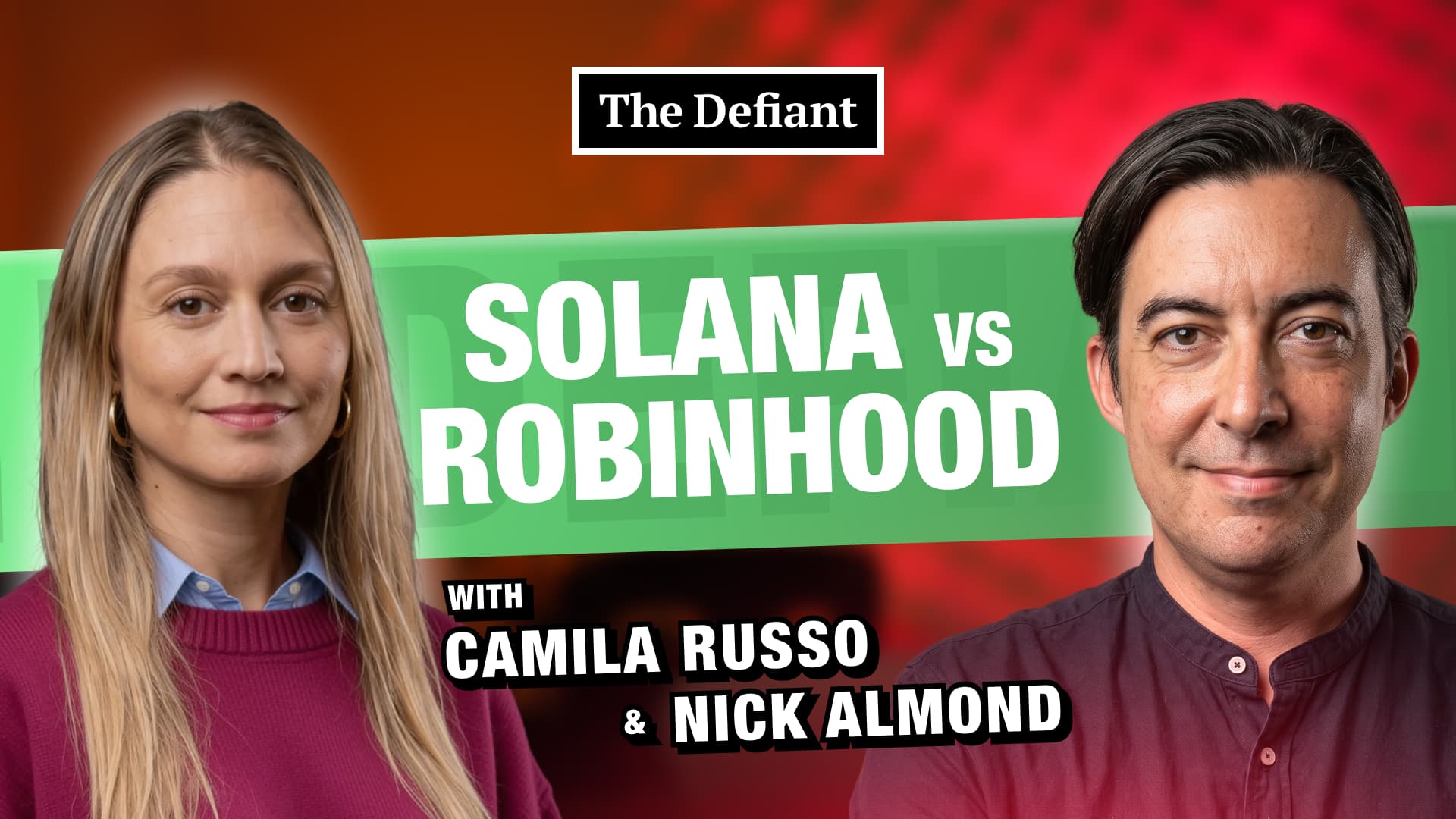
Solana's Historic Governance Vote — While Robinhood Invades Its Meme Coin Turf

Solana just took the most historic step in its governance history: its first real on-chain vote, where any SOL holder — not just validators — could weigh in on the network's constitution, inflation and fees. Camila Russo sits down with Nick Almond, Head of Governance at the Jito Foundation, right as that shift collides with a new threat: Robinhood's own chain moving in on meme coins, the one corner of crypto that was always Solana's. Nick breaks down how the vote actually played out — including the disinflation proposal that was decided with eight seconds left after Kraken flipped its vote — how JitoSOL swung its entire stake pool with a 13% quorum trigger, and why he still thinks Solana's shot at attracting new apps, from tokenized stocks to meme coins, is stronger than people give it credit for. Presented by Oasis — a self-custody wallet built on a 2/3 multisig. You hold two keys, Oasis holds a recovery key, and never has unilateral access. Oasis is giving away a CryptoPunk to the first 500 new or upgraded plans through October 31: https://www.oasisvault.io/cryptopunk
Will crypto get clarity? Senate votes today
Will crypto get clarity? Senate votes today

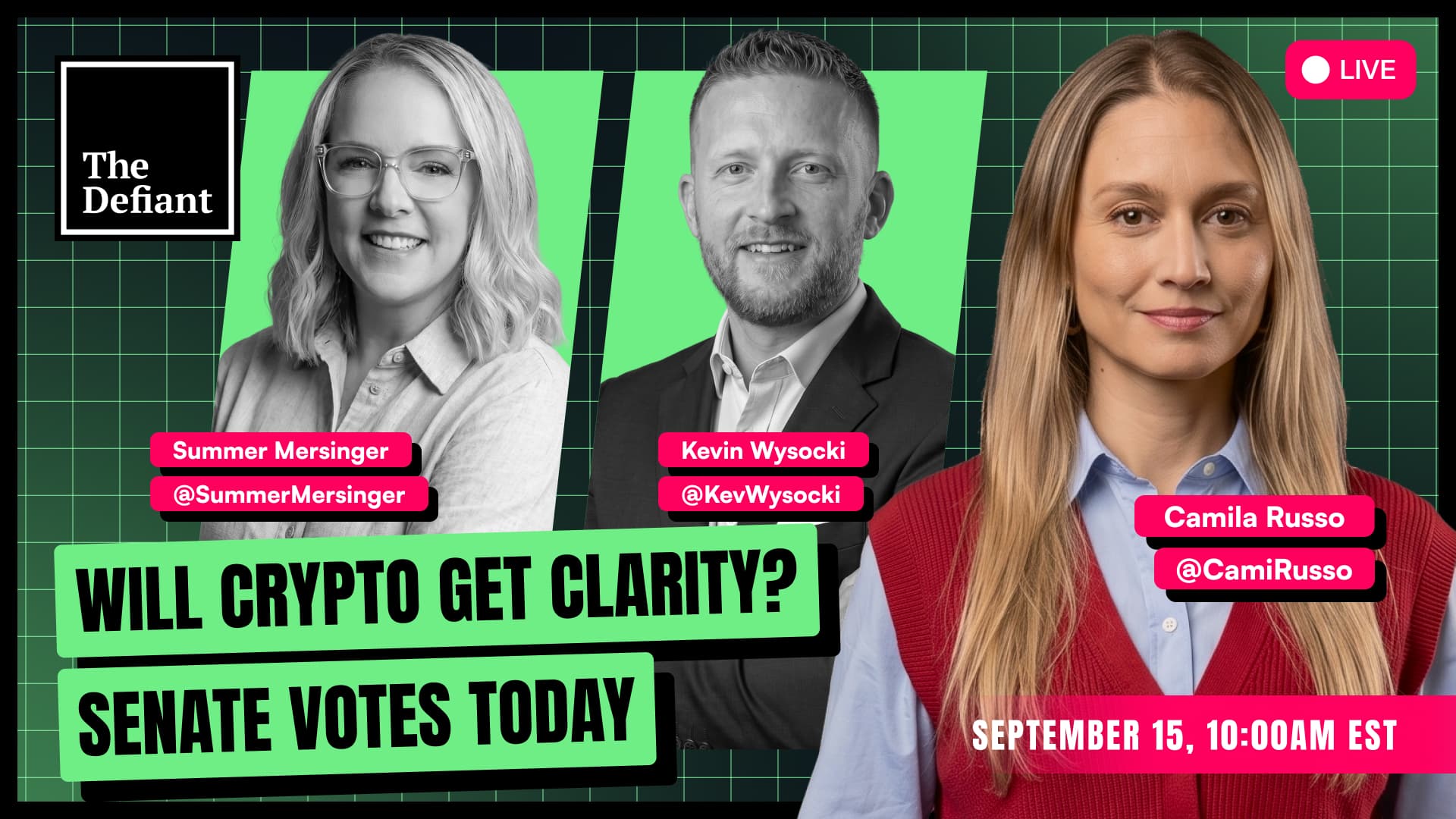
The Senate is set to vote on a procedural motion to advance the Digital Asset Market Clarity Act, the major crypto market structure bill, on Tuesday, September 15 — a critical step toward a full floor vote, requiring at least seven non-Republican votes to clear the 60-vote threshold. Camila Russo talks with Summer Mersinger (Blockchain Association) and Kevin Wysocki (Anchorage Digital) live as the vote unfolds, breaking down what's in the bill, what's still being negotiated, and what it would mean for the industry if it passes.
Tokenized Stocks and Memecoins: Revolutionary Primitive or Retail Wipeout?
Tokenized Stocks and Memecoins: Revolutionary Primitive or Retail Wipeout?

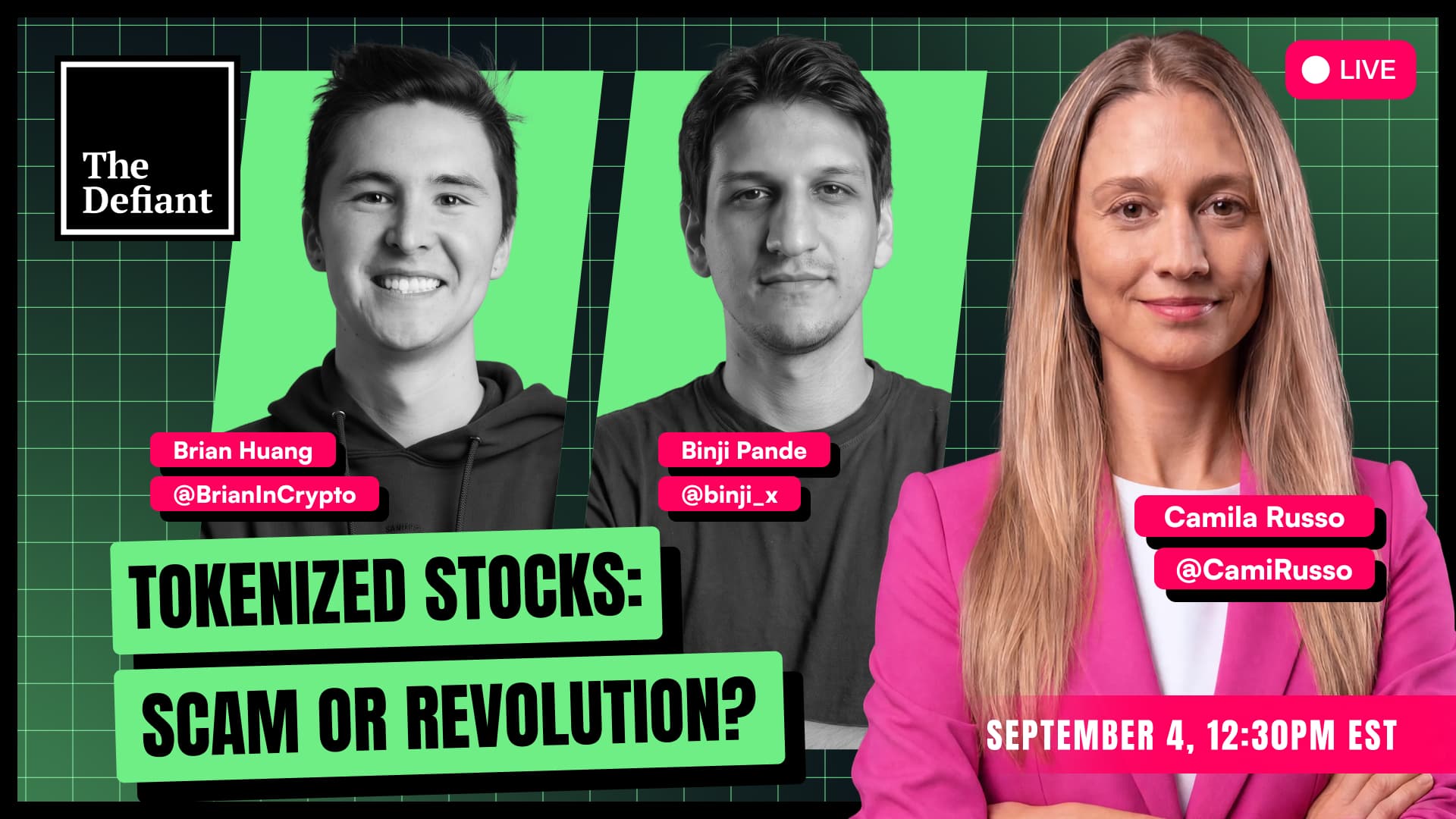
Join host Camila Russo live today at 12:30 PM as she sits down with Brian Huang (@BrianInCrypto) and Binji (@binji_x) to dig into one of the biggest debates in crypto right now: are tokenized stocks and memecoins a revolutionary new financial primitive, or are they setting retail traders up for the next big wipeout? We'll break down the mechanics behind tokenized equities, the risks hiding beneath the hype, and what separates real innovation from the next speculative bubble. Like, subscribe, and hit the bell so you don't miss it, and drop your questions in the comments before and during the live.
Can RobinHood Chain Take This Boom? w/ ARB's Steven Goldfeder
Can RobinHood Chain Take This Boom? w/ ARB's Steven Goldfeder

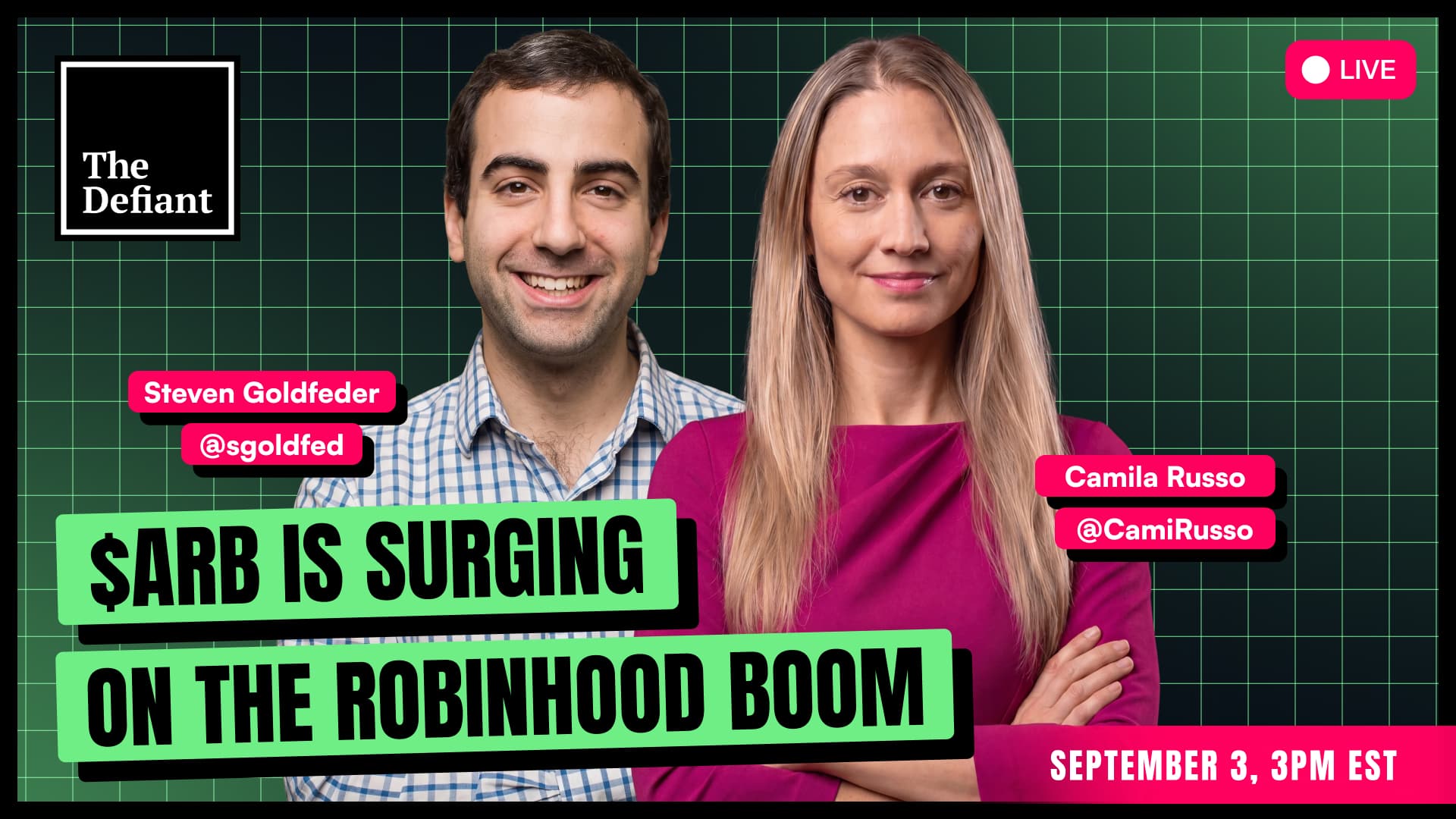
Robinhood is surging on Arbitrum's stack, and today we're joined by ARB co-founder Steven Goldfeder to break down the boom.
How Maple Finance Became the #2 Crypto Lender Behind Tether — Sid Powell Explains

How Maple Finance Became the #2 Crypto Lender Behind Tether — Sid Powell Explains

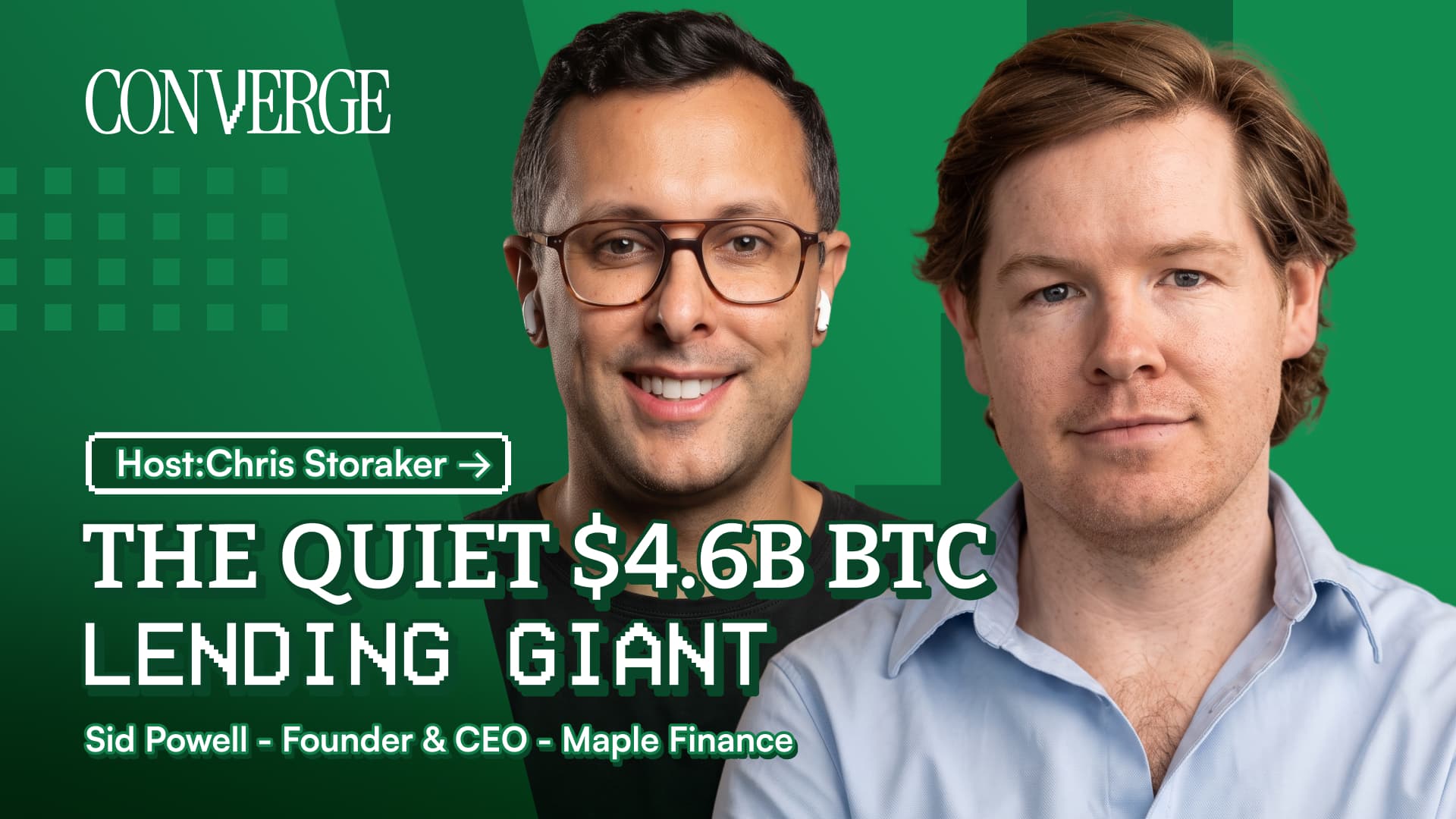
Sid Powell, CEO and co-founder of Maple Finance, joins Chris Storaker on the Converge Podcast
 Robinhood's Head of Product Reveals How Robinhood Chain Hit 200M Transactions in 30 Days
Robinhood's Head of Product Reveals How Robinhood Chain Hit 200M Transactions in 30 Days

Robinhood just launched its own blockchain — and the numbers are wild. Seong Lee, Head of Product for Robinhood Crypto, joins Chris Storaker to explain how Robinhood Chain went from zero to 200 million transactions in a month, why permissionless stock tokens can now be redeemed even if Robinhood disappears, and how everyday users are earning yield through a fully insured DeFi lending product. A must-watch conversation on the future of tokenized finance, meme coins, and real-world assets on chain.
The Ethereum EIP-8363 Debate

The Ethereum EIP-8363 Debate

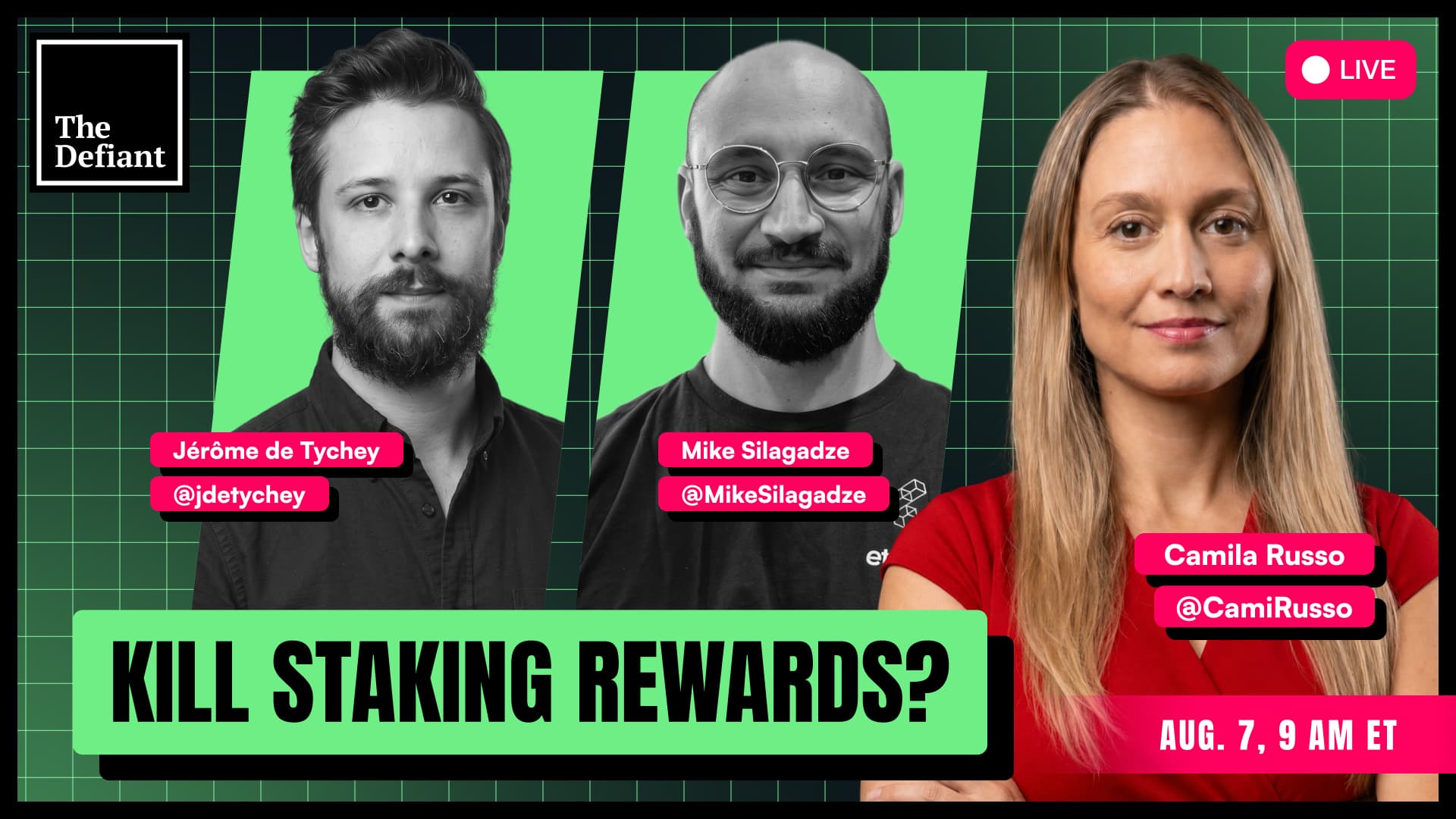
The EIP-8363 Debate: ETH Researchers Want to Kill Staking Rewards After 50% of ETH is Staked