Who Decides Which Chains Count as Public? | Cosmos, Zenith, Injective
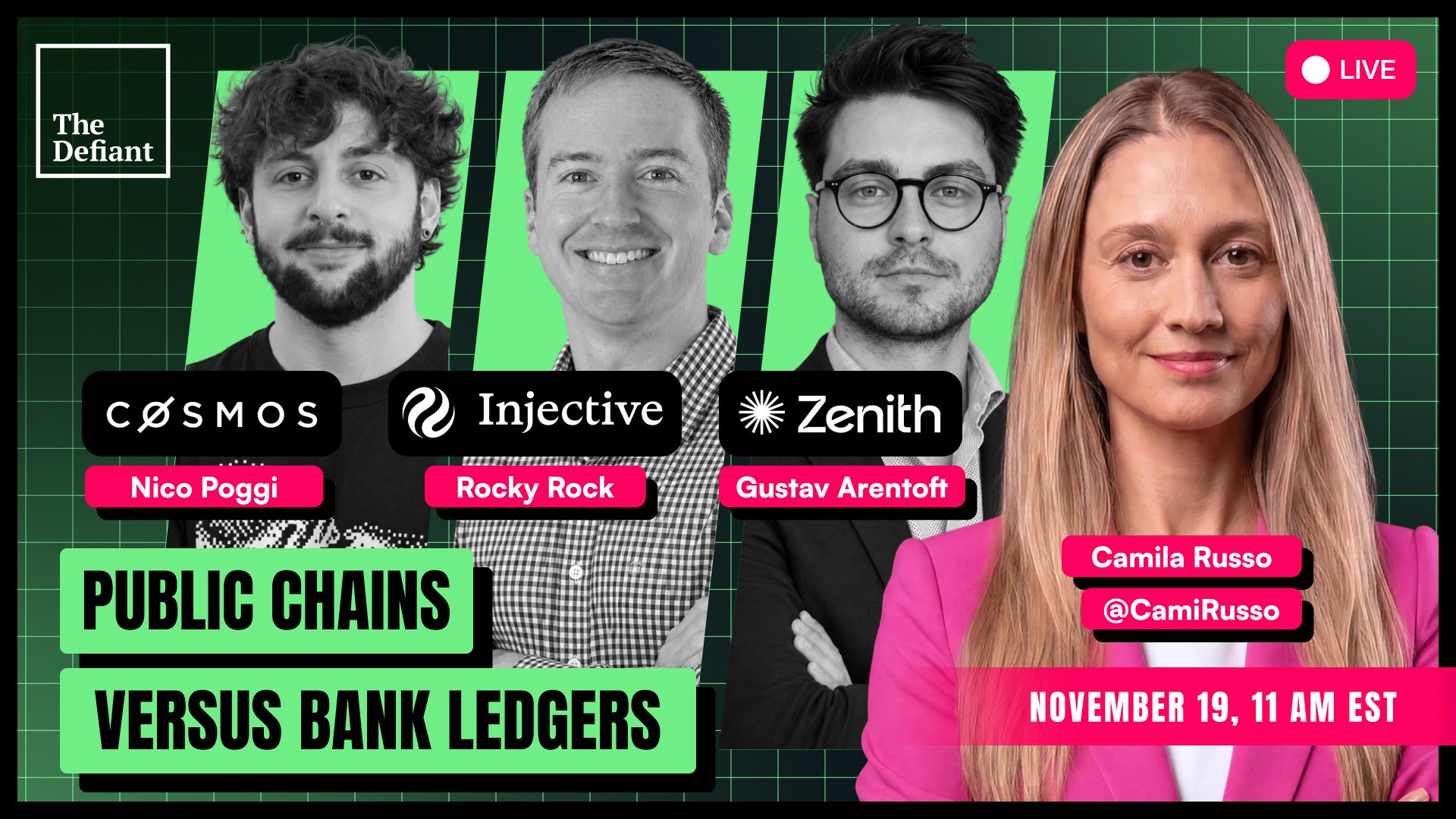
Over the past three weeks, the OCC finalized the first federal rulebook for payment stablecoins, Hong Kong's HKMA switched on 24/7 settlement in tokenized central bank money, and DTCC opened a tokenization platform with 20 banks, with Morgan Stanley among the first to use it. The ECB, the European Commission and ESMA then opened a standards group for tokenized securities. Almost none of it ran on Ethereum or Solana. Most of it ran on Canton, on a bank's own ledger, or on infrastructure nobody has named. Banks are building deposit tokens on ledgers they control. Regulated issuers mint dollars natively on public chains. Finance-specific L1s sell institutions a dedicated lane into block production. There is no common standard, and the industry can't agree on which rails count as public. We brought together three of those rails: 🔹 Nico Poggi, Chief Business Officer at Cosmos Labs 🔹 Gustav Arentoft, Head of Ecosystem at Zenith 🔹 Rocky Rock, Ecosystem Marketing Lead at Injective We cover: → What makes a chain public, and whether institutions still care → Where most tokenized value sits in five years: public chains or bank ledgers → Wells Fargo's tokenized deposits and the unnamed chain behind them → Zenith's mainnet timeline and what institutions get by building on Canton → Injective's Institutional Rail: who uses it and what ordinary users lose → OKX-ICE opens Nov. 23 with 67 issuers objecting, including all of the Magnificent Seven → Deposit tokens vs. stablecoins, and why Fed master accounts may decide it → Whether Europe sets tokenization standards before the US → $4.8B in tokenized equities spread across venues that don't connect → New technology, or TradFi rebuilt onchain? Subscribe to Converge, The Defiant's weekly newsletter on tokenization, stablecoins and RWAs: thedefiant.io
Loading this article…