Advertisement

Podcast

The Defiant Podcast delivers insightful discussions on decentralized finance, featuring interviews with DeFi's top innovators and analysis of the latest trends shaping the financial blockchain landscape.

Top Stories
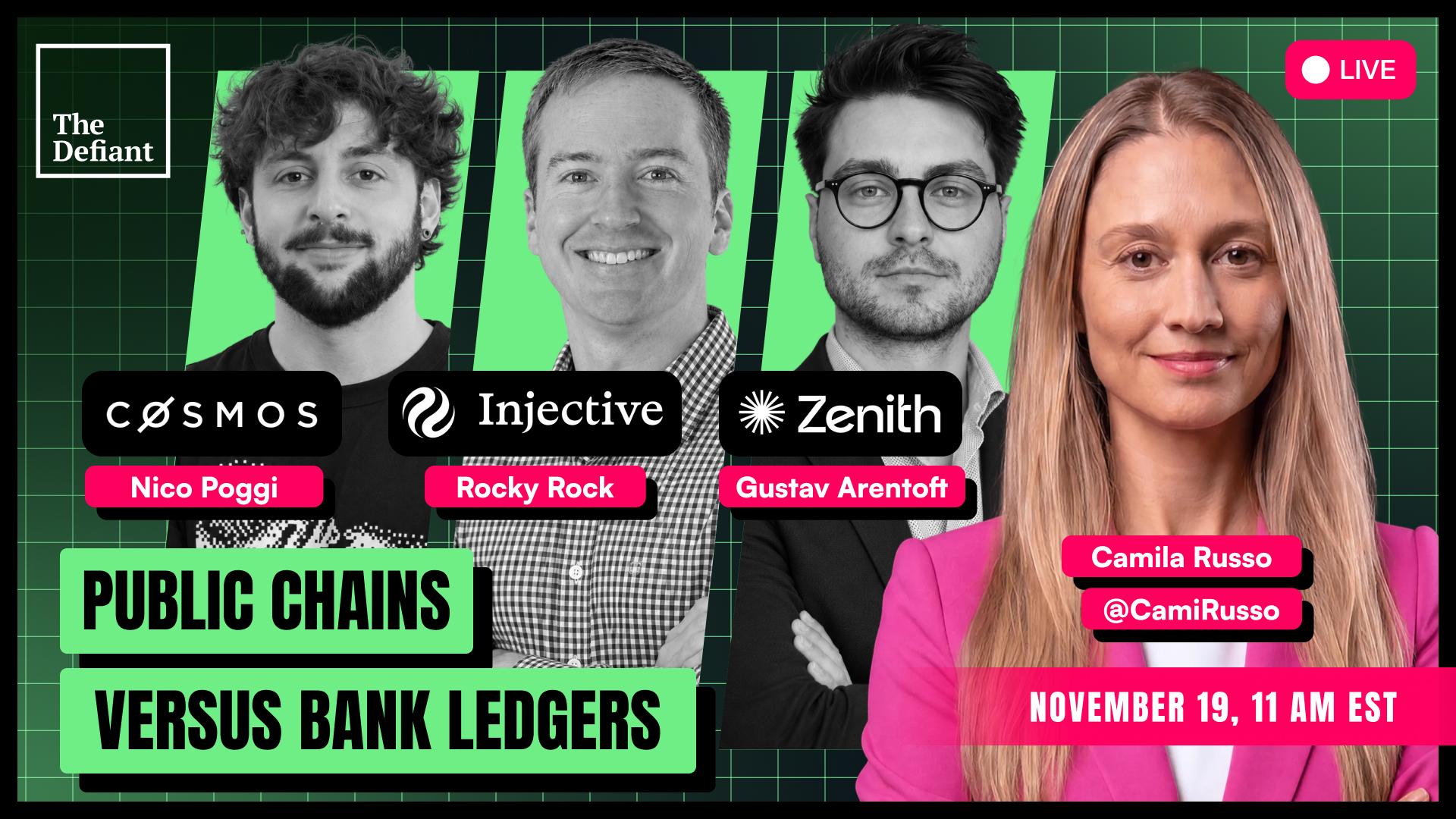
 Who Decides Which Chains Count as Public? | Cosmos, Zenith, Injective

Who Decides Which Chains Count as Public? | Cosmos, Zenith, Injective

Over the past three weeks, the OCC finalized the first federal rulebook for payment stablecoins, Hong Kong's HKMA switched on 24/7 settlement in tokenized central bank money, and DTCC opened a tokenization platform with 20 banks, with Morgan Stanley among the first to use it. The ECB, the European Commission and ESMA then opened a standards group for tokenized securities. Almost none of it ran on Ethereum or Solana. Most of it ran on Canton, on a bank's own ledger, or on infrastructure nobody has named. Banks are building deposit tokens on ledgers they control. Regulated issuers mint dollars natively on public chains. Finance-specific L1s sell institutions a dedicated lane into block production. There is no common standard, and the industry can't agree on which rails count as public. We brought together three of those rails: 🔹 Nico Poggi, Chief Business Officer at Cosmos Labs 🔹 Gustav Arentoft, Head of Ecosystem at Zenith 🔹 Rocky Rock, Ecosystem Marketing Lead at Injective We cover: → What makes a chain public, and whether institutions still care → Where most tokenized value sits in five years: public chains or bank ledgers → Wells Fargo's tokenized deposits and the unnamed chain behind them → Zenith's mainnet timeline and what institutions get by building on Canton → Injective's Institutional Rail: who uses it and what ordinary users lose → OKX-ICE opens Nov. 23 with 67 issuers objecting, including all of the Magnificent Seven → Deposit tokens vs. stablecoins, and why Fed master accounts may decide it → Whether Europe sets tokenization standards before the US → $4.8B in tokenized equities spread across venues that don't connect → New technology, or TradFi rebuilt onchain? Subscribe to Converge, The Defiant's weekly newsletter on tokenization, stablecoins and RWAs: thedefiant.io
Recent articles

 Who Decides Which Chains Count as Public? | Cosmos, Zenith, Injective

Who Decides Which Chains Count as Public? | Cosmos, Zenith, Injective

Over the past three weeks, the OCC finalized the first federal rulebook for payment stablecoins, Hong Kong's HKMA switched on 24/7 settlement in tokenized central bank money, and DTCC opened a tokenization platform with 20 banks, with Morgan Stanley among the first to use it. The ECB, the European Commission and ESMA then opened a standards group for tokenized securities. Almost none of it ran on Ethereum or Solana. Most of it ran on Canton, on a bank's own ledger, or on infrastructure nobody has named. Banks are building deposit tokens on ledgers they control. Regulated issuers mint dollars natively on public chains. Finance-specific L1s sell institutions a dedicated lane into block production. There is no common standard, and the industry can't agree on which rails count as public. We brought together three of those rails: 🔹 Nico Poggi, Chief Business Officer at Cosmos Labs 🔹 Gustav Arentoft, Head of Ecosystem at Zenith 🔹 Rocky Rock, Ecosystem Marketing Lead at Injective We cover: → What makes a chain public, and whether institutions still care → Where most tokenized value sits in five years: public chains or bank ledgers → Wells Fargo's tokenized deposits and the unnamed chain behind them → Zenith's mainnet timeline and what institutions get by building on Canton → Injective's Institutional Rail: who uses it and what ordinary users lose → OKX-ICE opens Nov. 23 with 67 issuers objecting, including all of the Magnificent Seven → Deposit tokens vs. stablecoins, and why Fed master accounts may decide it → Whether Europe sets tokenization standards before the US → $4.8B in tokenized equities spread across venues that don't connect → New technology, or TradFi rebuilt onchain? Subscribe to Converge, The Defiant's weekly newsletter on tokenization, stablecoins and RWAs: thedefiant.io
 Tokenized Nvidia Through the Huang Removal: One Share, Seven Prices
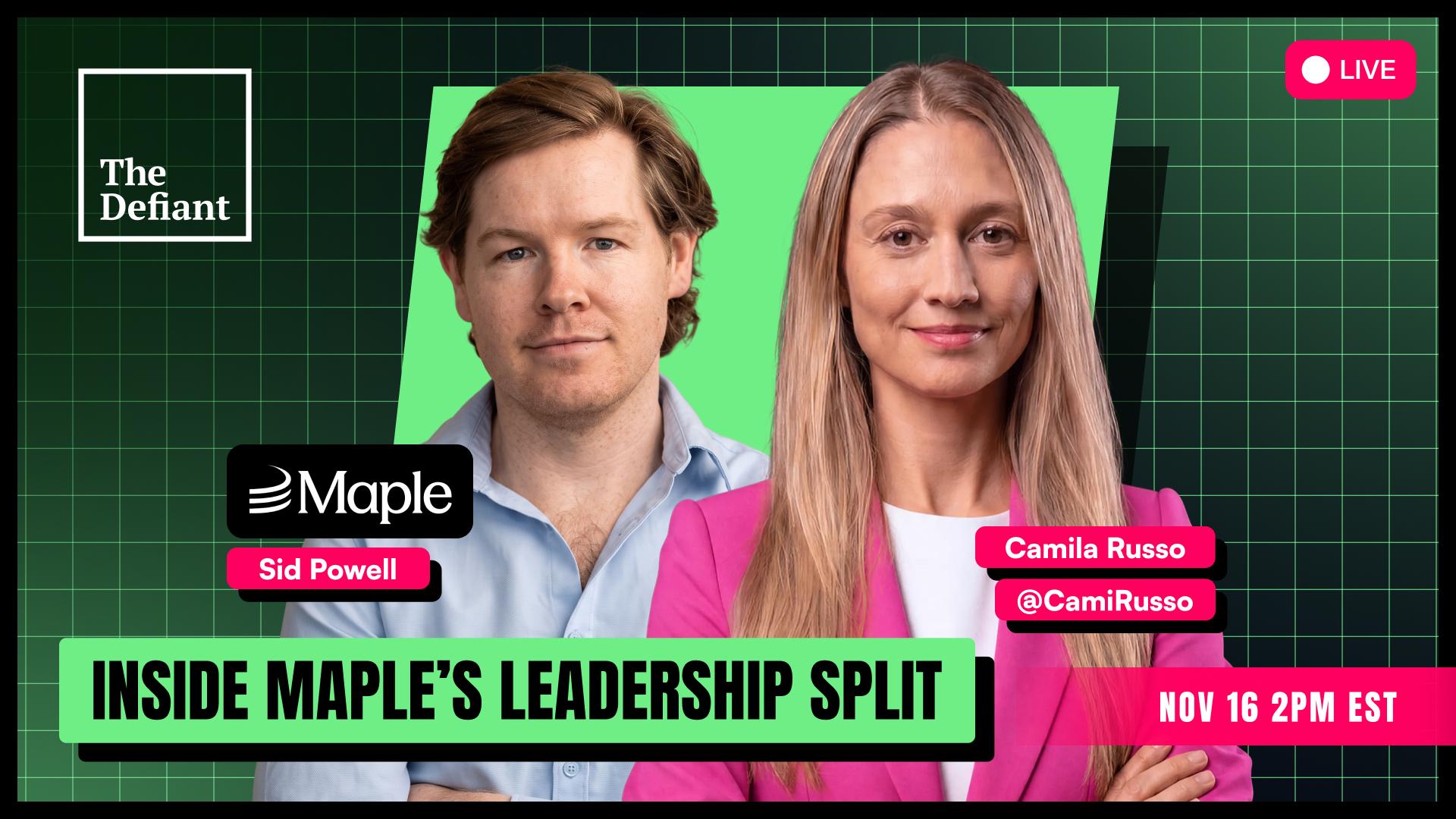
Tokenized Nvidia Through the Huang Removal: One Share, Seven Prices

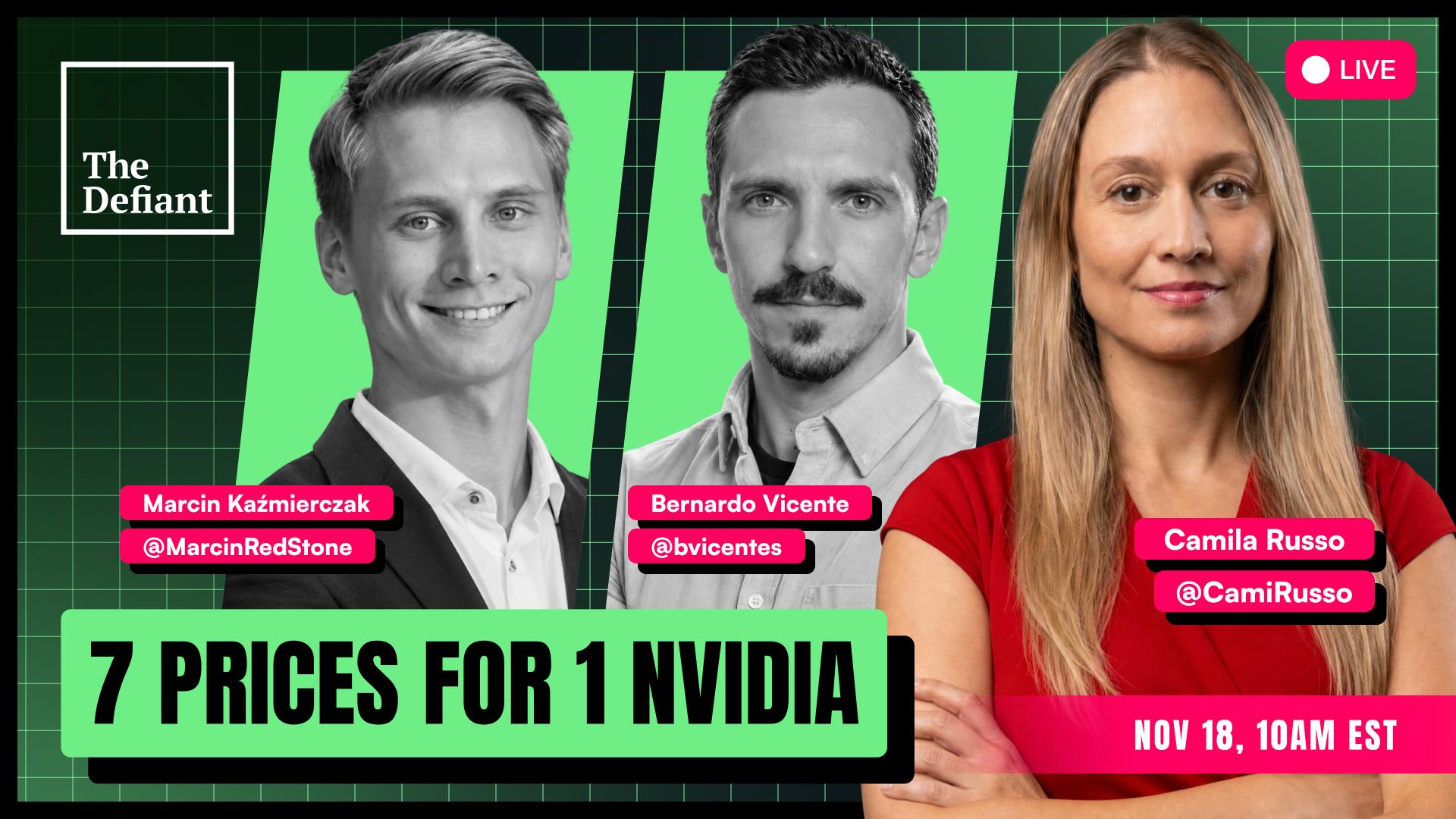
Jensen Huang offered to come back. Hours later, on Nvidia's first earnings call without him, the board said no. Seven tokenized versions of Nvidia stock keep trading when Nasdaq doesn't, and over the last two weeks they have disagreed with each other by as much as 6.3%. Marcin Kaźmierczak of RedStone and Bernardo of Credora join Camila Russo on what the tokens priced, what the lending markets missed for 50 hours, and what last night added. Guests: Marcin Kaźmierczak, co-founder, RedStone Bernardo, Credora. Like, subscribe, and hit the bell so you don't miss our next streams.
 Sid Powell On Maple’s Leadership Shakeup And The Strategy Behind It
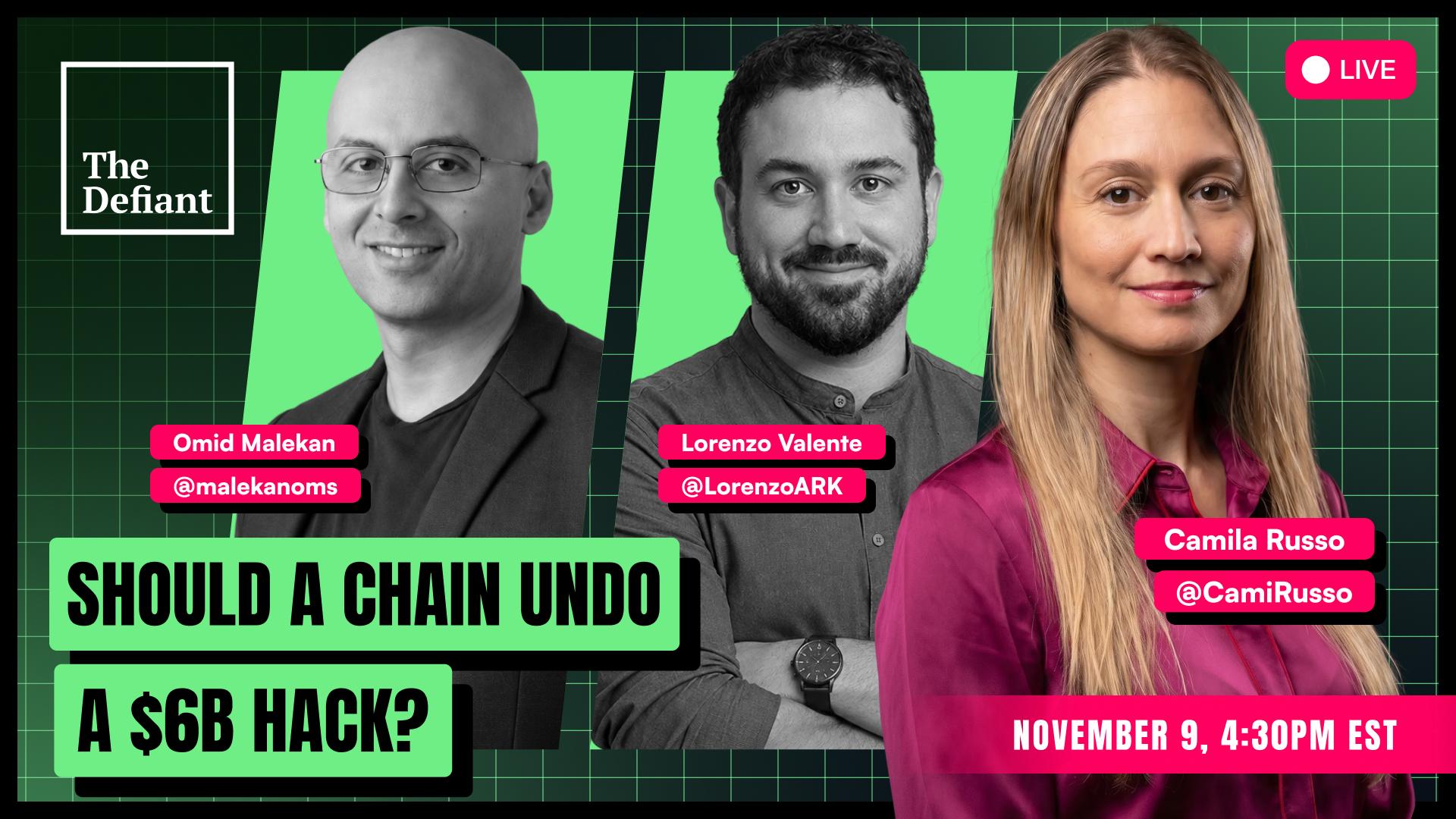
Sid Powell On Maple’s Leadership Shakeup And The Strategy Behind It

Maple Finance lost two senior executives this month. Co-founder and executive chairman Joe Flanagan said on Nov. 11 he is leaving after seven years, citing diverging views with CEO Sid Powell on strategy and leadership. COO Ryan O’Shea announced his exit a day later, with a last day of Nov. 27. Powell joins The Defiant to explain what the disagreement was about, how the responsibilities get redistributed, and why he says the exits have nothing to do with the loan book. We also cover his Q4 roadmap — onchain credit, yield products, embedded services, vaults and tokenized collateral — and the gap between Maple’s revenue growth and SYRUP’s price. Sid Powell @syrupsid CEO & Co-Founder Maple Finance @maplefinance Nov 16 2pm EST Like, subscribe, and hit the bell so you don't miss our next streams.
 Should a Chain Be Able to Undo a $6 Billion Hack? Lorenzo Valente and Omid Malekan Disagree
Should a Chain Be Able to Undo a $6 Billion Hack? Lorenzo Valente and Omid Malekan Disagree

ARK Invest’s director of research wants a two-to-three year window in which chains can reverse extreme hacks. The Columbia adjunct professor says a chain with a button is a chain whose button gets pushed. They agreed on X to settle it here. Context: the $6.3 billion Binance hack of Oct. 29, 2026, attributed by the FBI to the North Korean group TraderTraitor. Date: Nov 9, 4:30 pm ET Guests: Omid Malekan, adjunct professor at Columbia Business School (@malekanoms), and Lorenzo Valente, director of research for crypto at ARK Invest (@LorenzoARK). Like, subscribe, and hit the bell so you don't miss our next streams.
 THORChain Refused to Block the $387M Bitget Hacker. Here’s Why | Chad Barraford
THORChain Refused to Block the $387M Bitget Hacker. Here’s Why | Chad Barraford

Bitget lost $387.5 million in a hack and asked THORChain to block the attacker’s addresses. THORChain said no. Weeks later, Tether froze four THORChain vaults on Tron holding 1.45 million USDT, then unfroze them three hours later. And in May, THORChain itself lost $10.7 million to a GG20 flaw and stayed halted for 39 days. Camila Russo sits down with Chad Barraford, THORChain’s technical co-founder, to tackle the question splitting DeFi: if a protocol can stop a hacker, should it? They cover why hackers run to Bitcoin to cash out, the difference between “can’t” and “won’t,” how THORChain compares to Bitcoin, Ethereum and NEAR Intents, and what comes next: Monero, Zcash, new chains, and the bet that DEXs will eventually beat CEXs.
The Ledger Implant Factory: Mark Karpelès on Who's Building Spy Chips at Scale
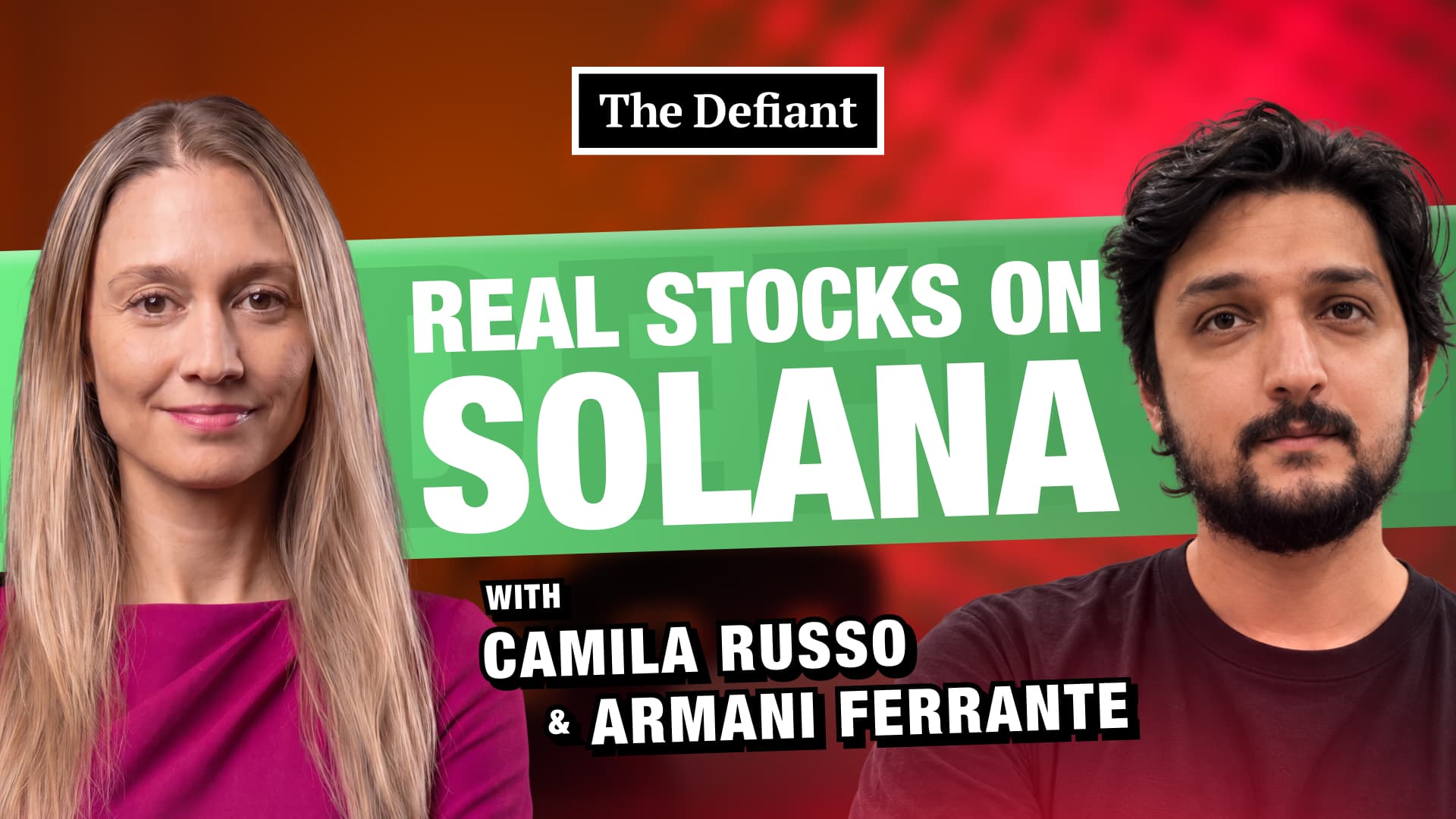
The Ledger Implant Factory: Mark Karpelès on Who's Building Spy Chips at Scale

Former Mt. Gox CEO Mark Karpelès has spent two weeks opening Ledger hardware wallets bought from third-party sellers in Japan, Singapore and Germany. What he found inside wasn't a one-off: the boards carry revision markings, regional antenna variants and a design that has moved from hand-soldering to something built for volume. Ledger says every confirmed theft traces back to a single Malaysian reseller. Karpelès's own devices didn't come from that reseller — and separate research suggests implants were transmitting seed phrases to overseas servers months before the drains became public. Camila Russo talks to Karpelès about who is manufacturing these implants, how many are still sitting unopened in drawers and on shelves, why a security researcher's March warning to Ledger produced no public alert, and what a company does when it's holding a report it doesn't want to be true. Date: Tue Oct 20, 10am ET Guest: Mark Karpelès, former Mt. Gox CEO — X: @MagicalTux Like, subscribe, and hit the bell so you don't miss our next streams.
 He Lost $14M to FTX. Now He’s Putting Real Stocks on Solana | Armani Ferrante (Backpack)
He Lost $14M to FTX. Now He’s Putting Real Stocks on Solana | Armani Ferrante (Backpack)

What do you actually own when you buy a tokenized stock? Backpack founder Armani Ferrante breaks down the transfer agent, DTCC, SPV debt-security and Backpack models. Backpack’s version is 1:1 redeemable stock you can move between your brokerage and DeFi. Armani explains how that unlocks arbitrage and better price execution, how 24/7 trading and in-kind dividends work, and why the BP token gave zero tokens to founders, team or investors, with 20% of company equity set aside for stakers.
STRK’s L1 Bet: Eli Ben-Sasson on Starknet’s Exit Plan
STRK’s L1 Bet: Eli Ben-Sasson on Starknet’s Exit Plan

Starknet says it is “actively considering becoming an L1” — leaving Ethereum to become what it calls the first fully quantum-resistant network, with 2027 as the target. StarkWare co-founder and CEO Eli Ben-Sasson joins Camila Russo to explain the plan. The announcement came as a post on X on Oct. 8, with no governance proposal attached. STRK ran from $0.05 to $0.12 in five days and has since given back most of it. In the same week, StarkWare shipped Shadow Accounts, a privacy primitive that gives users a separate address per app, and launched OffMarket, a service for trading on Polymarket without linking positions to a public wallet. We get into: — What becoming an L1 actually means for Starknet, and what replaces Ethereum’s settlement guarantees — Who approves the move, and when a proposal goes to governance — Why Ben-Sasson thinks the quantum threat is “much closer than we think” — Where he lands in the “bunker mode” fight between Justin Drake, Vitalik Buterin and Yehuda Lindell — Why StarkWare is demoing ML-DSA signatures when Buterin named lattices as the next risk — Shadow Accounts, OffMarket, and building privacy on a counterparty that can switch you off — Starknet’s revenue, emissions, and whether an L1 changes the economics Guest: Eli Ben Sasson
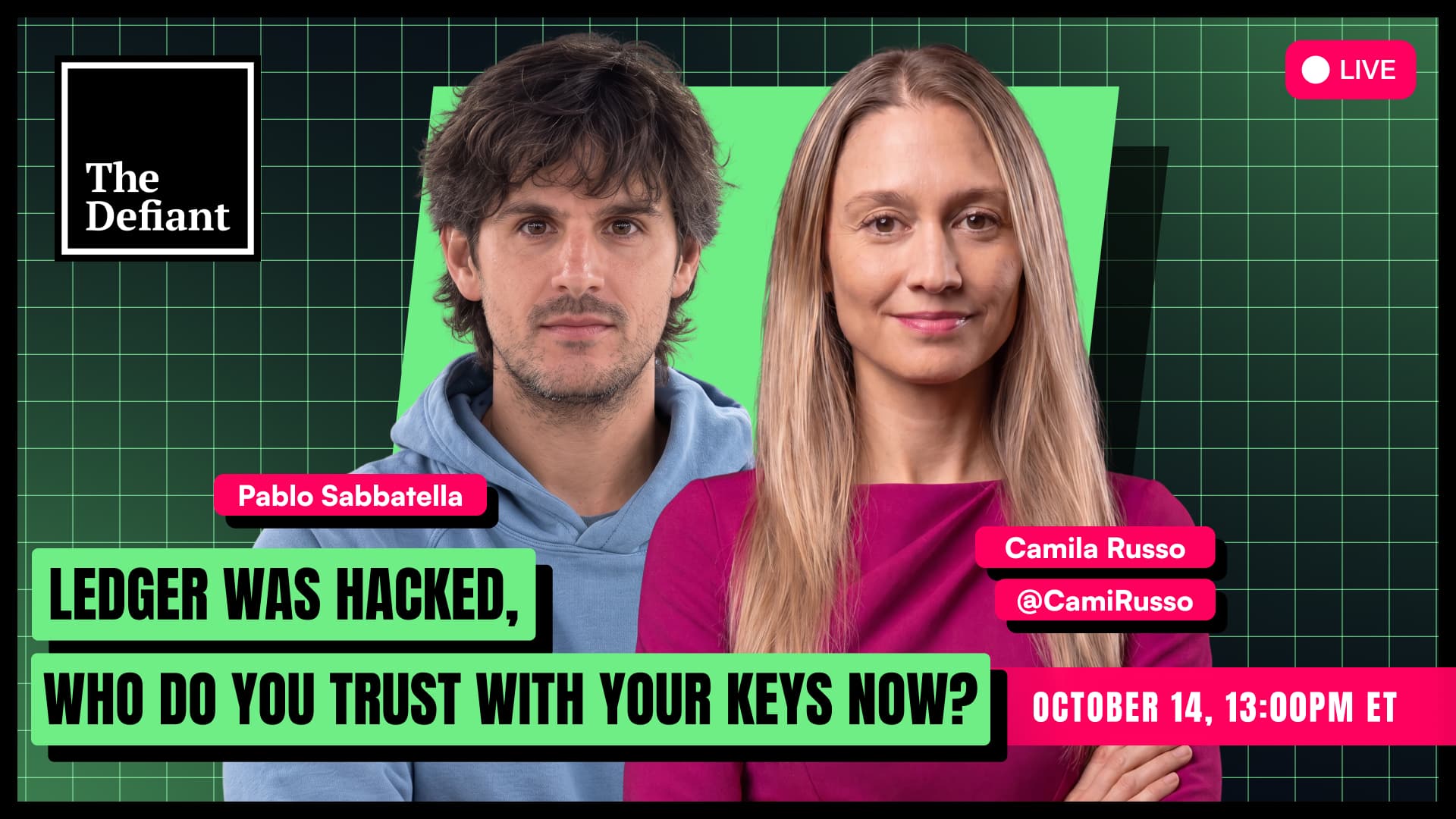
Ledger Was Hacked — Who Do You Trust With Your Keys Now?
Ledger Was Hacked — Who Do You Trust With Your Keys Now?

The Defiant Livestream | Wednesday, Oct. 14, 1:00pm ET Up to $93M drained from more than 300 wallets, and the software was never touched. Ledger confirmed a physical implant inside signers sold through reseller CryptoBilis, reading recovery phrases off the screen at setup and sending them out over a mobile network. So the question stops being what happened and becomes who you trust. The vendor? The reseller? The sealed box? The device already sitting in your drawer? Yourself? Guest: Pablo Sabbatella (@PabloSabbatella), founder of Opsek (@opsek_io)
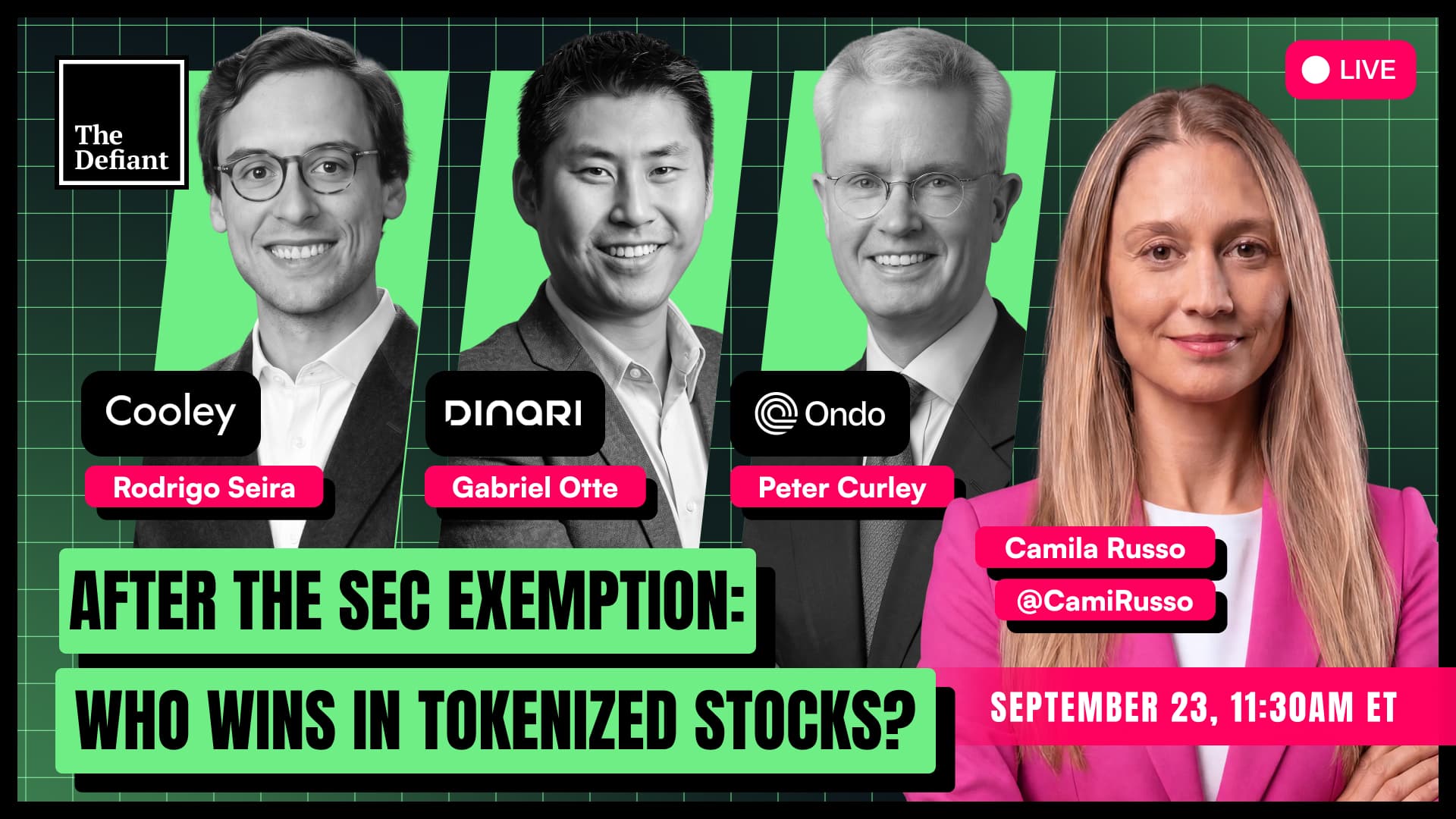
Synthetic vs. Direct Tokenized Stocks: Who Wins After The SEC Exemption?

Synthetic vs. Direct Tokenized Stocks: Who Wins After The SEC Exemption?

The SEC's exemption for tokenized equities has reopened the question every issuer has been working around: should a tokenized stock be a synthetic instrument that tracks the price, or a direct claim on the underlying share? Camila Russo sits down with the lawyers and builders shaping that answer. Rodrigo Seira, partner at Cooley, breaks down what the exemption allows and where the legal lines still sit. Gabriel Otte, co-founder of Dinari, and Peter Curley, head of global regulatory affairs at Ondo Finance, lay out how each model handles custody, investor rights, compliance, and access for non-U.S. users, and which structure is better placed to scale now that the rules have changed. 🗓 Live Wednesday, Sept 23, 11:30am ET Guests: Rodrigo Seira, Partner, Cooley Gabriel Otte, Co-founder, Dinari Peter Curley, Head of Global Regulatory Affairs, Ondo Finance Host: Camila Russo, founder of The Defiant Like, subscribe, and hit the bell so you don't miss our next streams.