Treasury Drops Its Crypto Wallet Surveillance Rules
FinCEN withdrew the unhosted-wallet reporting rule and its mixing finding, hours before the CFTC opened an elective federal rulebook of its own.
gm, Defiers!
These are the biggest stories in DeFi and crypto:
- FinCEN withdrew its unhosted-wallet reporting rule and its finding that crypto mixing is a laundering concern
- The CFTC opened an elective federal rulebook for exchanges offering retail crypto leverage
- ZachXBT spent weeks posing as a client of a Chinese syndicate laundering Bybit funds for North Korea
- OKX and ICE will trade tokenized stocks in permissioned Uniswap v4 pools on X Layer
- S&P Global started grading DeFi lending vaults, with the curator's score capping the result
FinCEN published its unhosted-wallet reporting rule on Dec. 23, 2020 and gave the public until Jan. 4 to comment. Twelve days, most of them holidays. The rule drew 7,685 comments anyway, the mixing proposal that followed in 2023 drew 2,239, and both then sat unfinished — one of them for five and a half years.
On Monday the bureau withdrew them both, ending the rulemakings with no final rule. Hours later the CFTC opened a rulemaking of its own that would pull exchanges offering retail leverage under a federal regime and leave ordinary spot venues to state money transmission law. The same day, OKX's joint venture with NYSE owner Intercontinental Exchange filed to trade 63 tokenized U.S. stocks in permissioned Uniswap v4 pools, the first venue to use the SEC's September exemption.
The Senate blocked the CLARITY Act 49-50 on Sept. 15. The next day, SEC Chairman Paul Atkins and CFTC Chairman Michael Selig said they would write crypto rules without it. Three days after that the CFTC sent this rulemaking to the White House at the prerule stage. The SEC cleared tokenized stocks to trade onchain on Sept. 17 and proposed a self-custody route for investment advisers on Oct. 1. Monday was the fourth installment in three weeks.
Withdrawing a proposal takes no vote, and an exemption is an order a commission can sign in a season. Selig was direct about the limit: only Congress can require every crypto exchange to register, so the CFTC built something exchanges may opt into, and compared the choice to a bank picking a federal or state charter.
To note, each piece is reversible by the mechanism that created it. FinCEN kept its risk assessment on mixers and said it may act again. The SEC's tokenized-stock relief expires in five years.
Read more below!



Synthetic vs. Direct Tokenized Stocks: Who Wins After The SEC Exemption?
OKXICE's permissioned pools land straight on the question The Defiant's panel argued out two weeks ago: who takes the tokenized-stock market now that the SEC exemption is live, the synthetic products or the directly-backed ones.
Treasury Drops Crypto Wallet Surveillance Rules
FinCEN withdrew two proposed crypto rules on Monday, ending both rulemakings with no final rule. The 2020 proposal would have made banks and money services businesses report a customer's counterparty and verify identity on transfers above $10,000 to a self-custodied wallet. The 2023 proposal would have declared crypto mixing a class of transactions of primary money laundering concern. The wallet rule drew 7,685 comments, the mixing rule 2,239. FinCEN said it will take no further action on the wallet rule, and that it may act again on mixing.
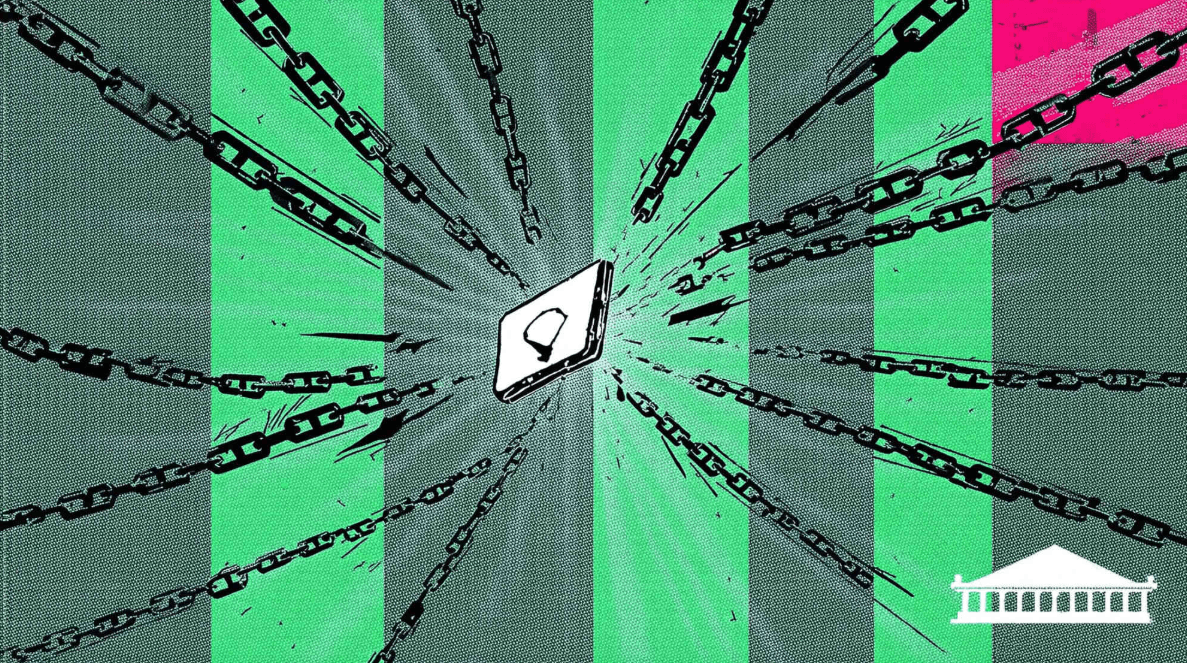
CFTC Seeks Comment on Crypto Rulebook That Leaves Spot Exchanges to the States
The CFTC opened a rulemaking on Monday that would put crypto exchanges offering retail leverage under a single federal regime, using 2010 authority it has enforced but never written rules under. Chairman Michael Selig called the framework elective and compared the choice to a bank picking a federal or state charter. Ordinary spot exchanges stay under state money transmission law. The notice would codify delivery to a user's own non-custodial wallet within 28 days as an exception to on-exchange trading. Comments are due 60 days after Federal Register publication.
ZachXBT Posed as a Client to Infiltrate Chinese Syndicate Laundering Bybit Hack Funds
Onchain investigator ZachXBT spent weeks in early 2025 posing as a client of a Chinese syndicate he says has laundered more than $1 billion for North Korea's Lazarus Group. He funded an address with 349,700 USDC and took a 5% loss on every order to build trust with one broker. The broker then started describing moves a day before they happened. One cluster he exposed held more than $12 million in Bybit proceeds, and Tether froze 442,000 USDT tied to it. The thread sat unpublished for roughly 18 months.
OKX-ICE Plans Tokenized Stock Trading Through a Uniswap v4 Hook
OKX and Intercontinental Exchange will run their tokenized-stock venue on Uniswap v4 pools on X Layer, per the venture's Oct. 4 public notice. Each pool pairs one stock token with USDC, USDG or USDT. Traders must clear KYC, sanctions and wallet screening to receive a non-transferable soulbound token, which a custom hook checks before every trade and liquidity action. Only OKXICE can create pools with that hook. The notice says the venue does not currently support aggregators, solvers or relayers. It remains pre-launch.
S&P Global Puts A Letter Grade On DeFi Lending Vaults
S&P Global Ratings launched the Vault Risk Assessment on Oct. 4, a letter-scale opinion on the risk of loss for depositors in onchain lending vaults. The scale runs AAA(v) to D(v). It grades the curator directly, and a weak curator score caps how high the vault can be rated. Vaults are scored on the assets they are permitted to hold, so a broad mandate costs them. Deposits in these vaults hit $10 billion in September, up from $1.5 billion two years earlier. No assessment has been issued yet.
Other Stories Worth Your Time
Safe Investor Greenfield Files Swiss Regulatory Complaint Over Foundation Governance — the early Safe investor asked Switzerland's foundation regulator to examine a three-person board of Safe and Gnosis insiders, and says Gnosis forced a SAFE redistribution after the Bybit hack.
Base Vault Drained of About $6 Million in Aave Deposit Tokens — six withdrawals followed a borrower-whitelist change, and the proceeds were redeemed for wstETH, with some later entering bridge withdrawals toward Ethereum.
SEC Clears 3x Bitcoin and Ether ETPs for Cboe Listing — Cboe can list BITH and ETHK, which use futures and reset leverage daily, so longer-term holders carry compounding losses in choppy markets.
CFTC Staff Clears Fast Track for Stock-Index Perpetual Conversions — an exchange converting a stock-index perpetual must give position holders five calendar days' notice and a chance to exit, with other material contract terms left unchanged.
Plume Opens Tokenized Vault Backed By Fidelity's Bond ETF — the nBND vault is backed by an actively managed Fidelity bond ETF, pushing onchain fixed income out of short-dated Treasuries and into credit and duration risk.
Anchorage Digital Cuts 17% of Staff, The Information Reports — the federally chartered crypto bank cut about 17% of staff, The Information reported, months after a $100 million Tether investment and an institutional settlement expansion.
Compound Votes on Giving Governance Power to Cancel Treasury Operations — Proposal 612 would stretch treasury timelocks from two days to ten, and a wallet linked to Humpy has cast 1.75 million COMP in support.
Ethereum Exit Queue Eases to 767,000 ETH After MetaMask Validator Exits — the queue fell to 767,000 ETH after MetaMask pulled its validators, while 1.44 million ETH still waits to start staking behind a roughly 25-day delay.
Aave Raises Core GHO Borrow Rate to 4.5% Amid Thin Redemption Reserves — the GHO Risk Council lifted the core borrow rate to 4.5% and raised Prime's base rate, while Ethereum's USDC conversion module stayed nearly empty.
Trending on The Defiant
Kalshi and Coinbase Win Partial Illinois Ruling on Sports Contracts · REGULATION
Arbitrum Pauses New Stylus Activations in Emergency Security Action · SECURITY
ICBA Sues OCC Over Crypto Trust Charters · TRADFI
Flying Tulip's NFT Options Market Tops $5 Million in Volume, Cronje Says · DEFI
Hyperliquid's USDC Yield Program Gets $14.6 Million for HYPE Buybacks · TOKENS
Free newsletters
Good reporting. Delivered.
Choose your coverage: crypto and DeFi, the future of finance, or both.
Free. Unsubscribe anytime.