The Price of a Crypto-Friendly White House
Plus, XRPL gets native ZK proof verification

Camila Russo & Olivia Capozzalo
April 15, 2026
gm, Defiers!
Today’s big story:
- Trump gave the industry everything it asked for: friendly regulators, a stablecoin law, a path to clarity, but helped himself to nearly $1 billion from token sales, memecoins, and NFTs along the way.
In other news:
- Boundless integrates with XRP Ledger
- Polygon launches liquid staking token
- Kraken confirms confidential IPO filing

Since 2014, we democratized venture investing, making professional-grade opportunities accessible to individuals and institutions, earning recognition from TIME Magazine and CB Insights as one of America’s top 20 venture firms.

Public blockchains promise transparency — but can they truly preserve privacy?
In partnership with RektHQ and Stellar, we explore the evolving “privacy trilemma” shaping the future of crypto. Watch as we unpack the trade-offs, innovations, and implications ahead of the April 22 premiere.
🎬 See trailer here: https://x.com/DefiantNews/status/2043732732199535054
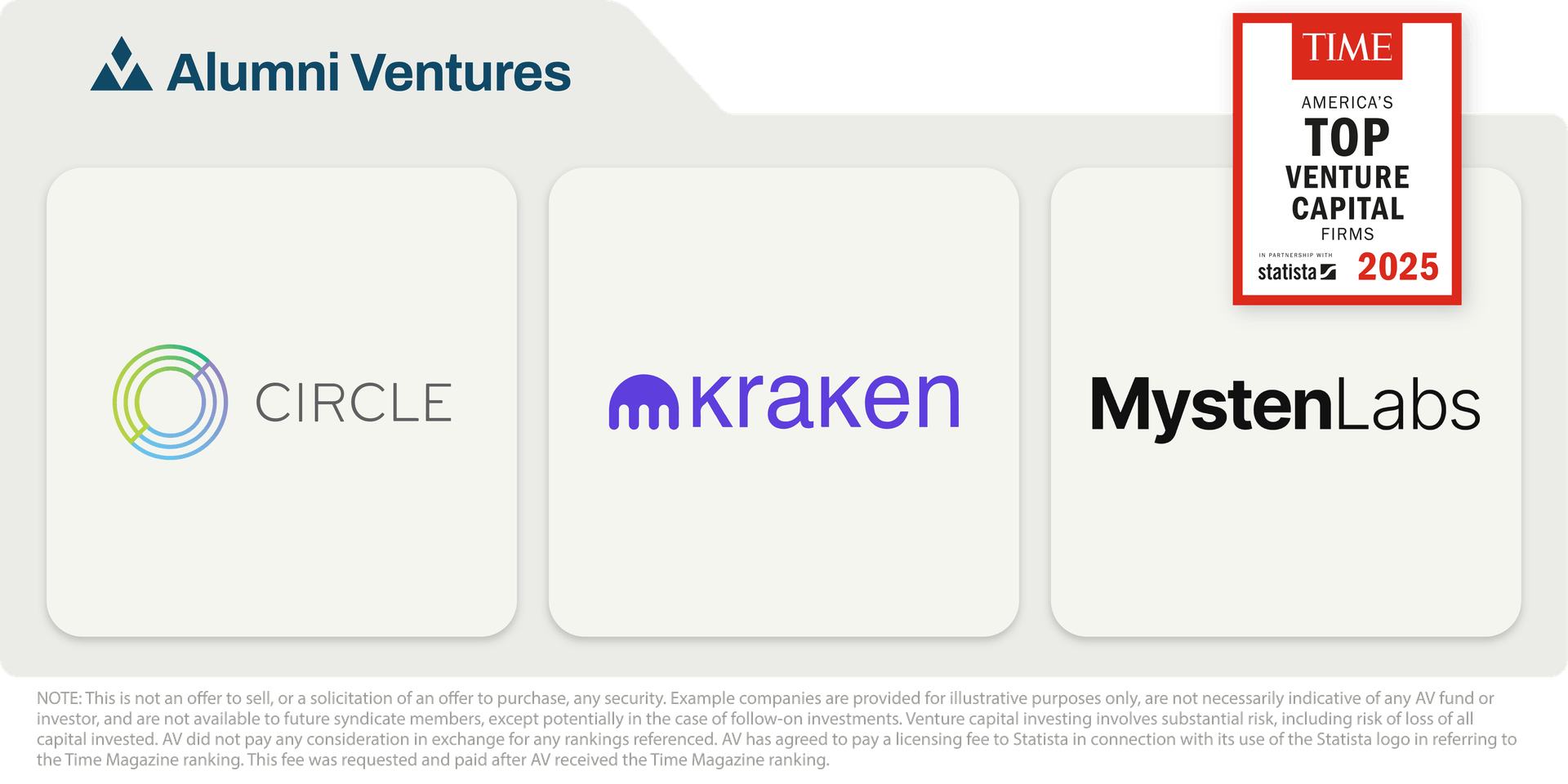
The Defiant Exclusive: You Could Be an Investor in High-Potential Startups Like These
The Defiant and Alumni Ventures are teaming up this week only to give readers early access to high-growth startup opportunities, including some of today’s most exciting blockchain & fintech startups co-invested alongside top VC firms like Paradigm & Pantera Capital.
You get:
• Curated deal flow of high-potential blockchain & fintech startups
• No cost, no commitment to join
• Invest only if a company excites you
Don’t miss your chance before access closes.
Join Alumni Ventures Blockchain & Fintech Syndicate Today →
| TICKER | VALUE | 24H | |
|---|---|---|---|
 | BTC | $74,039 | ▼ 1.10% |
 | ETH | $2,345.15 | ▲ 0.23% |
 | XRP | $1.38 | ▲ 0.61% |
 | BNB | $620.77 | ▲ 0.12% |
 | SOL | $84.82 | ▼ 0.56% |
The Price of a Crypto-Friendly White House
We all wanted a crypto president, and now we have one.
But we got both versions.
We got the crypto president the industry dreamed of: the one who fired Gary Gensler, elevated Paul Atkins to run the SEC, signed the GENIUS Act into law, and is still pushing the CLARITY Act to finally get clear (and friendly) regulation for crypto. Since Atkins was sworn in, the SEC has established a dedicated Crypto Task Force, issued staff guidance on meme coins, and convened public roundtables on how to regulate the sector, rather than trying to sue it into compliance. Banks and fintechs are tripping over themselves to integrate stablecoins, while asset managers are fighting over who’s more bullish on “tokenization.” This was all unthinkable not too long ago.
But we also got the other version of a crypto president. The one who seems to have absorbed crypto’s worst habits, along with its policy ambitions.
World Liberty Financial, the Trump family-backed “DeFi” protocol built on Aave and Ethereum, has borrowed roughly $75 million in stablecoins against its own WLFI governance token using Dolomite, a different lending protocol tied to WLFI’s CTO.
The project routed billions of WLFI tokens into Dolomite as collateral, with the position valued at about $460 million as of April 9. The operation allowed the Turmp family to borrow real, liquid dollars (USDC) against illiquid insider paper without having to openly sell tokens. In crypto, we have seen this movie before – FTX borrowed against FTT, Terra leveraged LUNA. It rarely ends well.
We hadn’t even finished processing that controversy when we were hit with a new one: World Liberty rolled out a new token-unlock proposal that would keep 80% of early investors’ holdings locked for two more years, followed by another two years of vesting.
In practice, that means many early buyers would not be fully free to exit until 2030, after Trump’s term is scheduled to end. Reuters also reported that 75% of all new token-sale proceeds still flow to the Trump family.
That’s only if you’re not Justin Sun, who apparently got locked out of his tokens indefinitely after he reportedly tried to cash out of his stake via his own exchange.
This all feels unfortunately familiar to anyone who has covered crypto long enough. Governance tokens that have no governance behind them (the token unlock proposal literally says, either approve this or your tokens are locked forever). DeFi protocols with centralized levers. Insiders “max extracting” on retail.
And WLFI is only part of the picture.
Reuters estimated that the Trump Organization earned about $802 million from crypto ventures in the first half of 2025 alone, including roughly $463 million tied to World Liberty token sales and another estimated $336 million from the $TRUMP memecoin. Trump’s 2025 financial disclosure also listed $1.16 million in income from his NFT business, while Melania Trump earned about $216,700 from NFT licensing fees. Put differently, the family has already extracted close to or above $1 billion from crypto through token sales, meme coins, and NFTs, before even accounting for unrealized upside.
And yet, the pro-crypto policy side is real too.
The GENIUS Act, which Trump signed on July 18, 2025, created the first federal framework for payment stablecoins in the U.S. Citi’s base case projects a $1.9 trillion stablecoin market by 2030, with a $4 trillion bull case. Meanwhile, McKinsey has estimated that tokenized financial assets could reach around $2 trillion by 2030 in a conservative scenario. And if the CLARITY Act eventually clears the Senate, it would go further by settling the jurisdictional fight that has hung over the industry for years and by giving builders more confidence to stay and scale in the U.S.
So on one side, there’s an administration delivering what crypto has spent years begging Washington for: friendlier regulators, a stablecoin law, and a credible path toward market-structure clarity. On the other, a president and family monetizing crypto with the kind of aggressive token engineering, memecoin extraction, and governance theater that the industry usually claims to be maturing beyond.
We could have gotten neither. We could have gotten only one. Instead, we got both.
The question now is not whether Trump is still good for crypto. In many ways, he is.
But is the industry willing to accept extraordinary private enrichment at the top in exchange for public policy wins that could grow the pie for everyone else?
Just like WLFI holders, I don’t think we have a real choice.
With love,
Cami, founder of The Defiant
Forwarded this newsletter? Subscribe for daily insights and curated news from The Defiant team, Monday-Saturday. It’s free.
Quantum Could Break Bitcoin Sooner Than We Thought | Alex Pruden
In this episode of The Defiant Podcast, Camila Russo sits down with Alex Pruden, co-founder and CEO of Project 11, to unpack what the latest quantum breakthroughs actually mean for Bitcoin, Ethereum, and the broader crypto ecosystem.
Alex explains why the latest research matter, how quantum computers could use Shor’s algorithm to break the cryptography behind blockchain ownership, why exposed public keys are especially vulnerable, and what “Q-Day” could look like if the industry is unprepared.
XRP Ledger Gets Native ZK Proof Verification Via Boundless Integration
Boundless, a zero-knowledge (ZK) proving network originally launched by RISC Zero, has integrated with the XRP Ledger (XRPL), bringing native ZK proof verification to the Layer 1 blockchain for the first time.
Why it matters: The integration reflects a broader industry shift toward privacy-first architecture; For XRPL, it addresses the fact that on-chain transparency has remained a barrier to deeper adoption, especially by TradFi players.
Polygon Launches Native Liquid Staking Token
Polygon Labs on Tuesday launched sPOL, the network's first native liquid staking token (LST), aiming to unlock more than 3.6 billion POL tokens currently locked in validator staking contracts.
Why it matters: Polygon's liquid staking penetration has lagged far behind Ethereum's, where over 43% of staked ETH sits in liquid staking derivatives.
Kraken Confirms Confidential IPO Filing as Deutsche Börse Takes $200M Stake
Kraken co-CEO Arjun Sethi confirmed that the crypto exchange has confidentially filed for an initial public offering, speaking at Semafor's World Economy conference in Washington, D.C. The news comes alongside a $200 million investment from Deutsche Börse, Germany's largest stock exchange operator, in Kraken’s parent company, Payward, for a roughly 1.5% fully diluted stake.
Why it matters: Speaking at the conference, Sethi framed the IPO push as part of a broader mission to democratize sophisticated financial tools.
Trending on The Defiant
- 21Shares Files Updated Hyperliquid ETF Application With Ticker $THYP: SEC
- SEC Approves Elimination of Pattern Day Trader Rule and $25,000 Minimum: FINRA
- XRP Ledger Gets Native ZK Proof Verification Via Boundless Integration
- Kraken Confirms Confidential IPO Filing as Deutsche Börse Takes $200M Stake
- Polygon Launches Native Liquid Staking Token
- GMX Rolls Out 24/7 Gold and Silver Trading
That’s it for today — if you enjoyed this newsletter, tell your friends! https://thedefiant.io/subscribe
Free newsletters
Good reporting. Delivered.
Choose your coverage: crypto and DeFi, the future of finance, or both.
Free. Unsubscribe anytime.