RWAs are Landing in DeFi with Superstate

Christopher Storaker & Olivia Capozzalo
December 18, 2025
gm, Defiers!
Today’s big story:
- RWAs Real Test: Isolation or Composability. TradeXYZ perps market manipulation over the weekend exposed the risks of shortcut RWAs, DTCC Canton Networks risks isolation on new rails, while Superstate shone a path for composable RWAs on public network.
In other news:
- SoFi Bank launches SoFiUSD
- Superstate stocks go live on Kamino
- Coinbase unveils tokenization platform
- HumaTek is rebuilding trust in humanitarian aid with blockchain [SPONSORED]
- How AI agents are reshaping DeFi [SPONSORED]
Read more below! But first, please give our sponsors some love; they make this newsletter possible.

Stellar: The Proving Ground for Real-World Privacy The latest Stellar upgrade, X-Ray, delivers zero-knowledge cryptography that lets developers build privacy into their apps—protecting what matters while keeping Stellar radically open, trusted, and ready for real-world finance.
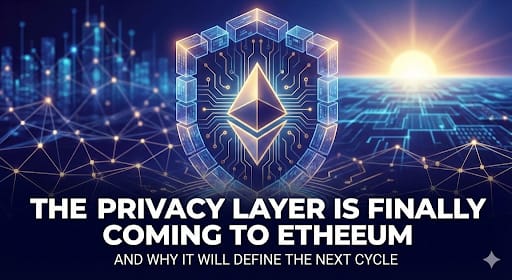
Ethereum has solved scale. It unlocked programmability.
Now it’s approaching the challenge that will define the next crypto cycle: privacy.
As institutions and everyday users move onchain, radical transparency is no longer enough. Payroll, treasury flows, vendor relationships, and financial strategies can’t live forever in public. Adoption has arrived, but retention depends on confidentiality that works in the real world.
A new privacy layer is forming across Ethereum, focused on selective disclosure, regulatory alignment, and practical use at scale. This isn’t about hiding activity, it’s about restoring balance between transparency and discretion.
In our latest article, we explore why privacy is becoming crypto’s next foundational layer, and how it will shape the cycle ahead.
We’re back! Here’s what you need to know in web3 today
📈 Markets in the Past 24 Hours
| TICKER | VALUE | 24H | |
|---|---|---|---|
 | Bitcoin | $85,245 | -0.27 % |
 | Ethereum | $2,811.33 | 0.06 % |
 | BNB | $825.64 | -1.14 % |
 | XRP | $1.83 | -1.21 % |
 | Solana | $119.64 | -1.79 % |
Today’s Big Story
RWAs Real Test: Isolation vs. Composability
It’s been an active week for tokenization and RWAs, with a steady stream of announcements reinforcing that crypto rails are no longer optional for financial institutions. Coinbase unveiled an end-to-end tokenization platform aimed at issuers looking to bring assets on-chain. Intuit partnered with Circle to integrate USDC across its payments and accounting stack. SoFi is launching its own native stablecoin, SoFiUSD.
But beneath the surface, all these developments raise a key question: what kind of financial system is actually being built on-chain?
Three stories this week make the following tension explicit: isolation versus composability.
At one extreme are shortcuts that attempt to graft TradFi assets onto DeFi without fully accounting for their structural differences. TradeXYZ’s synthetic perpetuals tied to traditional equities are a clear example. The protocol faced backlash after a whale trade triggered cascading liquidations over the weekend, exposing users to losses.
The core issue wasn’t leverage or poor risk controls. It was a deeper mismatch: DeFi trades 24/7/365, while the underlying reference markets do not. When equity markets are closed, price discovery stalls. Meanwhile, DeFi liquidity, leverage, and liquidation engines continue running uninterrupted. In that environment, thin liquidity and self-referencing pricing make manipulation easier, and losses more acute for users who reasonably expect crypto markets to behave like crypto markets: continuously, transparently, and symmetrically.
Nasdaq and the NYSE are pushing to extend trading hours to nearly 23 hours a day (still five days a week) in an attempt to meet global, always-on demand. But without a fundamental reimagining of how securities are settled, longer hours won’t eliminate market discontinuities and these gaps will persist.
DTCC’s tokenized Treasury pilot on Canton showcased another model. Enabled by a regulatory no-action letter, the project prioritizes privacy, finality, and institutional control; all sensible objectives for systemically important infrastructure that measures its transactions in the quadrillions of dollars. For relatively slow-moving assets like Treasuries and bonds, this approach may deliver meaningful efficiency gains.
But it also reflects a broader pattern: tokenization as a way to re-platform existing workflows, rather than reimagine market structure. Permissioned networks with limited composability reduce immediate risk, but they do so by recreating closed financial silos on-chain. This kind of fragmentation comes with real costs: from liquidity silos to duplicated infrastructure and higher coordination overhead.
Against this backdrop, Superstate’s announcement that it will bring its registered tokenized securities into Solana DeFi as collateral via Kamino stands out, forcing RWAs to operate within open, composable systems.
The model isn’t perfect, as market hours still matter, so oracle design remains non-trivial. The advantage is that DeFi protocols remain open, while assets are permissioned. What’s key is that these assets aren’t derivatives; they're the actual assets. This approach avoids short-term shortcuts and strikes a good balance between compliance and interoperability.
The distinction matters. The long-term value of tokenization won’t come from merely issuing assets on blockchains. It will come from plugging them into open, composable financial systems where liquidity, risk, and settlement interact transparently. Isolation may feel safer in the short term, but it won't reshape markets as we know them.
Let’s get real.
Chris Storaker,
Prodcut and tokenization at The Defiant
Forwarded this newsletter? Subscribe for daily insights and curated news from The Defiant team, Monday-Saturday. It’s free.
🎬WATCH
Becoming the ‘Institutions Chain’ with Avalanche’s Morgan Krupetsky
In this episode of The Defiant podcast, we speak with Morgan Krupetsky, VP of OnChain Finance at Ava Labs, to break down one of the most significant shifts happening in crypto today: the rapid institutionalization of blockchain and Avalanche’s strategy to lead it.
Morgan walks us through Avalanche’s “real-world adoption first” ethos, explaining how its unique architecture enables enterprises, fintechs, banks, governments, and consumer apps to build purpose-designed blockchains while tapping into a shared liquidity hub.
Top News in the Past 24 Hours
- US Online Bank SoFi Launches Native Stablecoin SoFi Technologies unveiled SoFiUSD, a 1:1 cash-backed U.S. dollar stablecoin issued by SoFi Bank.Why it matters: The stablecoin will deploy on “a public, permissionless blockchain” and makes SoFi the first U.S. national bank to release an “open access” stablecoin.
- Top Solana Lending Protocol Adds Superstate Tokenized Shares as Collateral Superstate announced that tokenized public equities issued through its Opening Bell platform are now available to non-U.S. users as collateral on Kamino, the largest lending protocol on Solana. Why it matters: The integration reflects broader efforts to make tokenized assets more composable across DeFi.
- Coinbase Unveils 'End-to-End' RWA Tokenization Platform Coinbase revealed its new platform, Coinbase Tokenize, to bring traditional assets on-chain. Why it matters: The new product is part of the firm’s broader push beyond crypto trading to become an “everything exchange.”
Trending on The Defiant
- Legacy Yearn Vault Exploited in Second Attack on the Protocol This Month
- Bitcoin Rallies Back Over $90,000 as Alts See Modest Gains
- Unicoin Set for Crypto Exchange Debut Following Key Shareholder Approval
- Aave DAO Controversy Rekindles Debate on Tokenholder Rights
- SEC Commissioner Peirce, Crypto Experts Say Privacy Is Key to Crypto Adoption
- Gnosis Hard Fork to Recover Balancer Funds Sparks Debate on Immutability
That’s it for today — if you enjoyed this newsletter, tell your friends! https://thedefiant.io/subscribe
Free newsletters
Good reporting. Delivered.
Choose your coverage: crypto and DeFi, the future of finance, or both.
Free. Unsubscribe anytime.