Binance Catches Flak Over Listing Fees
Olivia Capozzalo & Camila Russo
October 16, 2025
gm, Defiers!
Today’s big story:
- One founder’s tweet calling out Binance’s alleged listing fees has turned into a CT debate and a bit of a PR spiral, complete with legal threats, and a deleted post.
In other news:
- L2 MegaETH opens ICO registration
- Paxos “mistakenly” mints $300 trillion of PYUSD
- Backpack integrates tokenized stocks
- Who really controls your blockchain? [SPONSORED]
Read more below! But first, please give our sponsors some love; they make this newsletter possible.
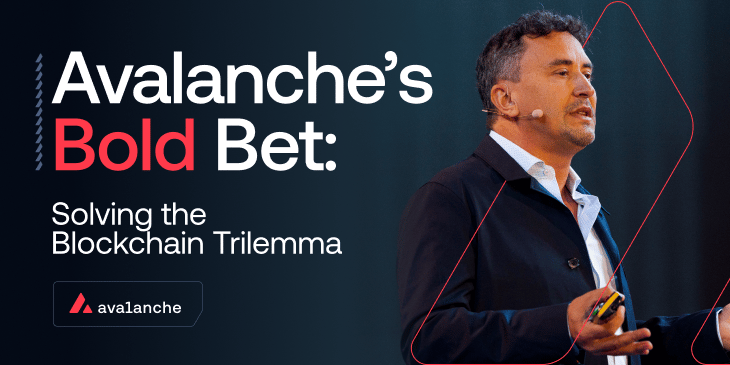
We are thrilled to launch Ecosystems, a new series from The Defiant that dives deep into today’s most innovative blockchain networks and protocols. Our first limited series explores whether Avalanche can break the tradeoff between speed, cost, and decentralization with sub-second finality and custom Layer 1s.
Hosts Camila Russo and Luigi D’Onorio DeMeo lead insightful conversations with Emin Gün Sirer, Nicholas Mussallem, and Hilmar Maximilian Orth to uncover how this technology could deliver on its ambitious promises.
We’re back! Here’s what you need to know in web3 today
📈 Markets in the Past 24 Hours
| TICKER | VALUE | 24H | |
|---|---|---|---|
 | Bitcoin | $110,832 | -0.26 % |
 | Ethereum | $4,032.09 | 0.69 % |
 | BNB | $1,175.06 | 0.54 % |
 | XRP | $2.42 | -2.05 % |
 | Solana | $194.98 | -2.26 % |
Today’s Big Story
CZ’s “Just Don’t List Here” Is Not a Real Option
When CZ says, “if you don’t like Binance’s listing process, just don’t list there,” he is not offering a real choice. It’s like telling a driver, “if you don’t want to take the interstate, take the back roads.” That’s fine in a world of many highways. But when the interstate carries ~35–40 percent of all global CEX volume, opting out means ceding relevance.
To make that concrete: in Q1 2025, Binance controlled ~36.5% of the global centralized exchange market by trading volume. In April 2025, CoinGecko placed Binance’s share of total spot volume among CEXs at 38%. Meanwhile, Coinbase, Binance’s principal U.S. rival, has dwindled to under ~6–7 % share of CEX spot volume.
In other words: when Binance controls a dominant tranche of liquidity and attention, to “just not list there” is tantamount to conceding the game.
The Controversy in Plain View
What triggered blowback was a founder, CJ Hetherington (Limitless Labs), going public—because Binance had not—about the terms Binance reportedly offered. According to his account, Binance demanded 8% of the total token supply plus a multi-million-dollar “security deposit” as conditions for listing.
Binance quickly responded, denying it “profits from listing,” accusing Hetherington of leaking confidential communications, even threatening legal action. Under community pressure, Binance later softened or removed some language and backtracked on parts of its support message.
CZ himself added rhetorical pressure, framing the narrative: “Strong projects don’t beg to be listed; exchanges compete to list them.”
What he’s implicitly saying is, “Because Binance is dominant, we can extract what we want and you’ll still have to comply if you want reach.”
If You Charge, Do It Transparently. Otherwise, Be Selective.
There is a defensible logic to charging for listings. Exchanges take on reputational risk, vet projects, run marketing and community incentive programs, and must support liquidity post-listing. But when you charge, you must do so transparently and consistently.
In TradFi, for example, annual listing fees on the NYSE and NASDAQ can range from $50,000 to $250,000 based on the size of the company, but their price lists are publicly available.
The other sound option is to forgo monetizing listings and instead enforce strict admission criteria.
Binance claims that its token allocations and deposits are returned to the ecosystem via airdrops, user incentives, or refunds when obligations are met. But given so many founders’ reports to the contrary, it may be a matter of semantics. In any case, there’s a problem with transparency: deals are sealed under NDA, terms vary project to project, and there is no public consistency or auditability.
The contradiction is glaring: Binance argues its listing process protects users from rug pulls, yet it accepts payment from any project willing to negotiate terms, and does that without transparent criteria.
Meanwhile, Coinbase publicly states: “listing an asset on Coinbase is, and has always been, free.” Coinbase’s model is explicit: no listing or application fees, no prerequisite marketing commitments or security deposits. Instead, they choose which assets to support based on internal criteria (liquidity, demand, regulatory risk, security) and monitor post-listing.
That model isn’t perfect—critics point out it is ultra-selective, slow, and may still favor well-resourced projects. But at least the rulebook is (in principle) public and consistent.
In the broader CEX market, many exchanges openly publish “listing tiers” and associated costs. For example (according to oqtacore):
- Mid-tier exchange Bybit reportedly charges ≥ $80,000 for listing in some cases.
- Tier-3 platforms like MEXC or lesser-known exchanges may begin at $30,000+ for listings.
- In guide compilations, estimated listing fees for Binance and Coinbase are pegged between $500,000 – $1,000,000+ for top-tier access, while exchanges like OKX, Bybit, Kraken, Gate.io fall into the $100,000–$800,000 ranges.
These fees are often just the beginning—projects sometimes must also commit to marketing budgets, token lockups, or other unseen conditions.
DeFi: The Transparent, Inclusive Alternative
When everything is centralized and opaque, DeFi (and DEXs) offer a true counterpoint: permissionless listing.
On DEXs, anyone can create a liquidity pool and make a token tradable. There’s no central gatekeeper, no secret demands, no NDA-wrapped terms. The only cost borne by the issuer is providing liquidity and possibly running incentive programs. Risks like slippage, impermanent loss, and volatility fall squarely on the community or project.
That model is not perfect, as projects without capital often can’t seed enough liquidity to attract volume. But in principle, it aligns with the open, transparent, meritocratic ideal.
That shift isn’t happenstance; it reflects growing disillusionment with opaque gatekeeping. If projects and users increasingly bypass centralized tollbooths, the moral and competitive pressure grows on exchanges like Binance.
Binance’s Choice
To maintain credibility, Binance must make a clear choice:
- Charge transparently and equitably, with published listing tiers, uniform rules, audits, and a commitment to distributing benefits to users and ecosystems; or
- Abandon pay-to-play listings entirely, lean fully into selective admissions and enforce high bar criteria (not token demands) to preserve legitimacy.
The hybrid posture—“we vet, but also demand your tokens or deposit in secret”—is untenable. It undermines trust, fuels narratives of exploitation, and conflicts with the mandate of building open infrastructure. CZ’s “don’t list if you don’t like it” line is disingenuous.
In contrast, DeFi offers a proving ground: market-based, transparent, and permissionless. The message for the industry is simple: if Binance wants to lead—not just dominate—it needs to either transparently monetize or step away from monetization and focus on curation. Until it does, its tollbooth posture will remain a stain on the narrative of an open crypto future.
With love,
Cami, founder of The Defiant
Forwarded this newsletter? Subscribe for daily insights and curated news from The Defiant team, Monday-Saturday. It’s free.
🎬WATCH
What Crypto VCs Want Now | Aryan Sheikhalian
In this episode of The Defiant Podcast, we sit down with Aryan Sheikhalian, Research Lead at CMT Digital, to unpack the shift from “crypto as an asset” to crypto as infrastructure: 24/7 markets, instant clearing and settlement, and new structured products that couldn’t exist before.
We talk about tokenized equities, how identity layers and ZK proofs unlock mainstream distribution through banks and fintechs, and where regulation is pushing builders toward partnerships and licensed rails.
Top News in the Past 24 Hours
- MegaETH Opens Registration for Potential ICO on Cobie’s Sonar Platform The Ethereum Layer 2 blockchain is preparing a community-focused token sale for MEGA on the Sonar platform. Why it matters: ICOs – a way for crypto projects to raise funds from the general public – are making a comeback in 2025, after their last peak in 2017-2018 left many skeptical of the funding mechanism.
- Paxos Mints and Burns $300 Trillion PYUSD on Ethereum The issuer of PayPal’s PYUSD minted an unprecedented $300 trillion PYUSD yesterday, but burned the new supply shortly after, confirming it was an accident. Why it matters: For context, the largest stablecoin, USDT, has a supply of ~$181 billion. Paxos’ apparent typo drew widespread criticism, as it appeared the firm was printing money out of thin air.
- Backpack Launches SEC-Registered Tokenized Shares amid Liquidation Controversy Wallet and CEX Backpack, founded by ex-FTX and Alameda employees, is integrating Superstate’s Opening Bell for tokenized stocks, just days after the Oct. 10 crash saw liquidated users on the platform report that their deposits had disappeared. Why it matters: Issuing U.S. stocks on-chain continues to be a growing trend, and Opening Bell is a prominent player in non-synthetic tokenized stocks — meaning the tokens don’t just track price, but also give investors dividends and shareholder rights.
Trending on The Defiant
- Paxos Mints and Burns $300 Trillion PYUSD on Ethereum
- MegaETH Opens Registration for Potential ICO on Cobie’s Sonar Platform
- Nansen and Sanctum Launch Solana Liquid Staking Token
- Yei Finance Token Soars 250% on Launch Day
- OhBaby Games NFT Mint Offers GameFi Bulls a Glimmer of Hope
- Crypto Continues to Offer Superior Returns and Diversification: Franklin Templeton
That’s it for today — if you enjoyed this newsletter, tell your friends! https://thedefiant.io/subscribe
Free newsletters
Good reporting. Delivered.
Choose your coverage: crypto and DeFi, the future of finance, or both.
Free. Unsubscribe anytime.