Are Crypto Bailouts Good?
Plus, pumpfun announces new buyback-and-burn policy

gm, Defiers!
Today’s big story:
- DeFi United’s fundraising plugged the hole this time. The next major exploit needs a system, not a savior.
In other news:
- DeFi United outlines technical implementation
- Pumpfun burns tokens worth $370M
- Securitize reveals partnership to tokenize equity
- Energy Web Is Building the Verification Layer for Real-World Markets [MEDIA PARTNERSHIP]

Nexo is a digital wealth platform offering crypto yield up to 15% and crypto-backed credit lines from 1.9%. Join and get 30-day access to exclusive rates. Terms apply.
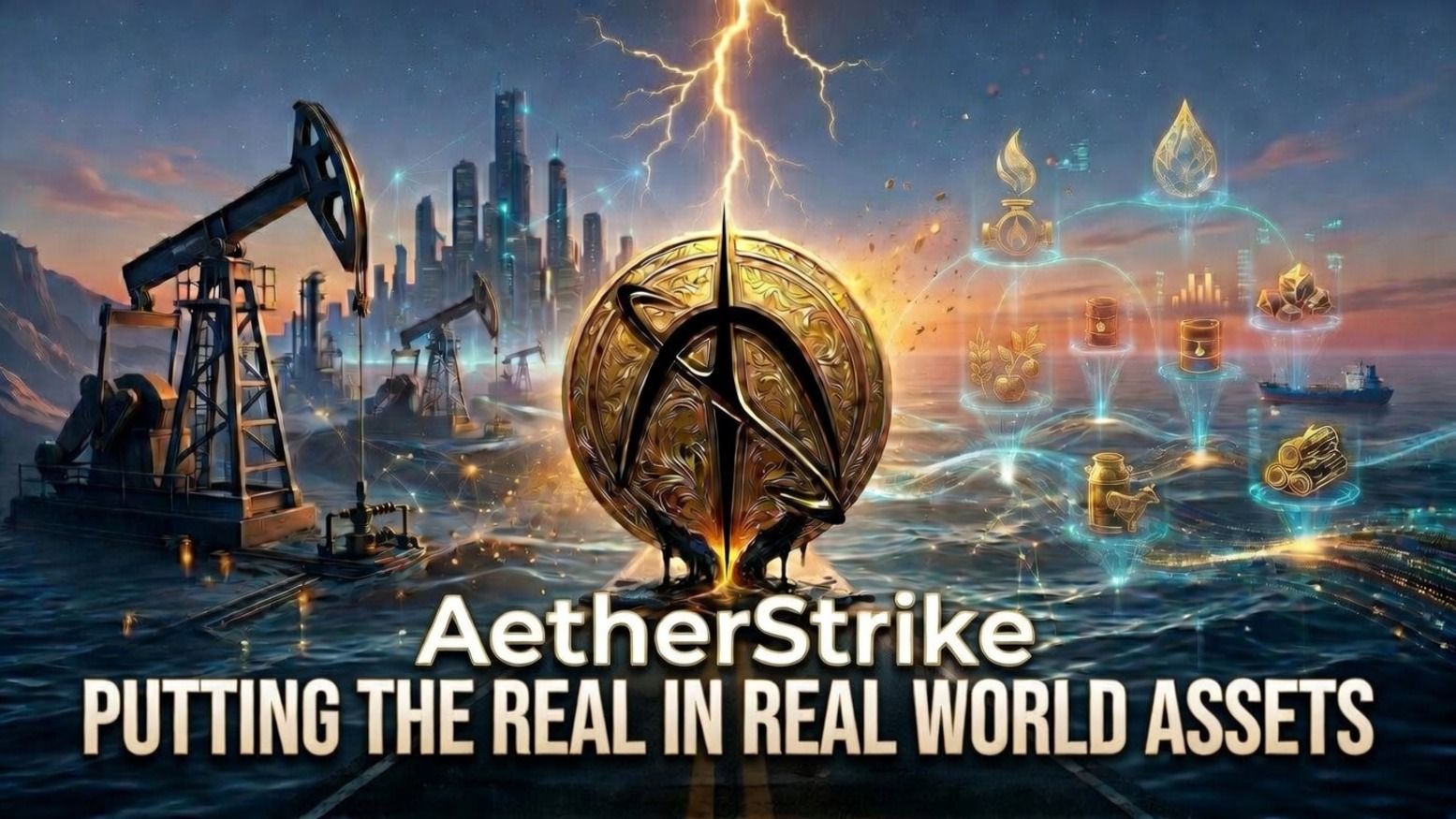
How do you tokenize a mountain?
The category's only credible if the stack holds up to institutional scrutiny. Here is ours.
Certification by a top-tier independent reserve engineering firm under PRMS standards. The same caliber of analysis the world's largest producers rely on, adapted for on-chain assets.
- Issuance on Ethereum under the ERC-3643 standard via Tokeny's T-REX protocol, with regulated identity and compliance at the token level.
- Institutional-grade custody. Licensed qualified custodian, cold storage, segregated accounts.
- An operator-manager separation with cost-plus structure. Independent producers extract and sell. AetherStrike manages token economics and investor relations.
A regulated security, compliant with US and international frameworks. Issued on the most battle-tested blockchain.
Register your interest at aetherstrike.com.
| TICKER | VALUE | 24H | |
|---|---|---|---|
 | BTC | $75,931 | ▼ 0.32% |
 | ETH | $2,272.11 | ▼ 0.78% |
 | XRP | $1.36 | ▼ 0.96% |
 | BNB | $618.9 | ▼ 0.75% |
 | SOL | $82.98 | ▼ 0.74% |
DeFi United Should Go Beyond Heroic Rescue Into Permanent Infrastructure
The community surprised everyone and came together to plug a $300M hole. Now it needs to evolve into something DeFi users know they can count on for the next attack.
When a North Korean hacker minted roughly 116,000 unbacked rsETH and used it to drain about $190M from Aave, the worst-case scenario for DeFi seemed to be in motion. Then something unprecedented happened: the community plugged the hole itself. Aave's Stani Kulechov rallied a coalition of treasuries and individual donors under the banner "DeFi United," and within days, more than $300M had been deposited to cover the bad debt.
Yes, it worked. But no, it can't be how DeFi handles the next one.
That's not just my opinion. It was the underlying theme in a debate I hosted today, with Dean Eigenmann from Markets Inc., Binji from the Ethereum Foundation, and David Phelps of Confetti. While everyone agreed the rescue was inspiring, no one thought it was a viable, sustainable solution going forward.
"DeFi United is like a heroic rescue, but I don't think it should be the norm," Binji said.
David was less polite. "You came up with a solution that just depends on trust. You're just trusting that Daddy Warbucks is gonna come in with his billions of dollars and give it back to you to try to help you out. I don't think this instills a lot of confidence." He cited JPMorgan's 1893 personal bailout of the U.S. government as precedent: "I would still qualify this as a bailout. I don't know what other term we could use for trying to plug the hole."
Loan vs Donation
Dean proposed an alternative. Instead of donations, he argued, DeFi United should have been structured as a loan to Aave at Lido + 1%, secured by AAVE, LayerZero, and Kelp tokens, with LayerZero and Kelp paying the majority of the interest because they were the parties actually at fault. "I don't see why some of the larger treasuries wouldn't bite on that."
A loan would have set a precedent that DeFi can heal itself with DeFi, not with charity. But likely more complex and slower to pull off than the fundraiser.
The deeper problem this exploit exposed is that DeFi, today, is not ready for the big leagues, even if that mainstream moment seems within reach. The system is still too fragile and littered with risks. Worse, even when running on public blockchains, many of those risks are opaque.
Centralization Fails Again
The good news is that the hack didn't come from some exotic smart contract failure. It came, as these things almost always do, from centralization hiding inside a "decentralized" stack, in this case, a 1-of-1 signer on a LayerZero. And over 40% of LayerZero bridges are configured the same way!
"Over and over again, we keep getting fucked, not because of decentralization, but because of centralization," David said. "Decentralization without transparency is just marketing," Binji added.
Robinhood and PayPal are integrating DeFi rails. BlackRock is tokenizing real-world assets on Ethereum. Meanwhile, Aave depositors had no way of knowing their ETH was sitting behind a 1-of-1 multisig two protocols away. The yields were never priced for that risk because the risk was invisible. As Dean put it, quoting Nassim Taleb: low risk is easy to price, high risk is easy to price, but medium risk is impossible, and DeFi has been pricing everything as medium.
So what should come next?
A few things. A public, neutral risk page for every major collateral asset; the L2Beat of DeFi. Circuit breakers that pause anomalous flows, like a fresh address deploying $200M that came from a bridge thirty seconds earlier. And most importantly, DeFi United itself shouldn't disband. The fund is already over-subscribed. The excess could be deployed into yield-bearing strategies and grown into a permanent insurance fund, something the next exploited protocol can draw against under predetermined rules.
While DeFi just showed it isn't ready for the big leagues, this might be the final drop in these liquidity pools, which pushed the ecosystem to step up and become ready.
With love,
Cami, founder of The Defiant
Forwarded this newsletter? Subscribe for daily insights and curated news from The Defiant team, Monday-Saturday. It’s free.
Can Privacy and Transparency Coexist?
A new documentary from The Defiant and Rekt News.
Every wallet is an open book. Institutions sit at the threshold, waiting for an answer to a question that's haunted this industry for a decade: can you build a system that's open enough to be trustless and private enough to be usable?
DeFi United Outlines Technical Path To Make Kelp's rsETH Whole
DeFi United, a coalition of decentralized finance (DeFi) ecosystem participants, on Tuesday published the technical implementation plan to restore the backing of Kelp DAO's rsETH and recover roughly 107,000 tokens still controlled by the exploiter.
Why it matters: The industry recovery effort spearheaded by Kelp and Aave Labs has already filled about half of the 163,200 ETH hole from the April 18 exploit.
Pumpfun Announces 50% Revenue Buyback-and-Burn Model
Solana memecoin launchpad pumpfun announced that it has burned approximately $370 million worth of previously bought-back PUMP tokens — roughly 36% of the circulating supply — and is pivoting to a programmatic buyback-and-burn policy funded by 50% of all future revenue for one year.
Why it matters: While the platform was previously using 100% of its revenue for token buybacks, the burn schedule and long-term plan remained unclear.
Securitize Teams Up With Computershare to Tokenize US-Listed Equities
Tokenization platform Securitize and Computershare, one of the world's largest transfer agents, announced an agreement on Wednesday to enable U.S.-listed issuers to bring their equity on-chain through a new construct called Issuer-Sponsored Tokens (ISTs).
Why it matters: The distinction matters in a market where most existing tokenized equity products rely on synthetic representations backed 1:1 by deposited certificates, rather than native on-chain issuance.
Trending on The Defiant
- Bitcoin Holds $76K Ahead of Powell's Final Fed Meeting
- DeFi United Outlines Technical Path To Make Kelp's rsETH Whole
- Developers of Telegram's Crypto Wallet Launch Agentic Wallets
- Ondo Partners with Broadridge to Bring Shareholder Voting to Tokenized Stocks
- Bitcoin Stalls Below $80K as Geopolitical Risk Returns Ahead of Fed
- NFTs Attempt Another Comeback as Blue Chips Surge
That’s it for today — if you enjoyed this newsletter, tell your friends! https://thedefiant.io/subscribe
Free newsletters
Good reporting. Delivered.
Choose your coverage: crypto and DeFi, the future of finance, or both.
Free. Unsubscribe anytime.