Why Atlas System Chose BNB Chain for Its First Web3 Product
Sponsored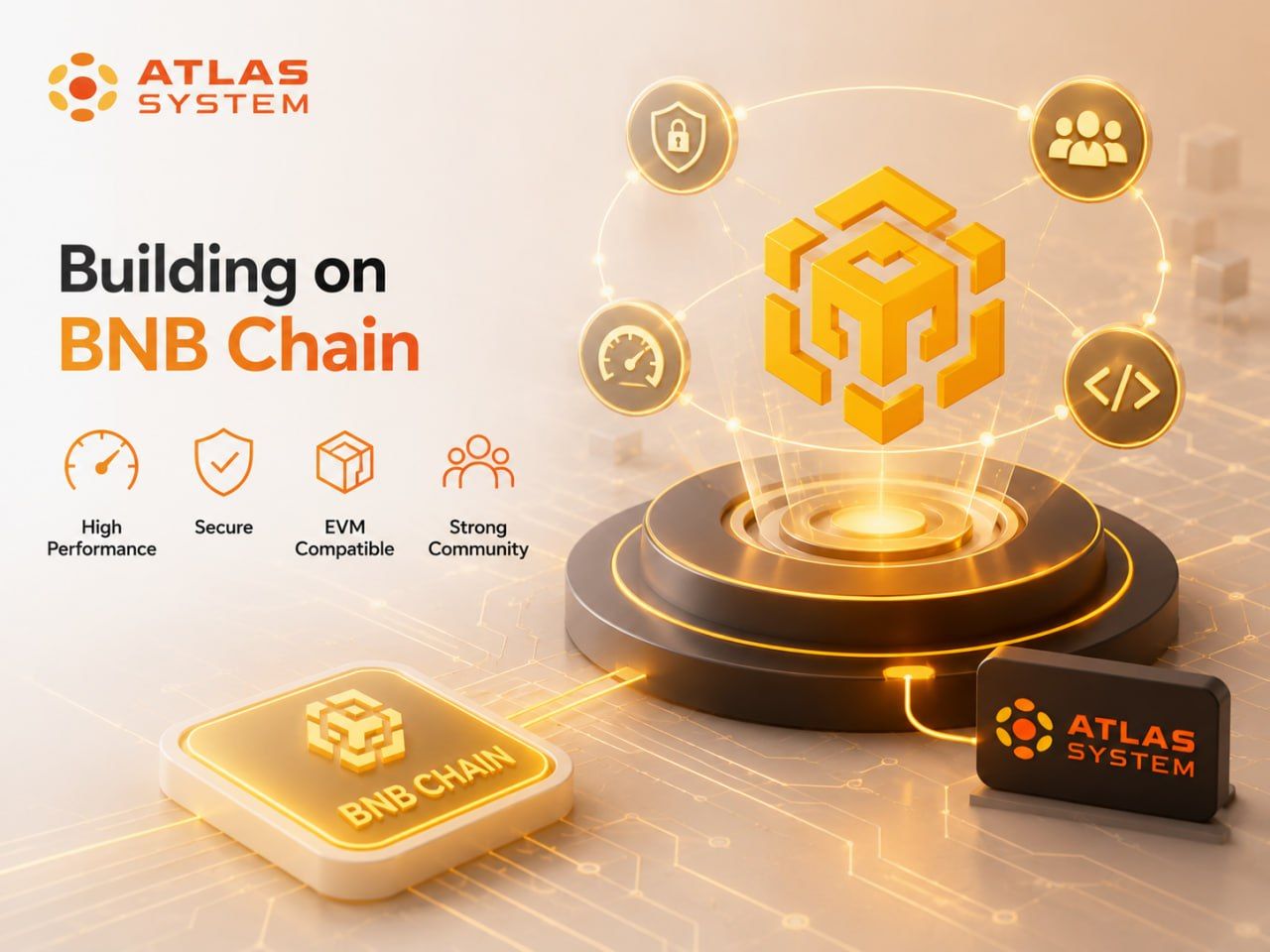
Choosing a blockchain is one of the most important decisions for any Web3 product. The network determines how users connect, what assets they can use, how much transactions cost and how easily activity can be verified.
For Atlas System, the first product is Smart Cycle v1, a smart contract-based model of voluntary mutual financing. The project's technical documentation identifies BNB Smart Chain as the execution environment and USDT BEP-20 as the primary settlement asset.
The choice is practical. Project is not launching a purely experimental protocol designed only for developers. Smart Cycle is intended for users who connect a Web3 wallet, select participation parameters, confirm a transaction and later submit a claim under the rules of the selected cycle. That user journey requires a network with familiar wallet support, widely used tokens and public infrastructure for checking transactions.
USDT BEP-20 as the Settlement Asset
Smart Cycle v1 uses USDT on BNB Smart Chain for participation amounts, calculated claims and partner-related accruals. Using a BEP-20 version of USDT gives Atlas System a settlement asset already familiar to many crypto users. Participants do not need to interact with a newly issued project token or depend on a separate token sale.
This also makes the economic mechanics easier to understand. Smart Cycle amounts, calculated deltas, platform fees and partner accruals can be denominated in USDT rather than in an asset whose market value may change sharply.
Public Contracts and BscScan Verification
Transparency is one of the main reasons BNB Chain fits the Atlas System model.
The project has published the addresses of its main contracts:
- Lockup Flow: 0x8F6daC6F25A5038112E1A01f1cBBD682e4D64889
- Daily Flow: 0x8F418e29a32AAB69Abf3DA742c43E7aDfBFbA3c3
- Transport: 0x5a71807861dBFc41aB016271C3191bF96322D42e
- Distribute: 0xEF156690b98AEc4F805Ec820268B9092bd83B76f
Users can review these addresses through BscScan and inspect token transfers, contract interactions, transaction hashes and event data. A user should not have to rely only on a private dashboard. They can compare information shown in the interface with blockchain-level records.
Supporting Two Smart Cycle Models
BNB Chain hosts the two principal user-facing Smart Cycle contracts. Lockup Flow handles cycles with a fixed participation term. Each order records information such as the participation amount, selected plan, term and claim conditions. Daily Flow handles a longer cycle in which calculated amounts may become available progressively during the participation period.
The user signs the initial transaction through a Web3 wallet. The relevant contract then records the order on-chain and applies the logic of the selected flow. After the required conditions are met, the participant can initiate a claim.
The whitepaper emphasizes that the right to submit a claim and the actual execution of that claim are different. Execution depends on the rules of the cycle, available liquidity, contract status, network conditions and the user's actions.
Integration With PancakeSwap V3
Another reason BNB Chain fits the Smart Cycle architecture is the project's use of PancakeSwap V3 infrastructure. Contract structure includes PositionHandler, a shared layer responsible for interacting with a PancakeSwap V3 liquidity position. It supports functions connected to adding liquidity, removing liquidity and validating the active position used by the contracts.
The architecture lists PancakeSwap V3 Factory and NonfungiblePositionManager as external dependencies. These are not Atlas System contracts. They are infrastructure components used by the Smart Cycle contracts through the liquidity layer.
The Cyberscope audit also describes PositionHandler as the base contract for interactions with PancakeSwap V3 positions. This integration gives Atlas System access to established decentralized exchange infrastructure rather than requiring the project to build every liquidity component from scratch.
A Familiar Environment for Wallet Users
BNB Chain also supports a relatively straightforward user path. A participant can connect a compatible Web3 wallet, hold USDT BEP-20 and BNB for network fees, interact with the Atlas System interface and confirm transactions directly in the wallet.
This matters for onboarding. A technically strong product can still struggle if participation requires multiple bridges, unfamiliar tokens or complicated network configuration. Atlas System's first product is intended to demonstrate the mechanics of Smart Cycle before the ecosystem expands into governance, educational tools, a P2P exchange, a wallet and other planned services. Starting on a network with an established wallet and token ecosystem lowers some of the practical barriers to that first stage.
The Limits of the Network Choice
BNB Chain can provide transaction infrastructure, public records and access to PancakeSwap V3, but it cannot guarantee the sustainability of the Smart Cycle model. Claims still depend on liquidity. Smart contracts still carry technical and administrative risks. Public transactions show what happened, not what will happen.
The Cyberscope audit identified several issues, including shared-liquidity risk, owner permissions, claim conditions and centralization concerns. For that reason, Atlas System's choice of BNB Chain should be viewed as an infrastructure decision, not a security guarantee.
Building Around Verifiability
Atlas System chose BNB Chain because Smart Cycle v1 requires a network that supports USDT, public smart contracts, wallet-based interaction, liquidity infrastructure and independent transaction verification.
The network gives the project a practical foundation for its first Web3 product. The more important test, however, will be how clearly Atlas System explains its mechanics, addresses disclosed risks and allows users to verify the difference between what the interface displays and what the contracts actually do.
About the Project
Platform: atlas-system.io
Facebook: Atlas System
TikTok: @atlas_system_official
Telegram: t.me/atlas_system_official
YouTube: @Atlas_system_official
Advertisement
Free newsletters
Good reporting. Delivered.
Choose your coverage: crypto and DeFi, the future of finance, or both.
Free. Unsubscribe anytime.