Who Settles Wall Street? Inside DTCC's Move to Stellar
The most consequential institution in U.S. markets is one most crypto readers have never thought about. The Depository Trust & Clearing Corporation (DTCC), the post-trade utility that clears and settles most U.S. securities activity, processed $4.7 quadrillion in securities transactions in 2025. Its depository subsidiary custodies $114 trillion in securities from more than 150 countries.
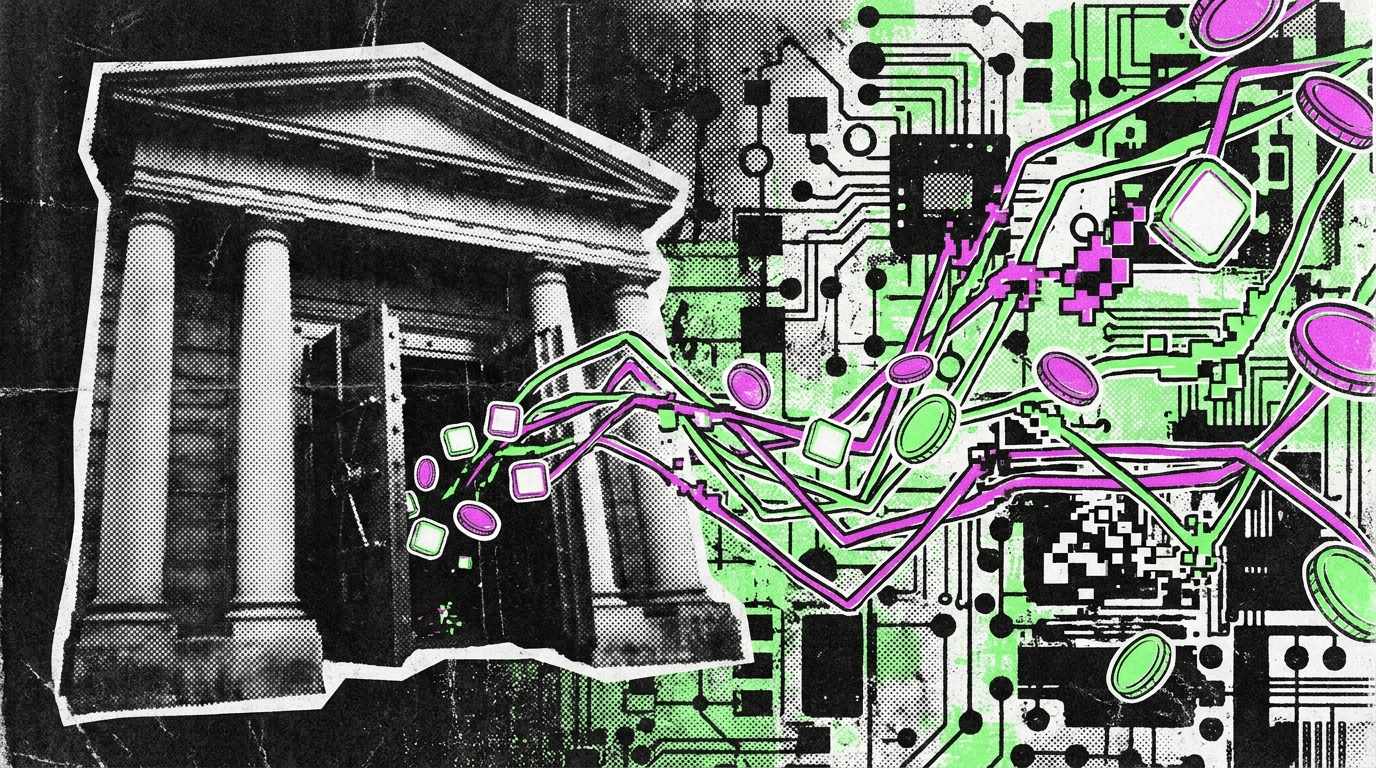
That institution is connecting to a public blockchain. On May 27, DTCC and the Stellar Development Foundation (SDF, the nonprofit that supports the Stellar network) announced plans to tokenize DTC-custodied assets on Stellar. Tokenized assets are expected on the network in the first half of 2027, under a No-Action Letter the SEC issued to DTC in December 2025.
This article walks through what DTCC does, how the tokenization service works, why the evaluation landed on Stellar, and where the hard limits sit.
What DTCC Actually Does
When a stock trade executes, the buyer and seller still need to exchange cash for securities. DTCC sits in that gap: its clearing arm nets trades between brokers, and its depository subsidiary, The Depository Trust Company (DTC), holds the securities and moves ownership entries on its centralized ledger. Nearly all U.S. stocks are registered to DTC's nominee, Cede & Co., while brokers hold "security entitlements" against DTC, per Morgan Lewis's analysis.
The machinery is fast by TradFi standards and slow by crypto's. Since May 2024, U.S. securities settle in one business day, known as T+1. Public blockchains settle in seconds, around the clock.
The Plan: Tokenized DTC Assets on Stellar by Mid-2027
The No-Action Letter authorizes DTC to run a voluntary tokenization service for assets it already custodies. DTCC aims to launch the pilot in the second half of 2026, with a July launch window signaled. The Stellar connection follows in the first half of 2027, supporting the full asset lifecycle, including corporate actions and reporting.
The mechanics, per the relief request: a participating institution moves securities into a Digital Omnibus Account at DTC, which mints tokens to the participant's registered wallet. Tokens then transfer between registered wallets 24/7 without further instruction to DTC, which tracks the chain through an off-chain monitoring system. Burning the token re-credits the securities to the traditional account.
"We are committed to expanding opportunities for market participants to utilize tokenized assets to access deeper liquidity, achieve greater efficiency and increase transparency on a public blockchain, while retaining the same investor protections and safeguards participants are used to today," Frank La Salla, DTCC's president and CEO, said in the announcement.
Faster Settlement, Longer Hours, Same Entitlements
The case study published by SDF frames the impact as four outcomes. Settlement can potentially move from days to minutes for eligible transfers. Assets gain mobility without leaving the regulated perimeter, trading extends beyond market hours, and fewer intermediated steps cut cost and risk.
Tokenized positions carry the same investor protections, entitlements, and safeguards as traditionally held securities because legal ownership does not move: the token is an instruction layer on DTC's official records. SEC Commissioner Hester Peirce called the no-action letter a step toward answering how tokenization fits the existing securities framework.
How Stellar Fit DTCC's Evaluation
DTCC's evaluation emphasized three properties: compliance-minded architecture with asset-level controls native to the protocol, open and configurable public infrastructure, and the throughput and cost profile post-trade systems require.
"Stellar's proven track record with institutional assets onchain is an important factor in our evaluation of blockchain networks. Its emphasis on compliance, transaction throughput and low-cost operations meets our rigorous standards," Nadine Chakar, global head of DTCC Digital Assets, said in the announcement. "DTCC is the backbone of global capital markets," SDF CEO Denelle Dixon said in the same release, "and integrating their tokenization service with Stellar connects public blockchain networks to regulated market infrastructure."
The program is multi-chain by design: Chakar said DTCC plans to integrate multiple Layer 1 and Layer 2 networks. The firm has separately named Chainlink as the data layer for a 24/7 tokenized collateral platform.
Russell 1000 Stocks, Index ETFs, and Treasuries
The asset classes under evaluation are deliberately liquid: Russell 1000 constituents, ETFs tracking major indices, and U.S. Treasury bills, bonds, and notes, subject to DTC's regulatory obligations. That covers most of what an ordinary portfolio touches.
"We are leveraging our 50+ years of expertise in clearing and settlement to galvanize the industry and foster collaboration across a wide cross-section of market players to enable tokenization of real-world assets," Brian Steele, DTCC managing director and president of Clearing & Securities Services, said in the announcement.
The No-Action Letter's Limits
The relief is narrow, per the letter. The securities stay registered to DTC's nominee, and the tokens act as instructions on DTC's ledger. They receive no settlement or collateral value for DTC risk management during the pilot.
DTC retains the ability to mint, burn, or forcibly transfer tokens to address errors or malfeasance. Every wallet is screened against OFAC sanctions lists.
Participation is limited to DTC participants, primarily large broker-dealers and banks. The relief runs three years from pilot launch, conditioned on DTC's representations, with quarterly reporting to the SEC staff. It is a supervised experiment with an expiration date.
Tokenization Moves Into the Regulated Core
Tokenized dollars came first: stablecoins hold more than $310 billion in circulation under the GENIUS Act's federal rulebook, and Citi projects a $5.5 trillion tokenized securities market by 2030. A week after the DTCC announcement, MoneyGram launched MGUSD, a stablecoin issued natively on Stellar: institutional issuance on one end, consumer distribution on the other.
The entity whose ledger defines ownership for $114 trillion in securities now has an SEC-supervised path to put tokenized versions on a public chain. The pilot starts in late 2026, with Stellar connectivity targeted for the first half of 2027.
Advertisement
Free newsletters
Good reporting. Delivered.
Choose your coverage: crypto and DeFi, the future of finance, or both.
Free. Unsubscribe anytime.