JPMorgan Just Put Real Debt on a Public Blochain
Christopher Storaker & Olivia Capozzalo
December 11, 2025
gm Defiers!
Today’s big story:
- JPMorgan worked with Galaxy Digital and Franklin Templeton to settle commercial paper on the Solana blockchain
In other news:
- Superstate launches Direct Issuance Programs
- ETHZilla invests in home loan platform
- Xiaomi partners with Layer 1 Sei
- BMIC Paves the Way for Crypto’s Quantum Computing Revolution [SPONSORED]
Read more below! But first, please give our sponsors some love; they make this newsletter possible.

Stellar: The Proving Ground for Real-World Privacy The latest Stellar upgrade, X-Ray, delivers zero-knowledge cryptography that lets developers build privacy into their apps—protecting what matters while keeping Stellar radically open, trusted, and ready for real-world finance.

Filecoin Onchain Cloud is live! Verifiable and programmable storage, fast retrievals, and onchain payments so builders can run real workloads without Big Cloud lock-in. Let's open the cloud: Filecoin.Cloud
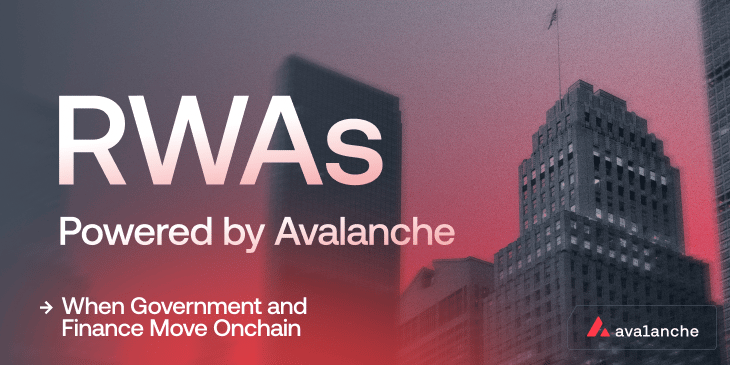
In the third episode of our Avalanche Ecosystems mini-series, we explore one of crypto’s biggest trends: real-world asset (RWA) tokenization. From land records to treasuries and equities, Avalanche enables institutions to create true onchain assets and not just wrappers. With insights from Ava Labs, Balcony, Grove, and Dinari, we explore how Avalanche is powering the next wave of RWA innovation.
We’re back! Here’s what you need to know in web3 today
📈 Markets in the Past 24 Hours
| TICKER | VALUE | 24H | |
|---|---|---|---|
 | Bitcoin | $90,368 | -2.13 % |
 | Ethereum | $3,200.41 | -5.34 % |
 | XRP | $2 | -2.81 % |
 | BNB | $873.09 | -2.60 % |
 | Solana | $133.99 | -2.70 % |
Today’s Big Story
How I Learned to Stop Worrying and Love Public Blockchains: JPMorgan Arranges USCP Issuance on Solana
JPMorgan arranged a $50 million U.S. commercial paper (USCP) issuance for Galaxy Digital, executed on Solana. It is the first time the largest U.S. bank has issued a short-term debt instrument on a public, permissionless network; a meaningful shift in how regulated debt can be issued, distributed, and settled.
1. JPMorgan endorses public blockchains for regulated issuance
JPMorgan’s prior digital-asset work (deposits, repo, intraday liquidity, collateral mobility) ran on its permissioned Kinexys infrastructure, and similar initiatives, including its OCBC’s $1B digital USCP program launched this August.
However, the bank has now begun testing public chains. Last month, JPMorgan became the first U.S. bank to issue a USD deposit token on Base, Coinbase’s public L2. The Solana USCP issuance extends that shift from payments into capital-markets instruments.
Taken together, the moves signal a progression: 1) Private pilots, 2) permissioned production, 3) public at scale.
Choosing a public chain for a regulated credit instrument broadens the set of acceptable settlement rails for institutions and for DeFi composability applied to RWAs.
2. RWAs expand into short-term corporate credit
Most tokenized RWAs to date, including treasuries, money-market funds, tokenized cash (and arguably even tokenized corporate bonds and stocks), are passive instruments with relatively minimal operational complexity.
Commercial paper introduces a more active asset class. It carries shorter durations, corporate credit risk, higher yields, and anchors liquidity management for corporates and MMFs.
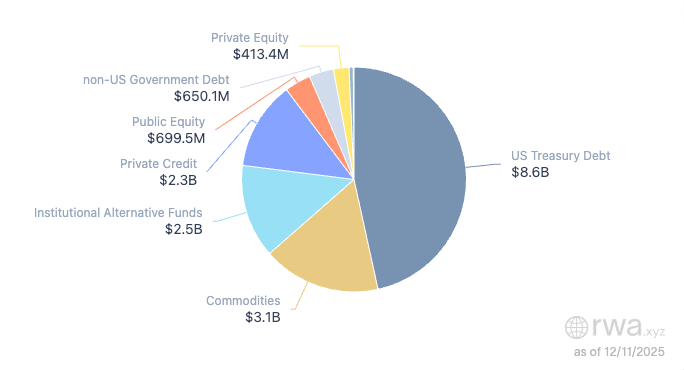
Traditional CP markets remain operationally cumbersome, with manual processes and limited settlement windows. Recording the CP lifecycle on Solana shows that public blockchains can support live short-duration credit, where issuance, distribution, and maturity are executed through programmable infrastructure rather than bilateral dealer workflows.
3. The structure of CP creates a path toward recurring on-chain liquidity
Liquidity has been the weakness of tokenized RWAs. Most tokens trade infrequently, with thin markets and fragmented venues. Commercial paper behaves differently. It rarely trades mid-cycle, but it matures quickly and is continually reissued, creating built-in turnover. MMFs must reinvest maturing paper, and corporates must roll funding.
Bringing that cycle on-chain enables a synchronized, programmable flow between borrowers and capital providers. Liquidity comes from predictable primary issuance and automated rollovers. As rollovers move to smart contracts CP begins to function as an always-on institutional funding rail. If scaled, this could become the most consistent source of activity in the RWA market.
4. The issuance highlights competition between stablecoins and tokenized cash
Settlement for this issuance occurred in USDC, showing that regulated debt can interoperate with stablecoin rails. Using USDC instead of a tokenized deposit highlights even JPMorgan, the issuer of JPM Coin, recognizes stablecoins provide continuous, global settlement capabilities that traditional rails lack.
For banks, this creates pressure. If regulated instruments can settle in stablecoins, tokenized deposits must compete on functionality. The question is whether public stablecoins or bank liabilities will dominate tokenized markets.
5. Direction of travel: actual issuance, not synthetic representations
Galaxy’s role aligns with its broader strategy. The firm previously issued tokenized shares—actual equity interests—on Solana via Superstate. Managing both equity and short-term credit on-chain positions Galaxy among the few issuers putting real instruments, not digital twins, onto public networks. For context, Galaxy Digital has invested at least $1.5 billion in SOL.
6. Demand still comes from crypto-native institutions
While JPMorgan provided the infrastructure, demand remains concentrated among crypto-aligned firms. Galaxy issued the paper, and Coinbase and Franklin Templeton were buyers. Adoption among traditional CP participants remains limited. Whether they shift from systems like DTC’s MMI is uncertain.
Tokenized issuance offers automation and fewer intermediaries, but adoption will require operating alongside existing infrastructure rather than replacing it.
Keep it real,
Chris, product and Real World newsletter at The Defiant
This is an excerpt of the full issue to be published in our Real World newsletter tomorrow.
🎬WATCH
More Than Wrappers | RWAs on Avalanche | Ecosystems, Ep. 3
In our third episode of the Avalanche Ecosystems mini-series, we dive into one of the most important trends in crypto: tokenization of real-world assets (RWAs). From land records to treasuries, private credit, and publicly traded equities, Avalanche is enabling institutions to not just issue onchain wrappers, but to create the real thing. It's tokenization the right way.
With interviews from Luigi D’Onorio DeMeo and Morgan Krupetsky (Ava Labs), Dan Silverman (Balcony), Kevin Chan (Grove) and Gabriel Otte (Dinari), we explore how Avalanche’s architecture is powering a new wave of RWAs across finance, government infrastructure, and consumer applications.
Watch the mini doc here:
This content is part of a media partnership between The Defiant and Ava Labs
Top News in the Past 24 Hours
- Superstate Debuts Direct On-Chain Stock Issuance Platform for Public US Firms Real-world asset tokenization firm Superstate, created by early DeFi founder Robert Leshner, announced today, Dec. 10, that it will let public U.S. companies issue new shares on blockchain, expanding beyond moving existing equity on-chain. Why it matters: Unlike other tokenized stock offerings, Superstate says these shares offer investors the same voting rights as traditional stock.
- ETHZilla Invests $21 Million in Zippy to Tokenize Manufactured Home Loans ETHZilla Corporation (Nasdaq: ETHZ) has acquired a 15% fully diluted stake in Zippy, a digital lending platform specializing in manufactured home loansWhy it matters: ETHZilla Corporation, formerly 180 Life Sciences, rebranded to become an Ethereum DAT company in August.
- Sei Partners With Smartphone Maker Xiaomi Layer 1 blockchain Sei has revealed a new partnership with Chinese consumer electronics giant Xiaomi, the third-largest smartphone manufacturer in the world, to preinstall crypto applications on new phones. Why it matters: Crypto apps will be installed on all new Xiaomi phones sold outside of mainland China and the United States.
Trending on The Defiant
- Payments-Focused Tempo Blockchain Launches Public Testnet
- Arkham’s 'Misleading' Zcash Tracking Claims Spark Outrage
- Crypto Market Rallies Ahead of Fed Meeting
- Swapper Finance Launches Card Deposits to DeFi via Mastercard
- Bitfinex-Backed Stable Sees Hectic Mainnet Launch as Token Price Drops
- Farcaster Abandons Social Network Strategy to Focus on Wallet
That’s it for today — if you enjoyed this newsletter, tell your friends! https://thedefiant.io/subscribe
Free newsletters
Good reporting. Delivered.
Choose your coverage: crypto and DeFi, the future of finance, or both.
Free. Unsubscribe anytime.