How 'Trustless' Is Crypto, Really?
Squiffs _ & Olivia Capozzalo
November 13, 2025
gm, Defiers!
Today’s big story:
- The Ethereum Foundation has published an on-chain manifesto emphasizing the importance of trustless design, co-authored by Vitalik Buterin
In other news:
- Hyperliquid’s liquidity vault loses $5 million
- TVL surges on XRP DeFi L1 Flare
- DEXs Aerodrome and Velodrome merge
- Is the end goal for a digital asset just getting listed? [SPONSORED]
Read more below! But first, please give our sponsors some love; they make this newsletter possible.

Stable Gain puts your stablecoins to work through professionally managed strategies. Deposit USDT/USDC, mint sbUSD, and earn up to 20% rewards. Withdraw anytime with zero lockup periods.
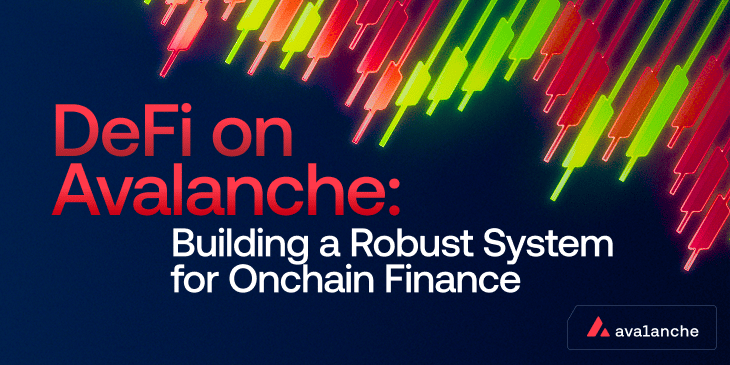
Building a lasting DeFi ecosystem is about more than chasing TVL; it’s about architecting a system that people can use to conduct business. After the initial gold rush, Avalanche is focused on a calculated new beginning, building a sustainable financial future for institutions.
Camila Russo explores this shift with Ava Labs’ Luigi D’Onorio DeMeo and the founders of BENQI, Euler Finance, and LFJ. They unpack the strategy, the tech, and the mission to build an ecosystem that is designed for the long term.

What if the future of crypto is not actually — blockchains? Giga brain @RosuGrigore, Founder and CEO of @Pi_Squared_Pi2, makes the case for a different kind of network.
Ask qs and hear him make the case why.
🎙️ Join us at 4 PM EST today for a live discussion
We’re back! Here’s what you need to know in web3 today
📈 Markets in the Past 24 Hours
| TICKER | VALUE | 24H | |
|---|---|---|---|
 | Bitcoin | $98,418 | -3.22 % |
 | Ethereum | $3,206 | -6.86 % |
 | XRP | $2.34 | -0.19 % |
 | BNB | $919.41 | -3.60 % |
 | Solana | $145.56 | -5.24 % |
Today’s Big Story
How 'Trustless' Is Crypto, Really?
Crypto is losing its identity. The cypherpunk ethos is overridden by a focus on maximal extraction; the belief in blockchain’s ability to birth a better financial system has been replaced with centralized stablechains, and the value of decentralization has devolved into a meme.
But as crypto natives capitulate on the very ideas that first brought them here, Vitalik Buterin, Yoav Weiss, and Marissa Posner of the Ethereum Foundation have published what they call “The Trustless Manifesto” - enshrining the idea that Ethereum was not created as the future of financial efficiency, but rather the future of trustless transactions.
“Every system begins with good intentions. A hosted node here, a whitelisted relayer there. Each is harmless on its own — and together they become habit. Gateways become platforms. Platforms become landlords. Landlords decide who may enter and what they may do,” the manifesto begins.
While readers may interpret the passage differently, the main takeaway is that the idealistic drive behind early crypto experiments has been lost and hyperfinancialized. This greed-driven phenomenon pushes us back towards a dependence on trust, as it is easy, comfortable, and streamlined.
The cost of trustlessness has become a limiting factor in DeFi’s greed-driven state. High costs raise overhead for development teams, and verifying information requires investors and traders to spend extra time and effort on their due diligence. In an ideal world, these costs should be considered non-negotiable, but when all parties involved are here to “make a bag,” corners get cut, and that eventually comes back to haunt everyone.
Stream Finance’s recent debacle serves as an excellent reminder that trust is exploitable, and trustlessness, while arduous, is not.
The manifesto continues: “The drift is not theoretical. It is already here. Hosted RPCs are the default. If AWS, GCP, and Cloudflare went dark, most apps would too. Sequencing is centralized by design in many rollups. Upgrade keys still exist. ‘Training wheels’ are used as an excuse to delay decentralization. ‘Self-custody’ is delegated to CEXes. Cross-chain interoperability has begun to mirror the very centralization it was meant to overcome — solvers and relayers act as gatekeepers of execution, deciding which transactions succeed and which fail.”
The Trustless Manifesto is a wake-up call to those who remain committed to the ideas of a fair financial system that doesn't fall victim to the same pitfalls as the traditional banking system, and a reminder that trustlessness is the foundation for a successful blockchain ecosystem.
Over the last few years, DeFi has lost its passion for fairness and replaced it with a passion for supercars, yachts, and “escaping the permanent underclass,” but the Ethereum Foundation’s Trustless Manifesto is a reminder that the issues it aims to solve are still very real.
Squiffs, resident degen at The Defiant
Forwarded this newsletter? Subscribe for daily insights and curated news from The Defiant team, Monday-Saturday. It’s free.
🎬WATCH
Inside the PYUSD's takeover of PayPal with May Zabaneh, VP Crypto
In the latest episode of The Defiant podcast, PayPal's VP of Blockchain, Crypto and Digital Currencies, May Zabaneh, breaks down PayPal’s move into stablecoins with PYUSD and why it matters for financial inclusion. The discussion covers the role merchants play in crypto acceptance, how DeFi and traditional finance are converging, and why interoperability will be essential in the next phase of digital payments.
The Next $100B DeFi Market: Real DNS Domains [SPONSORED]
Domains are one of the largest untapped asset classes on the internet — 360M+ names, most of them not even hosting a site. They’re traded like real estate, through slow, trust-based, broker-intermediated systems with fees as high as 30%.
D3 wants to bring this market on-chain. Unlike competitors, they're going for real DNS domains (.com, .ai, .xyz), not synthetic names. They're building as an Ethereum L2, and fully ICANN + DNS compliant, which means their domains have true rights ownership, leasing, fractionalization, collateralization, and even revenue shares.
Top News in the Past 24 Hours
- Large POPCAT Trades Result in $5 Million Loss for Hyperliquid Vault A user or entity built up a $20 million long position in the POPCAT memecoin. Once the position grew to roughly $30 million, the attacker allowed it to be liquidated, losing $3 million in the process and leaving Hyperliquid’s liquidity provider vault, HLP, holding more than $25 million worth of POPCAT. Why it matters: The attack was similar to the JELLYJELLY exploit in March.
- Flare TVL Nears Record High as Firelight Teases XRP Liquid Staking Flare, a Layer 1 network best known for bringing XRP into DeFi, is nearing its recent peak in total value locked (TVL) as liquid staking protocol Firelight prepares to launch on the Flare mainnet by the end of November. Why it matters: While other Flare protocols also allow XRP holders to lock their tokens to obtain a Flare-based representation for DeFi, those tokens are usually locked and can’t be freely used.
- Dromos Labs Merges Aerodrome and Velodrome into New DEX Aero Dromos Labs, the developer behind the decentralized exchanges Aerodrome and Velodrome, is merging the two platforms into a single DEX called Aero. Why it matters: The upgrade will also introduce a new native token for Aero, and holders of AERO and VELO tokens will be asked to transition to the new token.
Trending on The Defiant
- Large POPCAT Trades Result in $5 Million Loss for Hyperliquid Vault
- Flare TVL Nears Record High as Firelight Teases XRP Liquid Staking
- SKY Surges 14% as Savings TVL Passes $4 Billion
- Dromos Labs Merges Aerodrome and Velodrome into New DEX Aero
- Lighter Rises to Top Perp DEX by Volume, Reveals $68M Raise
- Ethereum Sees First Sustained Validator Exit Since Proof-of-Stake Shift
That’s it for today — if you enjoyed this newsletter, tell your friends! https://thedefiant.io/subscribe
Free newsletters
Good reporting. Delivered.
Choose your coverage: crypto and DeFi, the future of finance, or both.
Free. Unsubscribe anytime.