How Permissioned Crypto Protects Permissionless
Plus, Euler's founding CEO steps down

Olivia Capozzalo & Camila Russo
January 13, 2026
gm Defiers!
Today’s big story:
What Venezuela and Iran tell us about how permissioned crypto, like stablecoins, actually protects uncensorable crypto
In other news:
- Euler’s CEO steps back from day-to-day role
- Crypto market structure bill heads to key votes
- Dubai bans privacy coins trading
The Defiant’s 2025 in review:
- How Digital Asset Treasuries Went Mainstream in 2025
- RWAs Became Wall Street’s Gateway to Crypto in 2025
- Prediction Markets Expand from DeFi Niche to Global News Sources
- Stablecoins Became Crypto’s First Mainstream Use Case in 2025
- Looking Ahead: The Biggest Names in Crypto Predict New Bitcoin Highs and a Tokenization Boom in 2026
Read more below! But first, please give our sponsors some love; they make this newsletter possible.
Oasis Vault removes the single point of failure in self-custody with a 2-of-3 multisig setup. Users hold two keys, while Oasis keeps one recovery key, ensuring access is never lost. Supports BTC, ETH, tokens, and NFTs, all with privacy by default.Euler’s Founding CEO Steps Down as Protocol Refocuses on Institutions
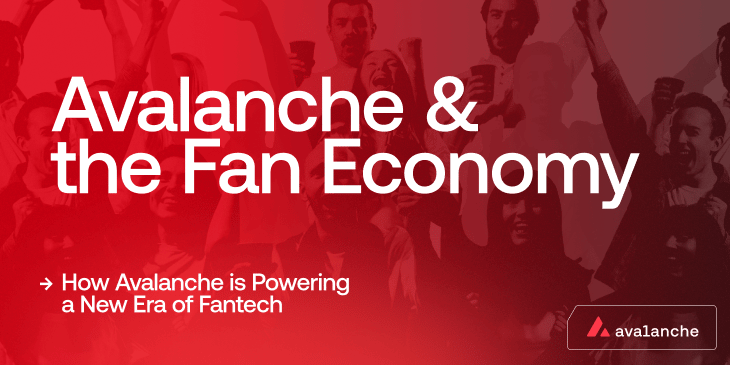
Our final ecosystem episode with Avalanche explores how blockchain is finally breaking into mainstream consumer use through fan-driven economies. The episode opens with a real-world ticketing failure at the Champions League final, exposing deeper flaws in today’s ticketing and loyalty systems, opaque infrastructure, counterfeit risk, and zero recourse for fans.
From payments and rewards to social platforms and live events, the episode shows how onchain systems can create verifiable, transferable, and programmable experiences. Featuring projects like Rain, Uptop, The Arena, and Tixbase. It highlights how Avalanche’s speed, low costs, and improved UX are enabling seamless consumer applications where crypto fades into the background. The result: better access, stronger loyalty, and direct relationships between brands, creators, and fans.
We’re back! Here’s what you need to know in web3 today
📈 Markets in the Past 24 Hours
| TICKER | VALUE | 24H | |
|---|---|---|---|
 | Bitcoin | $93,182 | 2.09 % |
 | Ethereum | $3,174.98 | 2.57 % |
 | XRP | $2.09 | 1.22 % |
 | BNB | $919.19 | 1.90 % |
 | Solana | $142.68 | 0.61 % |
Today’s Big Story
How Iran and Venezuela Highlight Crypto’s Necessary Contradiction
As two of the world’s harshest dictatorships, Iran and Venezuela, have convulsed in a matter of weeks, I’ve been thinking about cryptocurrency’s role in authoritarian regimes. On the one hand, uncensorable money offers a pathway for citizens under economic decay and political repression to preserve savings, transact beyond crumbling banks, and push back against state overreach. On the other hand, that exact characteristic — permissionless, global value transfer — also empowers the very regimes that oppress those citizens, allowing them to evade sanctions, sustain revenue streams, and blunt international pressure.
There’s no single moral answer to this tension, and there doesn’t have to be one. What’s emerging across crypto markets is a de facto two-layer system:
- Permissioned crypto: assets like stablecoins (USDT, USDC) that are tightly tied to centralized issuers and traditional finance relationships. These can be regulated, blacklisted, frozen, and coerced to comply with legal regimes.
- Permissionless crypto: decentralized assets like Bitcoin and Ethereum that, by design, cannot be programmatically censored or frozen at the protocol level.
This duality might actually protect the uncensorable layer.
By giving traditional regulators and global enforcement agencies a point of resistance (the permissioned layer), crypto avoids being portrayed as a universal tool for illicit finance.
The Two Layers in Iran and Venezuela
In Venezuela, stablecoins are everywhere. With the bolívar in free fall for years, U.S.-dollar-pegged assets like USDT have become a substitute currency for daily commerce, savings, and cross-border remittances, even used to pay for basic goods and salaries, for those lucky enough to be able to have access.
That same infrastructure, however, has also been leveraged by the state. Venezuela’s state oil company, PDVSA, has allegedly relied on USDT to settle oil transactions and evade U.S. sanctions, with court filings and reporting indicating that a significant share of export payments flowed through stablecoins rather than traditional banking rails.
That dual use has triggered enforcement. In January, Tether froze roughly $182 million in USDT across five wallets on the Tron network after requests from law enforcement, one of the largest single coordinated freezes to date. More broadly, crypto compliance firm AMLBot estimated in a report last month that Tether has frozen over $3 billion in USDT since 2023, primarily tied to sanctions evasion, fraud, and other illicit activity.
In Iran, the pattern is similar. As the rial has collapsed and domestic financial repression has intensified, citizens have increasingly turned to crypto to hedge against inflation and move value outside the banking system.
At the same time, investigators say Iran’s Islamic Revolutionary Guard Corps (IRGC) — a sanctioned entity — has used stablecoins to move funds through front companies and intermediaries abroad, with blockchain analytics firm TRM Labs reporting that over $1 billion in crypto-linked flows were connected to IRGC-associated networks between 2023 and 2025.
Both cases capture the dual nature of stablecoins:
- For individuals: It’s a store of value, a hedge against local currency collapse, a corridor for remittances, and a means of participating in global markets when local banks fail.
- For regimes: It becomes a way of sustaining revenue and bypassing global financial controls, turning crypto into de facto sanctions-evasion infrastructure.
That distinction is also made legally. Sanctions don’t necessarily prohibit serving people because of where they live, but they do prohibit facilitating designated state actors and their intermediaries. Still, in crypto it’s not always so straightforward. Wallets lack identity verification and civilians and governments share the same rails, so drawing that line in practice becomes the hardest question businesses face.
Issues around Kontigo, a YC-backed payments app, highlight the challenge. The service opened up access to dollars for Venezuelans, even as it allegedly provided channels for sanctioned financial flows. I strongly recommend you check out Fintech Biz Weekly’s investigation for more on that story:
Extreme Arguments on Both Sides
On one extreme are purists who argue that stablecoin issuers’ ability to freeze funds is reprehensible, antithetical to crypto’s original purpose. In this view, a stablecoin should be as resilient to censorship as a Bitcoin transaction and anything less is a capitulation to the legacy financial order.
On the other extreme are skeptics who see crypto’s use in sanctions evasion and conclude that crypto is primarily for criminals, states should shut it down, and regulators are right to clamp down across the board.
Both positions miss the nuance.
Stablecoins like USDT and USDC are already centralized by design: they rely on bank assets, fiat deposits, and corporate governance structures. They cannot credibly claim to be immune to law enforcement or regulatory oversight. And that’s not just acceptable — it’s necessary if crypto is to reach mainstream adoption.
If we want banks that can custody digital assets, on-ramps that make the fiat to crypto bridge seamless, merchants to accept crypto, businesses to pay crypto salaries, etc. — then we cannot simultaneously demand that stablecoin issuers allow sanctioned actors to launder money or evade global norms.
If stablecoins refuse cooperation with law enforcement, regulators will respond by banning or restricting them. By extension, they’ll end up restricting the broader crypto ecosystem, and we can say goodbye to blockchain rails for the global financial system.
The Permissioned Layer as Protection for the Uncensorable
But that’s how permissioned crypto actually protects permissionless crypto.
By acting as a pressure valve, a place where regulators can enforce compliance, permissioned assets may absorb pressure that otherwise could be directed at entirely uncensorable protocols. They offer a controlled outlet for global financial norms without destroying the permissionless foundations that allow individuals to transact beyond authoritarian reach.
Critics will worry that uncensorable crypto can also be used by rogue state actors or criminal networks. That risk is real. But it's my personal opinion that this is a risk the world should be willing to take. The benefits of blockchain rails for global finance, and of uncensorable money for the oppressed individuals in these regimes, is greater than the cost.
But crypto used by dictators and criminals should always be seen as a cost, not as a selling point. Bitcoiners that have used the recent freezing of Maduro government-linked USDT accounts as a talking point for BTC are missing the point.
BTC and ETH exist to make individuals more free. USDT and USDC can make dictators easier to stop. Confusing those roles or demanding they all serve the same purpose misunderstands both money and power.
With love,
Cami, founder of The Defiant
Forwarded this newsletter? Subscribe for daily insights and curated news from The Defiant team, Monday-Saturday. It’s free.
🎬WATCH
How Stablecoins Are Rewiring Global Payments | Borderless CPO Alex Garn
In this episode of The Defiant Podcast, Chris Storaker sits down with Alex Garn, chief product officer at Borderless, to unpack how stablecoins are quietly transforming cross-border payments — and what it actually takes to move money at scale across jurisdictions.
We explore why stablecoins are moving beyond trading and DeFi collateral into real-world enterprise payments, where they already outperform legacy rails on settlement speed, transparency, and custody — especially across emerging market corridors like Latin America and Southeast Asia.
Top News in the Past 24 Hours
- Euler’s Founding CEO Steps Down as Protocol Refocuses on Institutions Michael Bentley, co-founder of Euler Labs, the team behind multi-chain lending protocol Euler Finance, said he will step back from the protocol’s day-to-day leadership after nearly six years at the helm. Why it matters: Both Bentley and the incoming new CEO emphasized that Euler’s future involves catering to institutional demand.
- Crypto Market Structure Bill Heads to Key Senate Votes This Week Momentum is building in Washington around legislation on crypto market structure, as two U.S. Senate committees prepare for votes this week that could mark a pivotal moment for crypto regulation. Why it matters: A lot is at stake — the legislation aims to clarify how crypto markets, including DeFi, are regulated in the U.S.
- Dubai Bans Privacy Tokens on Regulated Exchanges Dubai’s financial regulator has banned privacy-focused cryptocurrencies like Monero (XMR) and Zcash (ZEC) from use on regulated centralized exchanges. Why it matters: The decision reignites a broader debate across the crypto industry over privacy versus regulation.
Trending on The Defiant
- Lighter Token Struggles as Farmers Transition to Alternative Exchanges
- Crypto Markets Stagnate as Gold and Silver Rally to New Highs
- Buterin Calls for Ethereum Updates to Ensure Blockchain Outlasts Its Developers
- A16z Crypto Shares Three Crypto Predictions for 2026
- Memecoin Market Cratered More Than 60% in 2025: Report
- Crypto Markets Edge Lower After US Jobs Miss Expectations
That’s it for today — if you enjoyed this newsletter, tell your friends! https://thedefiant.io/subscribe
Free newsletters
Good reporting. Delivered.
Choose your coverage: crypto and DeFi, the future of finance, or both.
Free. Unsubscribe anytime.