Crypto and TradFi Converge on RWAs
Plus, Zcash devs raise $25M
Olivia Capozzalo & Camila Russo
March 10, 2026
gm, Defiers!
Today’s big story:
- The convergence between crypto and traditional finance is no longer theoretical. It’s happening in real time. The harder question is what the dominant market structure for tokenized assets will look like.
In other news:
- Zcash Open Development Lab raises $25M from VCs
- Pudgy Penguins launches browser game
- Trump’s cyber strategy includes crypto
- Sahara AI’s Vision for the Agentic Era [SPONSORED]
- 7 Altcoins That Outgrew Bitcoin in 2025 — And What They Have in Common [MEDIA PARTNER]
Read more below! But first, please give our sponsors some love; they make this newsletter possible.

Ethereum's decentralised staking protocol just got a big upgrade! Saturn One brings 4 ETH validators, an RPL fee switch, and more. Stake your ETH with Rocket Pool today.
We’re back! Here’s what you need to know in web3 today
📈 Markets in the Past 24 Hours
| TICKER | VALUE | 24H | |
|---|---|---|---|
 | Bitcoin | $70,019 | 1.46 % |
 | Ethereum | $2,036.49 | 0.18 % |
 | BNB | $641.34 | 0.47 % |
 | XRP | $1.38 | 0.85 % |
 | Solana | $86.02 | 0.01 % |
Today’s Big Story
The Tokenization Race Has Started But No One Agrees on the Model
The convergence between crypto and traditional finance is no longer theoretical. It’s happening in real time.
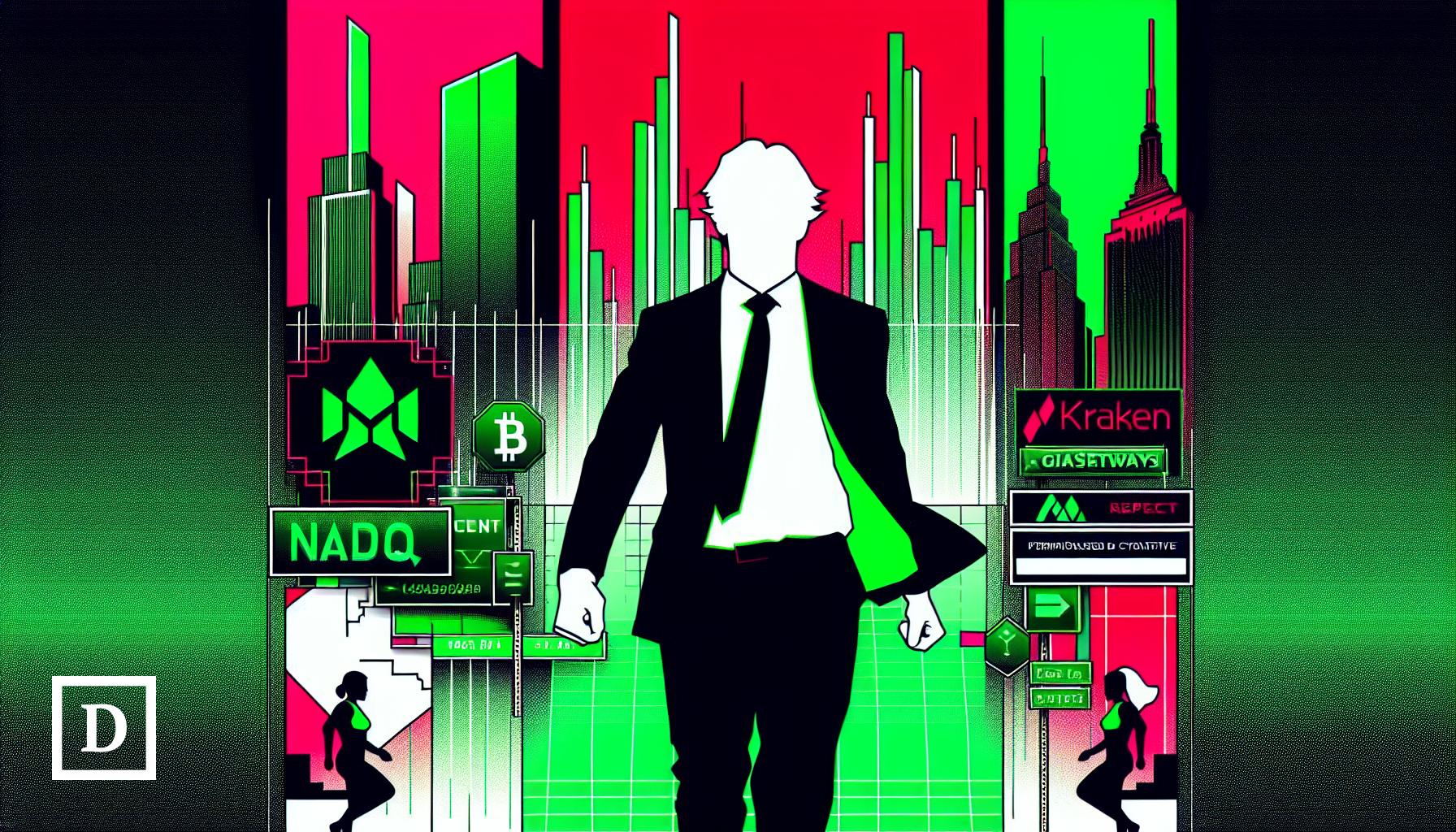
In the past week alone, we saw two notable partnerships: Kraken teaming up with Nasdaq to explore tokenized equities, and Intercontinental Exchange—the parent of the NYSE—partnering with OKX.
It’s clear traditional assets are getting tokenized. The harder question is what the dominant market structure for tokenized assets will look like.
Right now, three competing models are emerging.
Model 1: Tokenized Assets on Traditional Exchanges
The first model keeps traditional exchanges at the center.
Here, institutions like Nasdaq or Intercontinental Exchange issue tokenized representations of securities but continue to control the trading venues and regulatory structure.
Crypto platforms become distribution partners, but the core infrastructure remains within the traditional exchange ecosystem.
This approach has obvious advantages. It preserves the existing financial plumbing—clearing, settlement, listing standards, and regulatory oversight—while introducing blockchain-based settlement efficiencies.
But it also risks replicating the old system with a token wrapper.
Model 2: Tokenized Assets on Crypto Exchanges
The second model flips the power dynamic.
Instead of traditional exchanges tokenizing assets themselves, crypto platforms like Kraken or Coinbase list tokenized versions of traditional securities and distribute them to a global user base.
In this world, crypto exchanges become the primary trading venues, offering 24/7 access and programmable financial infrastructure.
For investors, this model could unlock dramatically greater accessibility: fractional ownership, global participation, and composability with DeFi.
But it raises difficult questions around custody, legal ownership, and shareholder rights.
If the token is only a synthetic representation of a stock held somewhere else, the system risks becoming a patchwork of wrapped assets.
Model 3: Brokers and Exchanges Launching Their Own Chains
There is a third model: financial platforms launching blockchains themselves.
We’re seeing early examples with companies like Robinhood experimenting with Layer-2 infrastructure to support tokenized assets.
In this vision, trading venues become blockchain operators, embedding settlement, custody, and asset issuance directly into their own networks.
This approach promises efficiency and vertical integration. But it also introduces another problem: fragmentation.
If every broker, exchange, and financial institution launches its own chain, we could end up with dozens of incompatible tokenized markets.
The Fragmentation Risk
This is the core danger of the current moment.
If every institution issues its own tokenized version of the same stock, markets could fragment into parallel liquidity pools.
You might end up with:
• one version of Tesla stock tokenized by a traditional exchange
• another issued by a crypto exchange
• yet another circulating on a proprietary blockchain
Liquidity, price discovery, and investor protections would splinter across competing ecosystems.
The promise that tokenization might bring more efficient global markets and composability could instead produce a maze of incompatible assets.
What the Optimal Model Might Look Like
The cleanest outcome would be a system where the token and the security are the same thing.
That would require two structural shifts.
First, existing equities would need to become tokenized at the issuer level, meaning the token itself represents the legal share.
In practice, that would require coordination across the institutions that run today’s capital markets infrastructure, including Depository Trust & Clearing Corporation (DTCC), stock exchanges, custodians, transfer agents, and securities regulators.
If that alignment happens, each share would have a single canonical token representation.
Second, new companies could issue shares natively as tokens from day one.
In that world, stocks would trade globally across any venue capable of listing them, whether a traditional exchange or a crypto platform.
Exchanges would compete on liquidity, distribution, and user experience, not on proprietary asset wrappers.
The Internet Capital Markets Endgame
Tokenization has the potential to create something finance has never had before: truly global, 24/7 capital market infrastructure.
But getting there requires avoiding the trap of fragmented token standards and synthetic assets.
The next few years will determine whether tokenization simply recreates the old system on new rails or unlocks a more open financial architecture.
The technology is ready. The question now is whether the institutions can agree on the rules.
With love,
Cami, founder of The Defiant
Forwarded this newsletter? Subscribe for daily insights and curated news from The Defiant team, Monday-Saturday. It’s free.
🎬WATCH
Optimism Is Done With “Ethereum Alignment” — Users Come First
In this episode of The Defiant Podcast, Cami sits down with Jing Wang to discuss how Optimism is evolving and why the debate over what counts as a “real” Ethereum L2 might be missing the point.
Watch the full interview:
Top News in the Past 24 Hours
Zcash Dev Team's New Company Raises $25M in Seed Round
The recently founded firm Zcash Open Development Lab (ZODL) — formed by the core developers of Zcash (ZEC) after they recently exited Electric Coin Capital — has secured over $25 million in seed funding to support the privacy-focused ecosystem.
Why it matters: The fundraising round marks a major milestone for the new firm, which formed after a governance dispute in January.
Pudgy Penguins Launches ‘Pudgy World’ Browser Game
Pudgy Penguins has officially launched Pudgy World, a free-to-play browser-based game. PENGU briefly rallied 7% on the news yesterday.
Why it matters: What has set Pudgy Penguins apart from other crypto-native NFT projects is an aggressive push into mainstream consumer products.
White House Cyber Strategy Puts Crypto Under Federal Umbrella
The White House recently published President Trump's Cyber Strategy for America, which states that the administration will pursue "supporting the security of cryptocurrencies and blockchain technologies" as part of its broader efforts.
Why it matters: The move in part represents recognition of crypto as critical infrastructure worthy of federal protection.
Trending on The Defiant
- Pudgy Penguins Launches ‘Pudgy World’ Browser Game
- Mastercard and Google Team Up to Build Trust for AI-Powered Shopping
- Two Largest DAT Companies Double Down on Crypto Buys
- Bitcoin Rallies Above $69,000 as Oil Reverses Sharply
- Zcash Dev Team's New Company Raises $25M in Seed Round
- Nasdaq Taps Kraken as Settlement Layer for Tokenized Stock Initiative
That’s it for today — if you enjoyed this newsletter, tell your friends! https://thedefiant.io/subscribe
Free newsletters
Good reporting. Delivered.
Choose your coverage: crypto and DeFi, the future of finance, or both.
Free. Unsubscribe anytime.