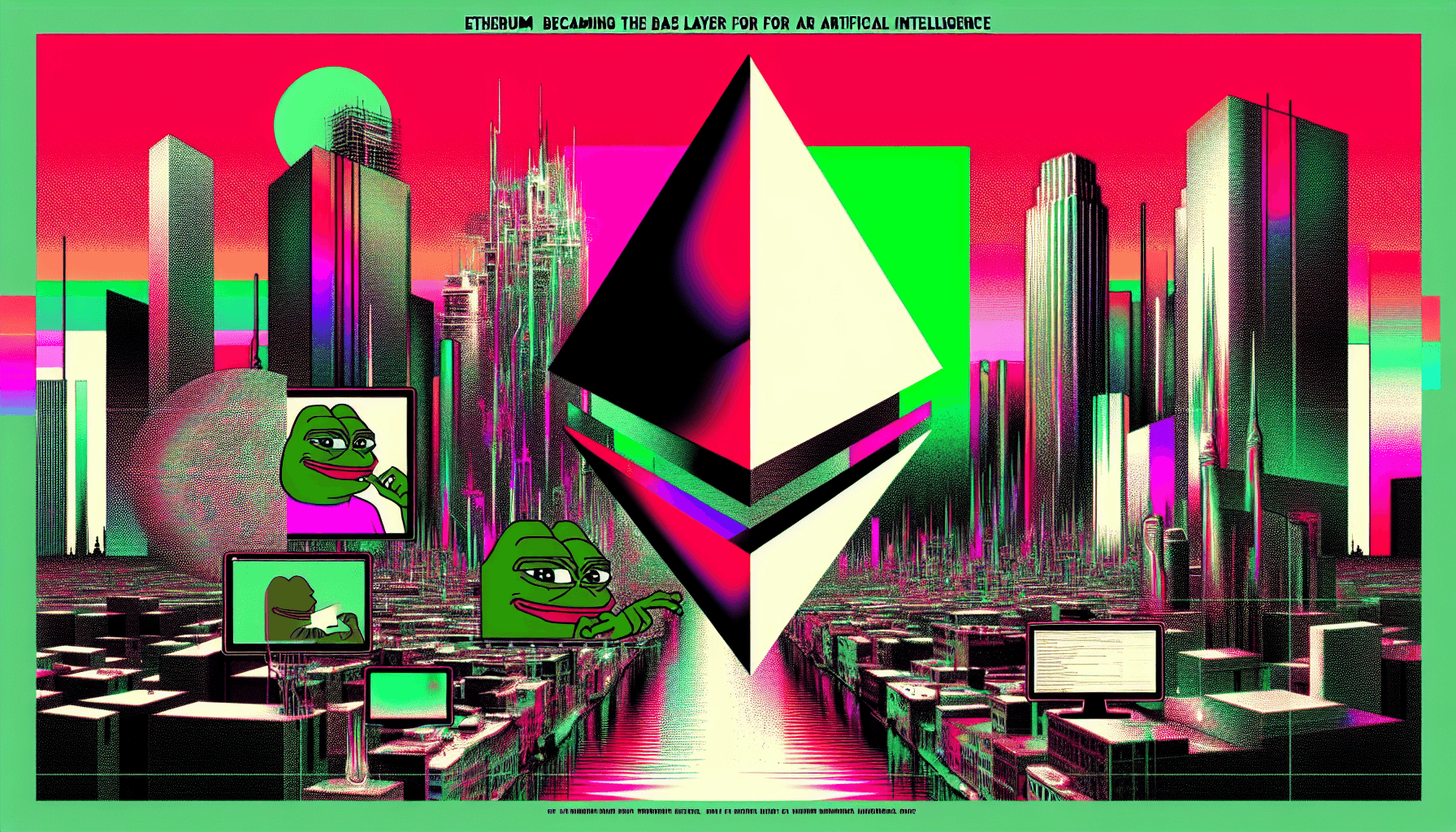
Is the EF Mandate What Ethereum Needs?
Plus, Centrifuge surges on Binance listing
Olivia Capozzalo & Camila Russo
March 17, 2026
gm, Defiers!
Today’s big story:
- The Ethereum Foundation just published a new mandate, and it has the community split between cypherpunks and pragmatists.
In other news:
- CFG spikes after Binance announces listing
- CoW Swap, Aave publish post-mortems
- Abra announces its going public via SPAC
- WhiteBIT and 10 Other Firms Enter Ghana's First Crypto Regulatory Sandbox [MEDIA PARTNER]
Read more below! But first, please give our sponsors some love; they make this newsletter possible.

Ethereum's decentralised staking protocol just got a big upgrade! Saturn One brings 4 ETH validators, an RPL fee switch, and more. Stake your ETH with Rocket Pool today.
Aligned: The Infrastructure Making Ethereum Inevitable
Less than 1% of the world’s assets are onchain.
The gap is immense, but it is accelerating and it is surmountable. To be equipped for the remaining 99% of global assets, Ethereum must prepare for the next phase of capital migration: business.
But today, building an onchain business means compiling a patchwork of solutions from a variety of vendors.
Aligned is the Ethereum migration stack helping businesses run real financial products onchain, without stitching together disparate vendors. It bundles the core infrastructure businesses need to launch, operate, and scale on Ethereum: wallets, rollups, interoperability, liquidity, and ZK.
Businesses want to run on Ethereum. Aligned makes it inevitable.
We’re back! Here’s what you need to know in web3 today
📈 Markets in the Past 24 Hours
| TICKER | VALUE | 24H | |
|---|---|---|---|
 | Bitcoin | $74,600 | 0.62 % |
 | Ethereum | $2,338.41 | 0.05 % |
 | XRP | $1.53 | -0.45 % |
 | BNB | $673.99 | -0.74 % |
 | Solana | $95.22 | 0.53 % |
Today’s Big Story
Ethereum's New Mandate Is Principled. It's Also Incomplete.
The Ethereum Foundation just published a new mandate, and it has the community split between cypherpunks and pragmatists.
On one side are those who see this as a return to first principles, a necessary reaffirmation that Ethereum is not a company and should not be run like one. On the other are builders and operators who say this is a concerning turn toward idealism when it’s more crucial than ever to build for the real world. I lean cypherpunk. But with a caveat.
Meet CROPS
At the center of the mandate is a new acronym: CROPS.
- Censorship Resistance
- Open Source and free (as in freedom)
- Privacy
- Security
This is Ethereum’s ideological core. Its reason for existing.
I agree. But I would argue CROPS is no longer enough.
It needs US. Us, symbolically, as in you, me, and the entire world. And US concretely, as in, to support applications for the entire world, the protocol also needs to prioritize:
- Usability
- Scalability
Call it CROPS & US.
A Foundation, Not a Firm
The EF mandate explicitly rejects the idea that the Foundation should act as a central coordinator or leader. Instead, it frames its role as a steward of public goods: funding research, supporting core infrastructure, and preserving Ethereum’s neutrality.
It draws clear boundaries. The EF should not pick winners, drive product strategy or act like a business
In other words, Ethereum is (once more) choosing to remain a protocol, not become an organization.
Timing
Besides the content, the timing is also what makes this contentious.
The mandate comes just after Tomasz Stańczak stepped down as EF’s executive director, following a year in which many felt the Foundation had begun to shift.
Under his tenure, there was a growing sense that the EF was responding to criticism that it had become too insular, too academic, too disconnected from the ecosystem it helped create. There were pushes toward engaging more with applications, highlighting Ethereum products, using its own ecosystem more actively, including DeFi, and moving with greater urgency in the face of competition.
All of this against the backdrop of a louder narrative: that Ethereum was moving too slowly, and losing ground to faster, more vertically integrated ecosystems like Solana.
Now, with Tomasz gone and this mandate out, many are interpreting it as a reversal. A return to the “ivory tower.” And the concern is understandable.
The World Is Already Here
Because at the same time, institutions are arriving. Tokenization is accelerating. The world is, slowly but undeniably, moving onchain.
I understand the frustration, but agree with the EF that their role is to ensure Ethereum remains neutral, credibly decentralized, resistant to capture, and able to survive without any single entity, including itself. Not to do marketing and BD.
The “walkaway test” is a powerful north star. If the EF disappeared tomorrow, Ethereum should keep running.
Still, this is where I side, at least partially, with the pragmatists: CROPS alone is not enough for Ethereum to capture the opportunity in front of it.
If Ethereum is to become the base layer for a world moving onchain, it must also scale to support global demand and be usable by people who are not crypto-native.
These shouldn’t be trade-offs against CROPS. Ethereum shouldn’t sacrifice censorship resistance for scalability, or privacy for usability. But it does need to treat Usability and Scalability as first-class goals.
Because in practice, a system that is too slow or too hard to use risks becoming irrelevant, even if it correctly tends to all its CROPS.
CROPS got Ethereum here.
CROPS + US is what gets it to the world.
With love,
Cami, founder of The Defiant
Forwarded this newsletter? Subscribe for daily insights and curated news from The Defiant team, Monday-Saturday. It’s free.
🎬WATCH
Will Aave’s New Plan Change DeFi Forever? | Stani Kulechov Explains
In this episode of The Defiant Podcast, Cami sits down with Aave founder Stani Kulechov.
Aave is navigating a pivotal moment with the recent "Aave Will Win" proposal. This initiative aims to redirect 100% of protocol revenue back to the Aave DAO, a move that many in the community have embraced. But with any major change comes scrutiny.
Watch the full interview:
Top News in the Past 24 Hours
CoW Swap Points to Legacy Code and Solver Failures in $50M Loss That Aave Attributes to Illiquid Market
Aave and CoW Protocol published separate post-mortem reports over the weekend dissecting the March 12 swap that resulted in a trader converting $50.4 million in USDT into roughly $36,000 worth of AAVE tokens, widely considered the largest execution loss of its kind in decentralized finance.
Why it matters: CoW struck a notably more self-critical tone than Aave throughout its report, acknowledging that a confirmation checkbox is an inadequate safeguard when trades involve tens of millions of dollars.
Centrifuge's CFG Token Surges 60% on Binance Listing
Centrifuge's native token CFG has rallied roughly 60% after Binance, the largest centralized exchange buy trading volume, announced it would list the token for spot trading yesterday.
Why it matters: Most of yesterday’s trading volume occured on Korea’s largest CEX, Upbit, for the CFG/KRW trading pair; the token rallied 200% when it was listed on Upbit in February.
Crypto Wealth Manager Abra to Go Public via SPAC Merger
Digital asset wealth management platform Abra announced that it has entered into a definitive business combination agreement with New Providence Acquisition Corp. III (Nasdaq: NPACU). The combined company is expected to list on Nasdaq under the ticker "ABRX."
Why it matters: The deal values Abra at $750 million pre-money, with existing backers — including Blockchain Capital and Pantera Capital — rolling 100% of their interests into the combined entity.
Trending on The Defiant
- Crypto Markets Soar as Stocks Rally, Oil Drops 5%
- Centrifuge's CFG Token Surges 60% on Binance Listing
- CoW Swap Points to Legacy Code and Solver Failures in $50M Loss That Aave Attributes to Illiquid Market
- Crypto Wealth Manager Abra to Go Public via SPAC Merger
- ETH Outperforms Large-Cap Crypto Assets as OGs Load Up
- SEC dismisses civil fraud case against BitClout founder Nader Al-Naji: U.S. Securities and Exchange Commission
That’s it for today — if you enjoyed this newsletter, tell your friends! https://thedefiant.io/subscribe
Free newsletters
Good reporting. Delivered.
Choose your coverage: crypto and DeFi, the future of finance, or both.
Free. Unsubscribe anytime.