Bitcoin for Oil?
Plus, new RWA predictions from Securitize, Keyrock
Olivia Capozzalo & Camila Russo
April 09, 2026
gm, Defiers!
Today’s big story:
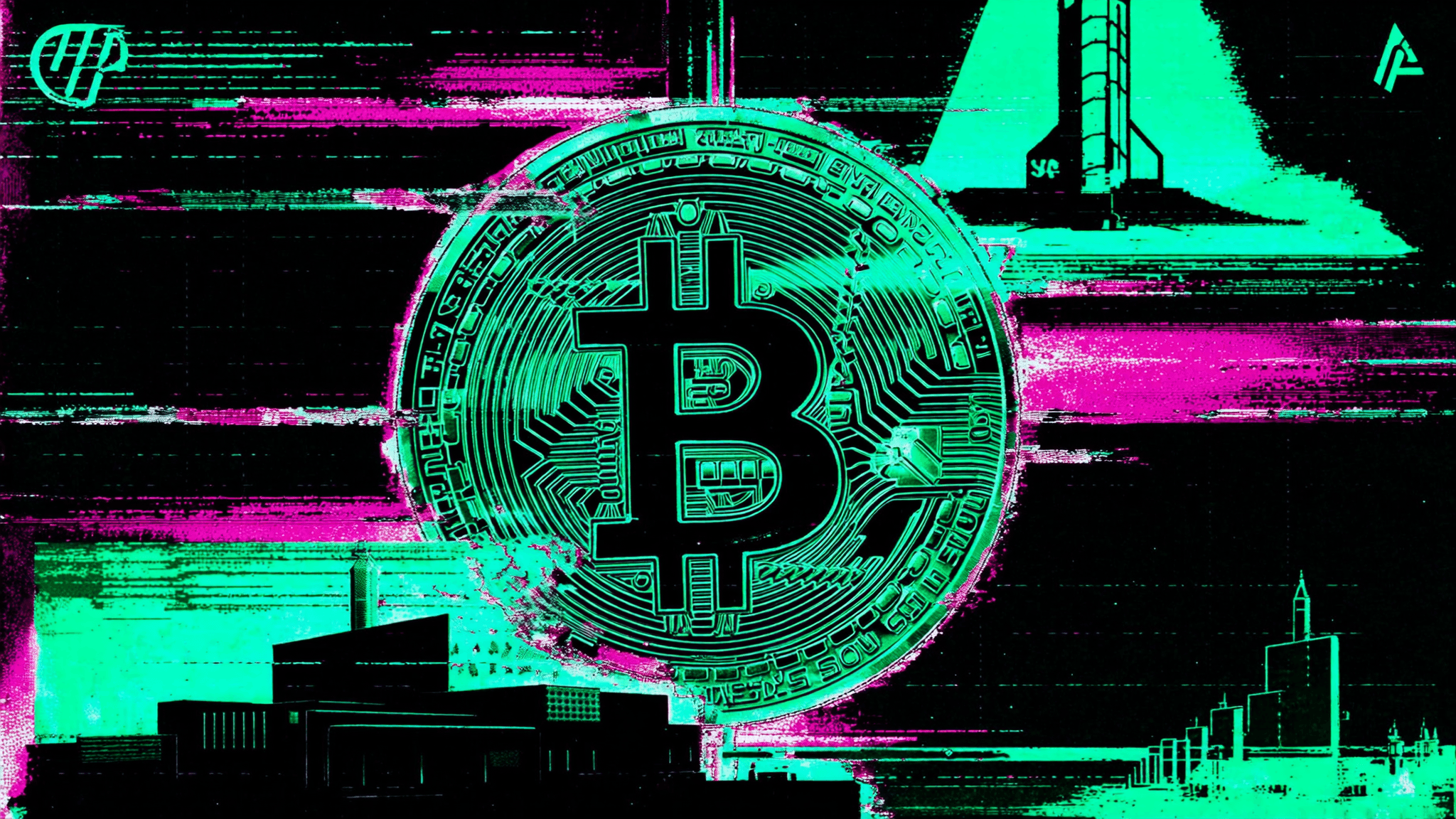
- A sanctioned regime collecting Bitcoin tolls on the world's busiest oil chokepoint. Morgan Stanley launching a BTC trust the same week. Bitcoin's moral ambiguity has never been clearer, and neither has its product-market fit.
In other news:
- MSBT sees $30M+ in day-one inflows
- New report says RWA perps are taking over
- Circle launches stablecoin settlment for TradFi
- Why Now Is the Best Time to Stake ETH on Rocket Pool [SPONSORED]

Nexo is a digital wealth platform offering crypto yield up to 15% and crypto-backed credit lines from 1.9%. Join and get 30-day access to exclusive rates. Terms apply.
| TICKER | VALUE | 24H | |
|---|---|---|---|
 | Bitcoin | $71,939 | 0.99 % |
 | Ethereum | $2,209.54 | -0.12 % |
 | XRP | $1.35 | -0.58 % |
 | BNB | $604.5 | -0.11 % |
 | Solana | $83.11 | -0.11 % |
Iran's Bitcoin Toll Booth Is the Bull Case
Yes, Iran using Bitcoin to evade sanctions provides the “crypto is for crime” crowd more ammo. But it’s still bullish for BTC.
This week, an FT report said Iran has started demanding Strait of Hormuz transit tolls in BTC or Chinese yuan. Tehran controls access to the world’s most important oil chokepoint and appears to be turning that access into a bargaining chip in its ongoing war with the U.S. Reuters reported that Tehran has explicitly tied ship fees to its peace demands, and other reports say Iranian officials have justified the tolls as payment for the burden of war.
So, Iran, a sanctioned regime, is using a payment rail designed to move outside the system Washington controls.
Crypto analytics firm TRM Labs says the regime has accepted Bitcoin, and possibly USDT, for passage through one of the most strategically important oil passages in the world. TRM said the system was effectively operating even before the end of March, and that charges could run as high as $2 million per vessel. The UN’s shipping agency and multiple governments have pushed back, saying tolls in the strait violate long-standing freedom-of-navigation norms.
If true, it strengthens Bitcoin’s original use case, playing out at the highest level of geopolitics.
Bitcoin advocates argue that the asset’s greatest value lies in censorship resistance: the ability to move value outside the traditional financial system, beyond the reach of banks, sanctions, or state gatekeepers. Iran reportedly using Bitcoin to extract payment from global shipping companies is a brutal demonstration of that thesis. Bitcoin works as uncensorable money. It works even when the user is a sanctioned state.
Censorship resistance cuts both ways. It can help dissidents, savers, and ordinary people living under inflation, capital controls, and authoritarian rule. It can also help the authoritarian state itself route around those same controls. The same property that makes Bitcoin liberating for the oppressed can make it useful to the oppressor. That contradiction proves Bitcoin is effectively neutral infrastructure. It does not ask or care whether its user is virtuous. It simply works.
And the clearest example of this neutrality: Wall Street continues to stretch its ties with Bitcoin in the same week Iran says it's using the cryptocurrency to evade sanctions.
Morgan Stanley just launched its own Bitcoin trust this week, explicitly pitching it as a way for advisors and clients to gain exposure to Bitcoin through a trusted wrapper. Morgan Stanley’s product is a direct challenger to BlackRock’s roughly $55 billion IBIT fund.
In other words, the world’s biggest financial firms are embracing Bitcoin despite the fact that its neutrality makes it attractive to everyone from sovereign actors to criminals to asset allocators.
Then there is the Trump-linked side of the story. World Liberty Financial, the DeFi venture affiliated with the Trump family, has borrowed roughly $75 million in stablecoins on Dolomite by posting billions of its own WLFI tokens as collateral. The borrowed assets included USD1, the stablecoin tied to the WLFI ecosystem, and USDC. Because Dolomite is also the infrastructure partner behind World Liberty Markets, the setup means a politically connected crypto project is not just issuing tokens and stablecoins, but also using its own DeFi rails to leverage its own token treasury.
Crypto has come a long way from the fringe. It is no longer just the tool of cypherpunks, darknet markets, or retail speculators. It is now showing up in presidential orbit, in statecraft, in sanctions evasion, in ETF wrappers, and in the plumbing of global capital markets.
At this point, Bitcoin’s core value proposition looks hard to dispute. It is censorship-resistant digital gold. That is why it is wanted by people seeking freedom, by states seeking leverage, by criminals seeking escape hatches, and by Wall Street seeking uncorrelated returns. The moral ambiguity is real. So is the product-market fit.
With love,
Cami, founder of The Defiant
Forwarded this newsletter? Subscribe for daily insights and curated news from The Defiant team, Monday-Saturday. It’s free.
How to Put Bitcoin to Work in DeFi
In episode 4 of Beyond Digital Gold: A Bitcoin DeFi Docu-series together with StarkWare, we break down the real ways people are putting their Bitcoin to work right now:
• borrowing against BTC without selling it
• earning yield through lending and staking
• spending BTC through Lightning
• providing liquidity in DeFi
• using more advanced structured BTC yield strategies
If you hold BTC and want to understand the real options for using it without just selling it, this episode is for you.
Morgan Stanley's Bitcoin ETF MSBT Sees $30.6M in Inflows on First Day
Morgan Stanley's spot Bitcoin (BTC) ETF, MSBT, kicked off trading as expected on Wednesday, April 8, on NYSE Arca. The fund saw a relatively strong debut, with $30.6 million in net inflows on its first day.
Why it matters: Morgan Stanley’s ETF launched as the lowest-fee product in the sector.
Distributed Tokenized RWA Market to Hit $400B by 2030: Keyrock, Securitize
New research from Keyrock and Securitize projects that the distributed RWA market — meaning tokenized assets that are freely transferable on-chain — will grow from around $29 billion today to $400 billion by 2030 as a base case. The joint report also flags perpetual futures as the fastest-growing on-chain channel for RWA exposure.
Why it matters: The report attributes the surge in RWA perps trading largely to Hyperliquid's HIP-3 upgrade, which enables permissionless deployment of perpetual futures markets.
Circle Launches Stablecoin Settlement Solution for TradFi Institutions
Circle recently launched Circle Payments Network (CPN) Managed Payments, a stablecoin settlement solution designed to simplify stablecoin transactions for traditional financial institutions.
Why it matters: Participating firms interact solely in fiat, while Circle handles the crypto rails in the background.
Trending on The Defiant
- Visa Rolls Out AI Agent Shopping Infrastructure Globally
- Biconomy, Ethereum Foundation Unveil Execution Standard for AI Agents
- Securitize Partners with Currenc Group to Tokenize Shares on Ethereum and Solana: Securitize
- Bitcoin Hovers Around $69,000 as Trump's Iran Deadline Looms
- DeFi Lending's Risk-Reward Ratio Sparks Debate Between Researchers and Curators
- Sky Protocol Proposes Two Structural Upgrades to Strengthen Capital Protection Framework: Sky Governance
That’s it for today — if you enjoyed this newsletter, tell your friends! https://thedefiant.io/subscribe
Free newsletters
Good reporting. Delivered.
Choose your coverage: crypto and DeFi, the future of finance, or both.
Free. Unsubscribe anytime.