$2B TVL and No Backlash - How Plasma Defied the Odds

Camila Russo & Olivia Capozzalo
September 25, 2025
gm, Defiers!
Today’s big story:
- Plasma just launched its mainnet beta and native token XPL, becoming a top-traded asset across CEXs and DEXs within hours.
In other news:
- SharpLink to issue its shares on Ethereum
- ASTER breaks all-time high as DEX flips Hyperliquid
- DePIN fees hit new highs, while sector tokens struggle
- 1inch leads the way for cross-chain DeFi [SPONSORED]
Read more below! But first, please give our sponsors some love; they make this newsletter possible.
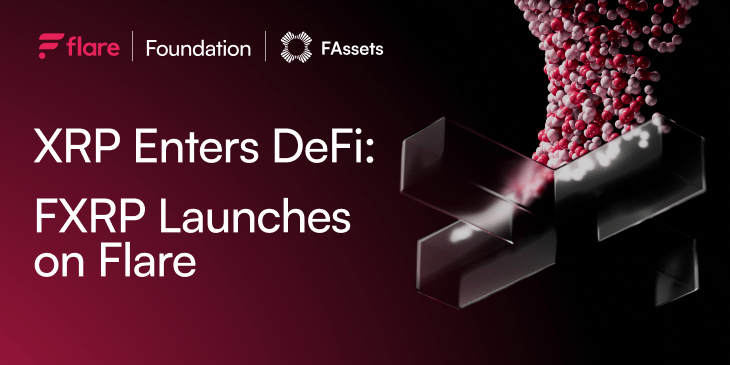
FAssets are LIVE on Flare mainnet!
Flare’s first FAsset, FXRP, is now live on mainnet, starting with FXRP, a 1:1 representation of XRP. The launch gives XRP holders access to DeFi tools, including lending, liquidity, and soon liquid staking. FXRP can be minted directly or swapped on SparkDEX, BlazeSwap, and Enosys, with incentives offering up to 50% APR. The protocol has undergone multiple audits, bug bounties, and continuous monitoring. FXRP marks the beginning of Flare’s XRPFi ecosystem and a new chapter for XRP utility
We’re back! Here’s what you need to know in web3 today
📈 Markets in the Past 24 Hours
| TICKER | VALUE | 24H | |
|---|---|---|---|
 | Bitcoin | $111,666 | -1.47 % |
 | Ethereum | $4,001.76 | -3.82 % |
 | XRP | $2.83 | -3.57 % |
 | BNB | $996.3 | -1.47 % |
 | Solana | $201.58 | -5.63 % |
Today’s Big Story
Plasma Just Pulled Off the Most Successful L1 Launch
Plasma is only a day old, but it’s already more successful than most Layer 1 chains.
The payments-focused Layer 1 launched with $2.6B market cap, $10B fully diluted valuation, and a full DeFi ecosystem already live. It also pulled off a pre-launch campaign that drove stablecoin deposits leading to $2B in TVL on day 1 of mainnet, a feat no other Layer 1 has managed.
While the rise of Plasma might look sudden, the truth is that this was a carefully orchestrated process, as Plasma CEO Paul Faecks said on The Defiant podcast.
So, how did a new chain manage to attract billions in stablecoin liquidity from day one?
Through a clever mechanism that flipped the script on traditional points programs: instead of vague engagement farming, Plasma ran a pre-deposit campaign that required users to bridge stablecoins in advance in order to access its public token sale.
“We sold 10% of the supply to anyone who passed KYC and pre-bridged stablecoins. That’s where the first $1B came from. The second billion came through a Binance Earn product tied to Plasma.”
Paul Faecks, CEO of Plasma on The Defiant Podcast
A Stablecoin Chain
Plasma, which is backed by Tether and Tether CEO Paolo Ardoino, is optimized and purpose-built for stablecoins.
“We saw that two chains dominate stablecoins — Ethereum mainnet and Tron. But neither was built just for that. You can make very different choices if all you focus on is stablecoins. And we saw that as a massive opportunity.”
Paul Faecks, CEO of Plasma on The Defiant Podcast
This means:
- Gasless USDT transfers for cheap, high-volume payments
- Purpose-built consensus (Fast HotStuff variant)
- Native USDT support at the chain level
- Early integrations with Aave and Pendle for stablecoin yield
- A future bridge for native Bitcoin collateral, not wrapped WBTC
“I truly believe stablecoins will be a trillion-dollar market. We’re about a quarter of the way there already. Plasma is about building the infrastructure for that future.”
Paul Faecks, CEO of Plasma on The Defiant Podcast
Emerging Markets Focus
While most L1s chase U.S. fintech partnerships or try to attract TradFi apps, Plasma is going the opposite way, leaning hard into emerging markets where stablecoins already have product-market fit.
“In the U.S. and Europe, traditional banking works pretty well. That’s not where the unlock is. Our focus is Southeast Asia, Turkey, South America, where stablecoins are a meaningful improvement over the local banking system.”
Paul Faecks, CEO of Plasma on The Defiant Podcast
In that light, the gasless USDT is a competitive strike against Tron, which had become the de facto payments chain in places like Argentina and Nigeria. But Tron transactions now cost $2–3 on average, eroding its edge.
Plasma is also planning to decentralize quickly.
“We’re very aggressively going to decentralize as soon as we’re live. No one — not Tether, not myself — should have centralized control over the chain.”
Paul Faecks, CEO of Plasma on The Defiant Podcast
What’s Next: From XPL Incentives to Real-World Rail Integration
Plasma still has 30% of its total token supply locked in its “Ecosystem & Growth” allocation and the team has already said they’ll be using XPL to incentivize DeFi usage.
“We will incentivize DeFi in ways we think are in the long-term interest of the network.”
Paul Faecks, CEO of Plasma on The Defiant Podcast
And while Plasma is focused on crypto-native flows for now (Binance, Aave, Pendle), the roadmap includes plugging into real-world fintech and payments rails — Stripe, PayPal, and beyond.
“We’re already working with some of the large payments companies. I wouldn’t underestimate how important the exchange-native flows are right now. But we’re positioning for where the world is going — stablecoin payments as a core global infrastructure.”
Paul Faecks, CEO of Plasma on The Defiant Podcast
Credit Where Credit’s Due
I’ve been openly skeptical about the wave of new stablecoin-focused Layer 1s.
Most feel more like token-first cash grabs than infrastructure that the industry genuinely needs. Stablecoins are already thriving on Ethereum, Tron, Solana, and L2s — so why spin up an entirely new chain just to move dollars around?
I still believe that’s the case, but for now, Plasma at the very least deserves credit for a successful launch.
Every participant in Plasma’s pre-deposit campaign received an allocation of ~9,304 XPL, or around $8,390 to $10,000 at the time of the mainnet launch. Participants are thrilled. In 2025, where nearly every drop ends in backlash, it’s a rare win.
Will it become the global payment layer it claims to be? That depends on more than TVL and Binance integrations. It depends on real-world traction, regulatory resilience, and an ability to keep emerging market users transacting at scale.
For now it at least deserves the benefit of the doubt.
With love,
Cami, founder of The Defiant
Forwarded this newsletter? Subscribe for daily insights and curated news from The Defiant team, Monday-Saturday. It’s free.
🎬WATCH
$100 Million DeFi DAT Chooses ETH | Ryan Zurrer
On the latest episode of The Defiant Podcast, Vinny sat down with crypto pioneer Ryan Zurrer to explore the strategy behind Game Square, the Jerry Jones-backed media powerhouse that bet $100 million on Ethereum instead of Bitcoin.
Ryan, who co-wrote the MakerDAO whitepaper and now leads Dialectic, shares why Ethereum dominates 5 out of 6 real-world crypto use cases, from stablecoins to DeFi, and how it’s emerging as the financial substrate of the future. The conversation dives deep into the evolution of DeFi, the lessons learned from past crypto cycles, and the importance of decentralization and fair launches in building sustainable ecosystems.
Top News in the Past 24 Hours
- Joe Lubin’s SharpLink to Tokenize SBET Shares on Ethereum via Superstate ETH treasury firm SharpLink Gaming, chaired by Consensys founder Joseph Lubin, said it will tokenize its Nasdaq-listed SBET shares on the Ethereum blockchain. Why it matters: Though several U.S. firms, including Galaxy Digital, have now natively issued their stock on Solana, SharpLink appears to be the first to do so on Ethereum.
- Aster Token Hits All-Time High Amid Layer 1 Plans Aster continues to hold the place of top perps DEX, recently overtaking Hyperliquid. After the DEX’s CEO teased plans to launch a Layer 1, the protocol’s native token, ASTER, broke a new all-time high above $2.40. Why it matters: As we’ve reported, on-chain perp trading has taken off this year, but the sector was dominated by Hyperliquid since its TGE in November — until very recently.
- DePIN Fees Hit All-Time High Decentralized physical infrastructure (DePIN) tokens have struggled so far in 2025, but activity in the sector continues to grow, pushing fees generated to all-time highs over the last month. Recent activity was boosted by a partnership between decentralized wireless provider Helium and Solana Labs’ web3 smartphone, Solana Seeker.Why it matters: DePIN is still an emerging sector, and represents a not strictly financial use case for blockchain, integrating it into an existing real-world infrastructure, like wireless, compute and data storage.
- Feature: UNI Holders Slam Lack of Rev Share as Uniswap Sees Record Volumes Uniswap, the second-largest DEX by trading volume, is nearing $1 trillion in yearly volumes, but holders of the platform’s UNI token are not reaping the benefits of its success.
Trending on The Defiant
- Franklin Templeton Expands Benji Tokenization Platform to BNB Chain
- Swarm to Launch Tokenized Stocks on Plasma Mainnet
- Crypto Markets Recover Slightly as Signs Point to Late Cycle Phase
- Crypto Treasury Activity Surges as DATCOs Expand Holdings
- Keeta Token Rallies on Mainnet Launch
- Crypto Markets Slide as Sentiment Echoes 2019, Analysts Say
That’s it for today — if you enjoyed this newsletter, tell your friends! https://thedefiant.io/subscribe
Free newsletters
Good reporting. Delivered.
Choose your coverage: crypto and DeFi, the future of finance, or both.
Free. Unsubscribe anytime.