Onchain Money Has Entered the Real World
A Turning Point for Everyday Onchain Use
For years, the idea that people would use digital money in ordinary life has been more aspiration than reality. The industry talked about seamless global payments, instant settlement and true ownership, yet most real-world workflows still felt experimental. Daily spending often required technical knowledge, patience or trust in custodians who held the keys on behalf of the user.
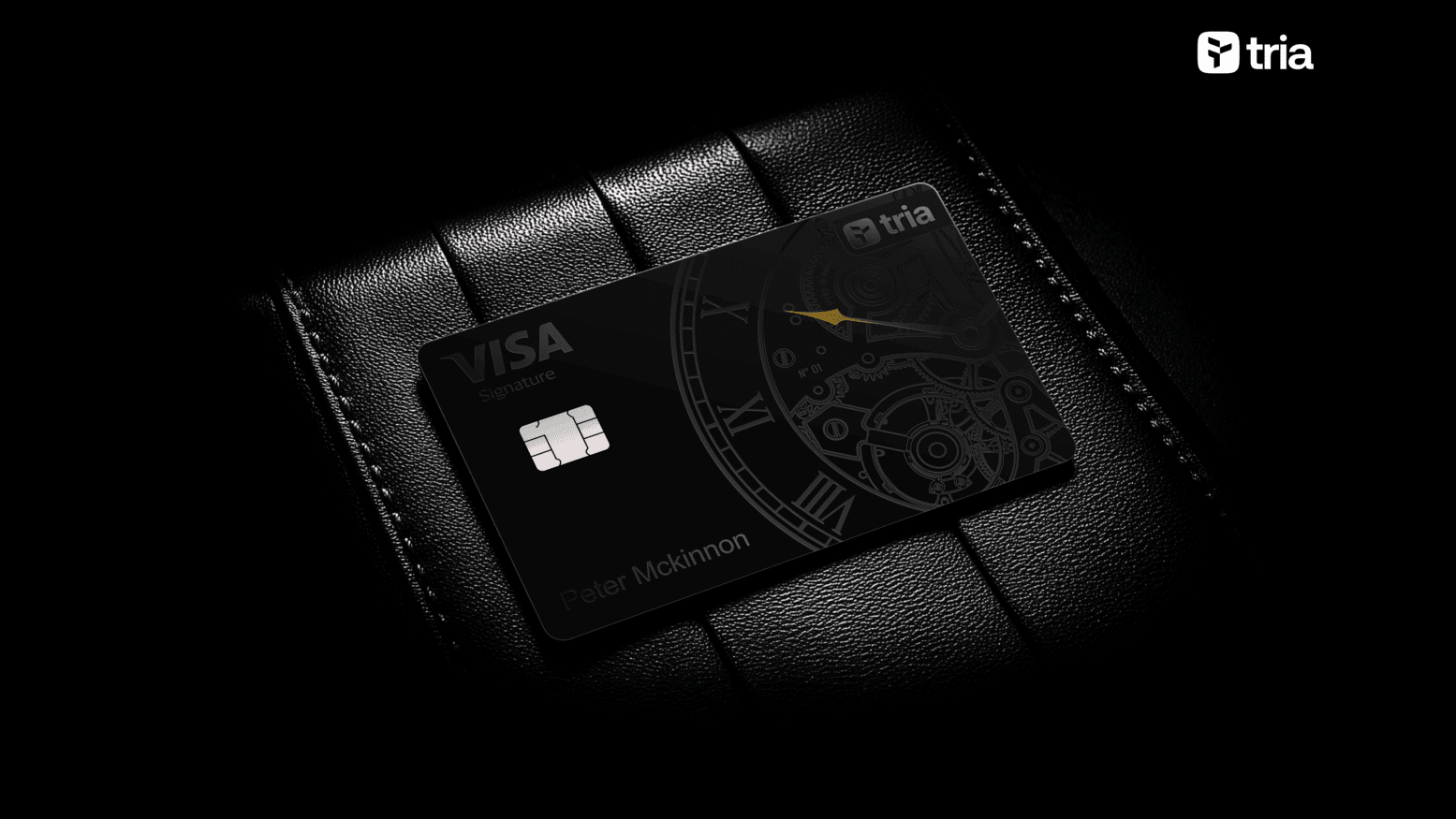
The first three months of Tria’s closed beta show that this long-promised shift is finally taking shape. More than 50,000 people have already begun using the platform. The cards they control are being tapped in supermarkets and airports. Travelers are discovering that typical bank cards charge foreign exchange fees in the two to four percent range on every purchase, while Tria routes cross-border spend through onchain execution that keeps fees at or under one percent. In many cases, spending abroad with Tria is cheaper than using a locally issued card.
Over the first 90 days, these patterns pushed more than 20 million dollars in real onchain spend and settlement. The adoption curve accelerated sharply on November 19, when users moved 1.12 million dollars in a single day. Most consumer Web3 products take many quarters, or even years, to reach that level of daily activity.
Self-Custody Without Barriers
Self-custody has always represented the principle that users should own and control their assets. The reality has been more complex. Everyday actions involving wallets, bridges, chain switching and gas decisions have made full control feel like a workflow designed for specialists. People who wanted simplicity often gave up custody altogether.
The early Tria usage patterns show that this tradeoff is disappearing. Assets remain in the wallets people already trust. The complexity of chain selection and routing is handled beneath the surface. Users simply spend, trade and move value in a flow that feels as familiar as a modern banking app. When self-custody becomes intuitive, people use it without hesitation or new learning curves. The rapid adoption of Tria’s system is the clearest evidence of this shift.
Community-Driven Acceleration
Momentum of this kind rarely happens in isolation. Weeks before the 20 million dollar milestone, Tria’s community round on Legion drew 66.7 million dollars in commitments for a 1 million dollar allocation. More than 4,500 people applied and over 1,500 were accepted, with priority given to contributors who had supported the mission early. These cardholders, testers, translators, ambassadors and partners are the same individuals who now help drive real usage across the platform. As a result, ownership and participation are rising together, which is one of the healthiest signs of network growth.
Momentum of this kind rarely happens in isolation. Weeks before the 20 million dollar milestone, Tria’s community round on Legion drew 66.7 million dollars in commitments for a 1 million dollar allocation. More than 4,500 people applied and over 1,500 were accepted, with priority given to contributors who had supported the mission early. These cardholders, testers, translators, ambassadors and partners are the same individuals who now help drive real usage across the platform. As a result, ownership and participation are rising together, which is one of the healthiest signs of network growth.
More than 6,000 ambassadors are active today, helping educate new users and align the community around the values of self-custody and open access. A global points system will launch soon that rewards everyday actions, which will allow the momentum to compound even more quickly.
Infrastructure That Makes the Experience Possible
The smooth experience users feel on the surface is powered by substantial infrastructure underneath. Tria runs on BestPath AVS, a routing and settlement engine that operates across EVM chains, SVM, Cosmos IBC and Bitcoin L1. Every tap, swap or transfer is processed as an intent. A network of solvers competes to execute that intent along the most efficient route available. Users are not exposed to bridges, manual routing decisions, gas selection or custody risk.
BestPath is integrated with more than 70 protocols and already supports ecosystems such as Arbitrum Orbit, Polygon AggLayer, Movement, Injective, Morph and Merlin. Across this broader ecosystem, BestPath has now processed more than 70 million dollars in transactions. The same pattern that appears inside Tria is visible across partners. When routing is reliable and self-custodial from start to finish, usage grows naturally.
How People Are Using the System Today
The behavior behind the numbers is consistent. People want to remain fully self-custodial without the stress of managing networks manually. They want to spend globally without rebuilding their setup every time they travel. They want to swap assets without using bridges or adjusting gas. They want a single place where top-ups, card spend, swaps and transfers work predictably.
These are the actions that are now scaling the fastest. None require the user to think about which chain they are on. None require any specialized workflow. Everything operates beneath the surface.
This shift represents an important milestone for the entire ecosystem. Crypto is starting to behave like a usable financial layer rather than a specialist environment.
A Milestone and a Beginning
The first 20 million dollars in spend and settlement show that a unified onchain experience can work at consumer scale. People are choosing self-custody when it feels natural. They are choosing global, low-cost settlement when it works without effort. They are choosing real ownership when it fits easily into their daily routines.
This is only the starting point. Card access is expanding to more regions. Direct spend support is being extended to thousands of assets. Yield, automation and credit features are being developed with full self-custody as a core requirement. BestPath AVS is progressing toward becoming the default network for onchain routing, payments and execution for autonomous agents. Staking, loyalty systems and governance will give users a meaningful voice in how the network evolves.
The guiding mission remains clear. Digital money should be usable everywhere. It should be global. It should be self-custodial. And the people who rely on it should directly benefit from its growth. The first three months of Tria’s closed beta show that the foundation is in place. The momentum is real. The next phase is already forming. Onchain money should work everywhere. It is beginning to do exactly that.
About Vijit Katta
Vijit is the CEO and Co-founder of Tria, with over a decade of experience across entrepreneurship, commercial strategy, and early-stage investing. He built Polygon’s in-house accelerator, funding early-stage projects; founded a healthtech startup in Austria, and led commercial strategy for multiple 9-figure portfolios at GSK and AstraZeneca; he holds a CS degree from BITS Pilani and an MBA from INSEAD.
About Tria
Tria is a self-custodial neobank that unifies spending, trading, and earning across all chains — without bridges, gas, or custodians. Built for both humans and AI, Tria makes money programmable, enabling anyone or any agent to transact natively on-chain. Powered by its interoperability layer, BestPath AVS, Tria abstracts away the complexity of crypto to deliver instant, global, and autonomous finance
Advertisement
Free newsletters
Good reporting. Delivered.
Choose your coverage: crypto and DeFi, the future of finance, or both.
Free. Unsubscribe anytime.