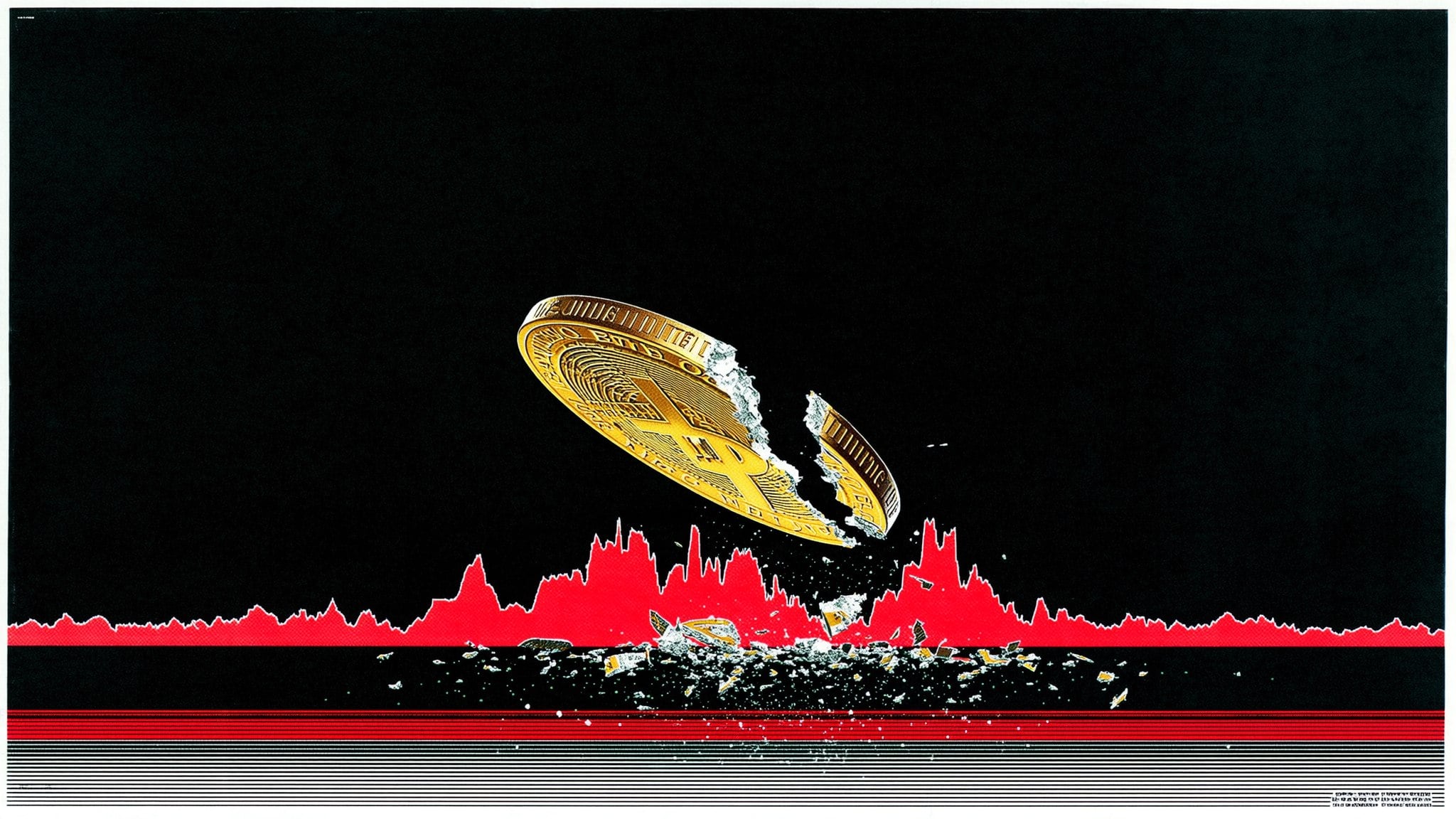
Bitcoin Breaks 200-Week Moving Average for First Time Since 2022 as Jobs Report Reprices Fed Cuts

Bitcoin fell below its 200-week moving average, a long-term trend marker while spot prices dropped below $61,000 for the first time since the 2022 bear market low.
The broader selloff has pushed BTC down roughly 17% over seven days and more than 25% from its 30-day range, per CoinGecko data. At the time of publication, BTC traded around $60,839, more than 50% below its all-time high of $126,080, set in October 2025.
The trend break came within hours of a stronger-than-expected US jobs report that pushed markets to reconsider the timing of Federal Reserve rate cuts.
The Bureau of Labor Statistics reported 172,000 nonfarm payrolls added in May, well above the ~85,000 forecast. The unemployment rate held at 4.3%.
The 200-Week Moving Average
The 200-week moving average is a widely tracked long-term trend line. It marked the bottom of every Bitcoin bear cycle from 2015 through 2020. Bitcoin spent roughly 16 months below the line after breaching it in June 2022 before recovering in late 2023. The current reading sits near $61,000, per CoinGlass.
A close below the line, not just an intraday touch, carries more weight as a signal. As of Friday, Bitcoin had touched but not yet closed a weekly candle below it.
The $60,000 Options Wall
More than $1.1 billion in notional open interest sits at the $60,000 put strike on Deribit, the largest concentration at any single strike, the Deribit website shows.
Investors have bought those puts as a hedge against a deeper drawdown. But the structure creates a feedback loop: as market makers delta-hedge their short-put exposure, they are mechanically forced to sell spot BTC or futures when the price nears $60,000. That selling can accelerate a decline.
The week has already produced substantial forced selling. CoinGlass data show more than $617 million in BTC long positions liquidated over the past 24 hours, with broader crypto liquidations topping $737 million in BTC alone.
The AI Rotation Frame
Strategy executive chairman Michael Saylor, whose company holds 843,706 BTC per CoinGecko data, has framed the selloff differently. In a post on X Thursday, Saylor argued that capital markets are funding AI infrastructure at historic scale — roughly $400 billion over six months — and that Bitcoin's weakness reflects a rotation rather than an impairment of the asset itself.
"This is a capital rotation, not a Bitcoin impairment. Volatility creates opportunity," he wrote.
The Defiant has covered Strategy's recent treasury moves, including its bond purchase earlier this month, as the arc around its BTC position has evolved.
Macro Context
The May jobs report was the immediate trigger on Friday. The payrolls beat sharply reduces the probability of a near-term Fed rate cut. Lower rates would generally be supportive of risk assets, including crypto. Futures markets shifted to price in fewer cuts through year-end following the 8:30 a.m. ET release.
The jobs data also arrived at the end of what some trackers have called Bitcoin's worst week of 2026, with the largest US spot Bitcoin ETFs reporting net outflows for more than 11 consecutive sessions and roughly $3.5 billion withdrawn from the products over that stretch.
Advertisement
Get an edge in Crypto with our free daily newsletter
Know what matters in Crypto and Web3 with The Defiant Daily newsletter, Mon to Fri
90k+ Defiers informed every day. Unsubscribe anytime.