Advertisement

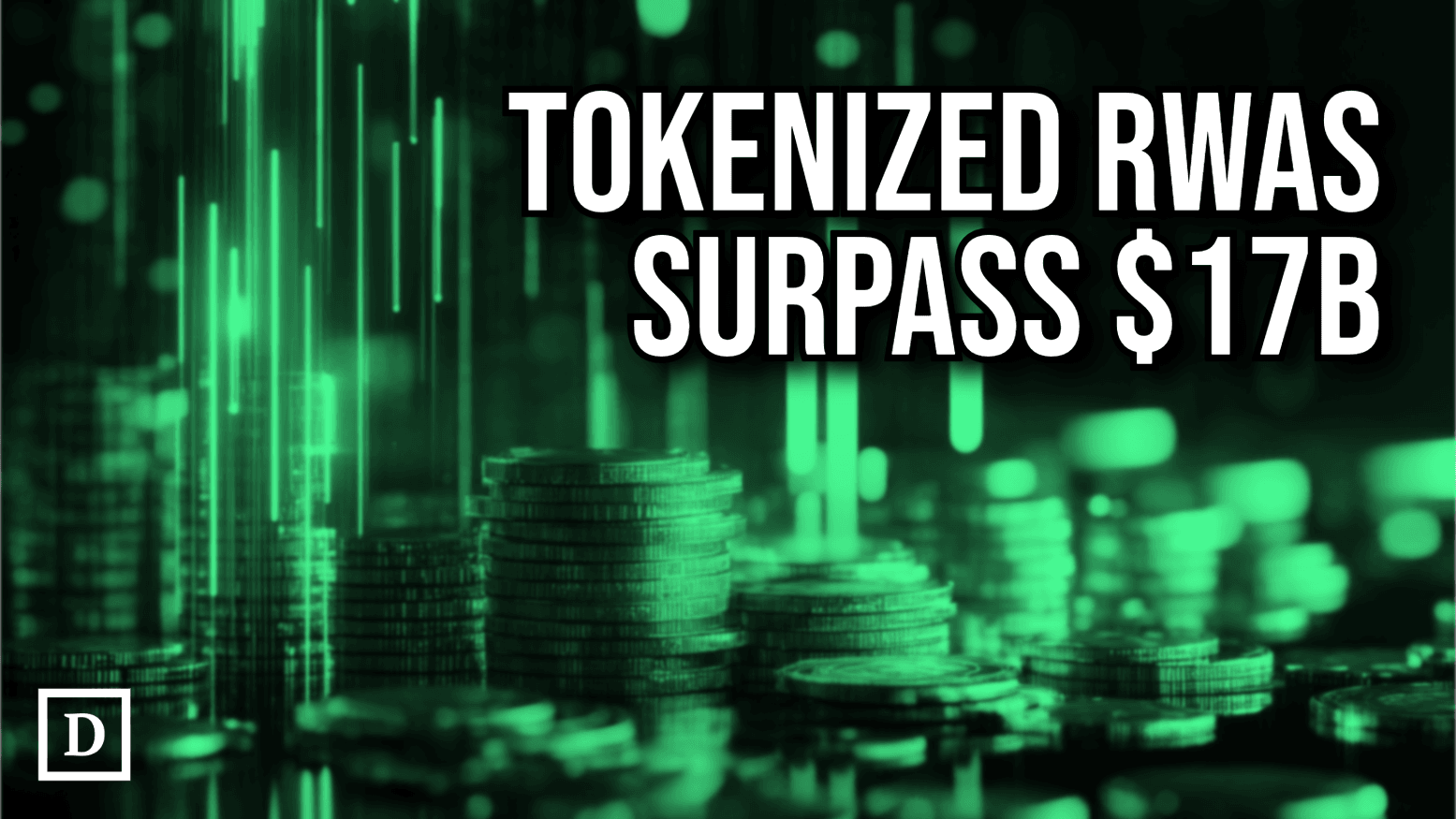
Tokenized Real-World Assets Hit All-time High of $17 Billion

With the legal and technological frameworks falling into place, the sector could grow to $600 billion by 2030, predicts Boston Consulting Group.
By: Leo Jakobson
Tokenized Real-World Assets Hit All-time High of $17 Billion

Tokenized real-world assets (RWA) hit an all-time high market capitalization of $17.1 billion on Feb. 1.

Tokenizing refers to the process of creating a digital representation of a financial asset, such as private credit, commodities, Treasuries, or equities, on a blockchain. There are even examples of real estate being tokenized for sale. Tokenization’s benefits include greater investor accessibility, reduced costs and improved transparency.

Excluding stablecoins, the vast majority of tokenized RWAs comes from private credit, which accounted for $11.9 billion, or 70% of the $17 billion total, according to RWA.xyz.

RWA Market chart
RWA Market

U.S. Treasuries come in second with $3.5 billion, and commodities third with $1.1 billion.

"It's exciting to see RWA hit an all-time high, but this is just the tip of the iceberg,” Dave Sutter, co-founder and CEO of OpenTrade, told The Defiant in an email.

“Tokenization of real-world assets is not new; it has been underway for over a decade, and over that time, a lot of the fundamental infrastructure, including tech and legal, has been built to make the path from millions to billions to trillions possible.”

Room to Grow

Only 112 firms are currently tokenizing RWAs, according to RWA.xyz.

That excludes stablecoins, which are, after all, mostly just tokenized fiat currency. Just the two largest dollar-backed stablecoins, Tether’s USDT and Circle’s USDC, account for $167 billion, according to CoinGecko. Altogether, stablecoins are a $225 billion market.

Calling fund tokenization “the third revolution in asset management,” in late October, Boston Consulting Group said 1% of mutual funds and exchange-traded funds (ETF) could be tokenized by 2030, with total assets under management (AUM) reaching $600 billion.

In 2023, Citi predicted that tokenized assets could reach $4 trillion by 2030. McKinsey & Co. matched that last year, predicting $2 trillion to $4 trillion in that time frame.

Institutional Adoption

Institutions are no longer just exploring using blockchain technology, they are “actively integrating them into portfolio strategies,” Edwin Mata, CEO and co-founder of RWA tokenization firm Brickken, said in an email.

“The advantages are becoming clear,” Mata added. “Faster settlement times, reduced counterparty risk, and fractional ownership, which allows broader investor participation. As regulatory frameworks evolve, institutions are gaining confidence in the security and compliance of on-chain financial instruments, reinforcing the trend toward blockchain adoption.”

Advertisement

Get an edge in Crypto with our free daily newsletter

Know what matters in Crypto and Web3 with The Defiant Daily newsletter, Mon to Fri

90k+ Defiers informed every day. Unsubscribe anytime.