Advertisement

IC3 Paper Finds Most AI Agent Platforms Show No Evidence of Autonomous On-Chain Trading

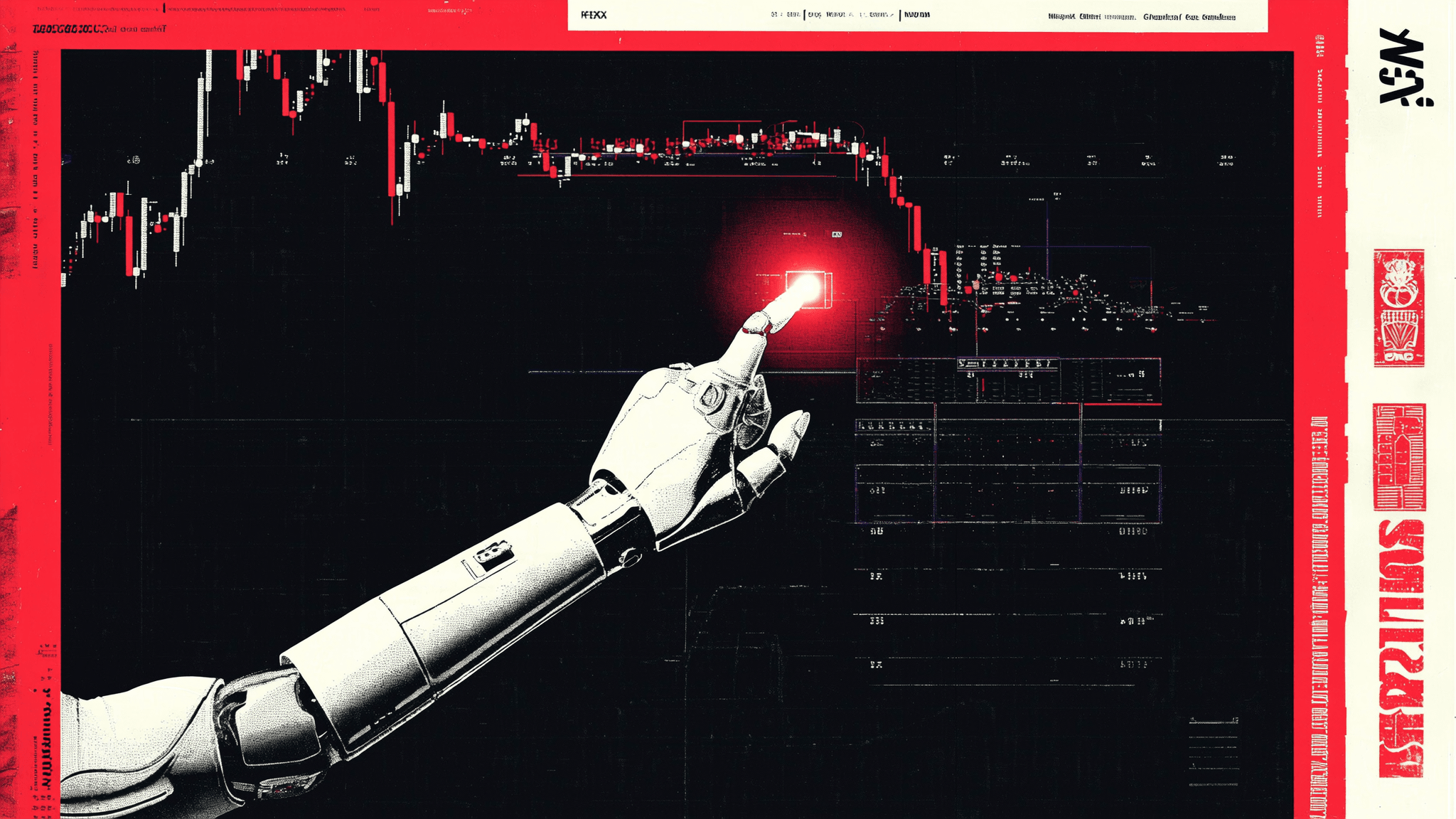
New IC3 research finds most AI-agent crypto platforms show no clear evidence of autonomous trade execution, despite combined token valuations exceeding $3 billion. The paper covers 1,900+ surveyed projects and finds token holders lost $191.7M collectively while the top 1% captured 81.4% of gains.
IC3 Paper Finds Most AI Agent Platforms Show No Evidence of Autonomous On-Chain Trading

New research from the Initiative for CryptoCurrencies and Contracts (IC3) finds that a large share of AI-agent crypto platforms show no clear evidence they are executing trades autonomously, a finding that cuts against the premise behind over $3 billion in combined category token valuations.

The paper, "Paper Agents, Paper Gains: An Empirical Analysis of DeFi Investment Agents," was published on arXiv on May 27 by IC3 researchers Jay Yu, Amy Zhao, and Danning Sui. The team surveyed over 1,900 AI-tagged crypto projects, narrowed to investment-focused agents, and selected 10 representative platforms for detailed analysis. Their on-chain performance analysis covered 11 Solana-based agent treasuries with publicly attributable trading activity and 925,323 token holders. IC3 posted about the study on its official X account this morning.

What the Architectural Analysis Found

The researchers ran a deep-dive review of two prominent agent frameworks: ElizaOS, the open-source AI-agent runtime built around the ai16z organization, and Virtuals Protocol, the platform where users create, tokenize, and trade stakes in autonomous AI agents. Both have attracted large token valuations over the past 18 months. The architectural review examined how the frameworks are structured; the abstract's "no clear evidence of autonomous trade execution" finding applies generically to the broader sample of projects, not to ElizaOS or Virtuals Protocol specifically.

In the study's sample, many projects do not provide clear evidence of autonomous trade execution. Developer interviews conducted for the research suggest many visible deployments are basic API integrations: software that relays user instructions to exchanges rather than generating and executing trades independently.

Market-cap-to-AUM ratios across the platforms examined exceeded 10,000x, compared to below 1x for established DeFi protocols.

The Distribution of Returns

The on-chain performance data shows a sharp divide between agent treasuries and token holders.

Agent treasuries, the pools of capital managed by the agents themselves, retain over $30 million in paper gains. Token holders as a class lost $191.7 million collectively. The top 1% of wallets captured 81.4% of all gains, a concentration that amounts to $1.81 billion.

Aggregate user gains peaked at $2.4 billion before declining to net losses. Median returns were negative on every platform examined. Tokens declined 93% on average from all-time highs.

The Maturity Framework

The IC3 team attributes these outcomes to characteristics typical of early, permissionless markets: open infrastructure enables rapid experimentation, but no established standards exist for what the paper treats as prerequisites for investment-grade agents.

Those three criteria are: autonomous execution (the agent executes trades without human relay), risk-adjusted profitability (the agent generates returns that justify the risk), and stakeholder alignment (returns distributed in a way that reflects actual investment performance). The paper does not characterize any of the 10 platforms examined as meeting all three criteria.

Context from the Broader Agentic Landscape

The AI-agent trading narrative drove significant speculation in late 2024 and into 2025. Platforms built on the premise that autonomous software agents would manage crypto treasuries and generate returns for holders attracted both capital and token buyers.

Virtuals Protocol migrated its VIRTUAL token cross-chain infrastructure to Chainlink CCIP earlier this month, citing security requirements for agent payment rails. In June, Coinbase opened standalone accounts to AI agents using the Model Context Protocol (MCP, the open standard that lets AI agents connect to external services and execute actions on behalf of users), with crypto trade execution and x402 payments wired in from day one.

The IC3 paper does not address brokerage-side or agent-account products. Its scope is DeFi investment agents operating on-chain.

Scope and Limits

The paper covers platforms with publicly attributable trading activity on Solana. Projects where trading activity cannot be linked to a specific agent treasury are outside the analysis. The researchers note that early-stage conditions in the category mean standards for measuring agent autonomy remain contested.

ElizaOS and Virtuals Protocol have made no public statement about the study's findings.

Advertisement

Get an edge in Crypto with our free daily newsletter

Know what matters in Crypto and Web3 with The Defiant Daily newsletter, Mon to Fri

90k+ Defiers informed every day. Unsubscribe anytime.