Ethereum’s Next Pectra Upgrade To Take Place Over Two Forks

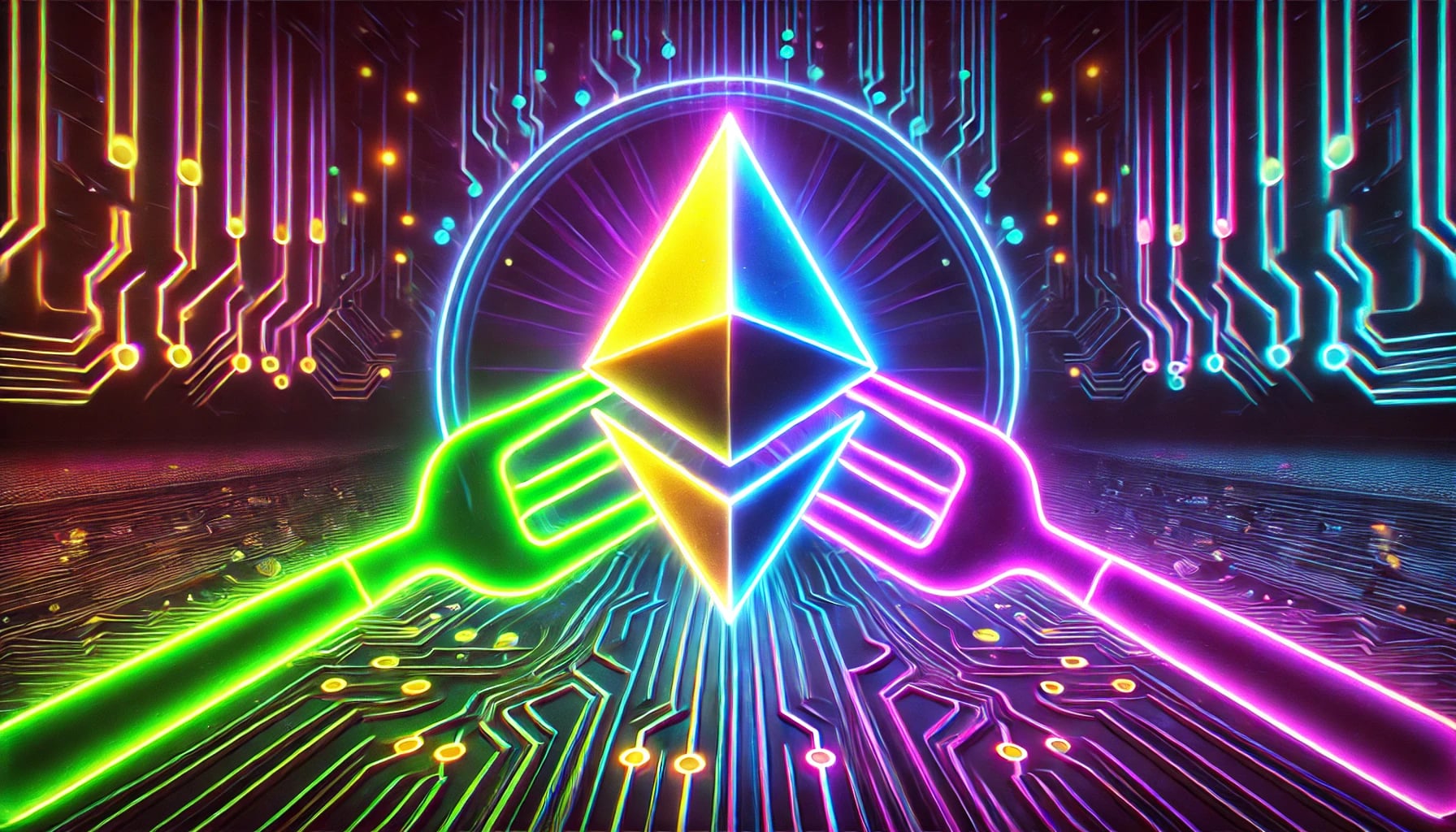
The decision to split Ethereum’s next major upgrade, Pectra, into two hard forks, appears to have been finalized during the Sept. 19 All Core Developers Consensus call.
Alex Stokes, an Ethereum Foundation researcher and a proponent of splitting the upgrade in two, chaired the call. He advocated for Pectra 1 to comprise the eight Ethereum Improvement Proposals (EIPs) currently undergoing testing on Devnet 3. Stokes also suggested that Pectra 2 should include the other 12 EIPs approved for Pectra, noting that a few additional proposals are also up for consideration.
The proposal to split the upgrade attracted the support of developers representing the Nimbus, Prysm, Lighthouse, Geth, Lodestar, and Teku client teams, in addition to Ethereum Foundation researchers Ansgar Dietrichs, Toni Wahrstatter, and Mario Vega. However, each developer presented their own caveats regarding which EIPs should be included or excluded from the respective forks.
PeerDAS, EOF, and EIP-7688 were notable topics of contention, with most developers arguing that their inclusion in Pectra 1 would delay the upgrade’s activation.
Still, Andrew Ashikmin of the Erigon client team dissented against splitting the upgrade in two, arguing that all approved EIPs excludingPeerDAS should be included in a single hard fork. Ashikmin asserted that developers should prioritize shipping Ethereum’s following Verkle upgrade as soon as possible, adding that deploying Pectra as two separate upgrades would delay such.
However, with the majority of developers in agreement that Pectra should be divided in two, Stokes concluded that the split would proceed.
“What I'm hearing is that we're generally on board with Devnet 3 essentially moving on to be the next hard fork,” Stokes said. “Downstream we can figure out what comes next.”
Francis, a Base protocol developer, also proposed increasing the number of blobs included per block as part of Pectra 1. Fracis asserted that three blobs per blob will not be adequate for Layer 2 networks to scale in preparation for the future PeerDAS upgrade. Developers responded favorably to the proposal.
The discussion also noted several technical issues encountered on Pectra’s third devnet.
In light of the discourse surrounding whether to divide Pectra, Parithosh Jayanthi, an Ethereum Foundation developer operations engineer, said he plans to propose changing the way developers scope out Ethereum upgrades at the upcoming Devcon in November.
Pectra 1
As it stands, Pectra 1 is expected to include eight EIPs.
On the execution Layer, EIP-2935 is a core component of Pectra required to facilitate the future introduction of Verkle Trees and statelessness. Verkle Trees eliminate the need for nodes to store the network’s state locally, significantly reducing the computational requirements on validators.
EIP-2537 and EIP-7865 will bolster interoperability between the Ethereum mainnet and its Beacon Chain consensus layer. This will improve the functionality of decentralized staking pools, DAOs, and dApps that communicate with the Beacon Chain for staking functions.
EIP-7702 is a controversial upgrade that will enable “smart account” features for regular externally owned account (EOA) wallets. The upgrade would introduce batched transaction execution, transaction fee sponsoring, and delegated wallet security. However, critics have warned the upgrade could make users vulnerable to new attack vectors.
On the consensus layer, EIP-7251 aims to reduce the size and slow the growth of Ethereum’s validators in a bid to bolster the network's security. EIP-7002 will expand the number of designs available to developers creating staking pools. EIP-7549 targets improving the efficiency of attestations, which would reduce network load and node bandwidth demands.
EIP-6110 aims to decrease the delay between stakers depositing collateral on the Ethereum mainnet execution layer and the transaction processing on the Beacon Chain, and reduce the complexity of validator client software.
Pectra 2
Pectra 2 appears likely to contain PeerDAS, which will provide further Layer 2 data availability, building on the introduction of proto-danksharding in March.
It is also expected to include a bundle of ten EIPs relating to EVM Object Format (EOF), which aims to improve the Ethereum Virtual Machine, Ethereum’s core smart contract engine, by bolstering the upgradability of EVM contracts and the efficiency of smart contract code execution.
Pectra 2 may also include EIP-7688, which would make it easier for staking pools to verify whether a participating validator has been slashed. However, Nimbus developers advocated for its inclusion in Pectra 1.
Advertisement
Get an edge in Crypto with our free daily newsletter
Know what matters in Crypto and Web3 with The Defiant Daily newsletter, Mon to Fri
90k+ Defiers informed every day. Unsubscribe anytime.