Dogecoin vs Bitcoin: Key Differences Explained
As cryptocurrency continues to shake up the financial landscape, both Bitcoin and Dogecoin have emerged as two of the most recognized digital assets, each with distinct purposes, strengths, and investment potential.
At the time of writing, Bitcoin’s price is $80,000, with a market cap exceeding $1.5 trillion – the largest of any digital currency. Launched in 2009, Bitcoin has reached highs near $109,000. In comparison, Dogecoin, created in 2013, is priced at $0.15, with a market cap of around $23 billion – the eighth largest digital asset, according to CoinGecko.
As of April 10, Bitcoin has surged by an astronomical 117,209% from its lowest recorded price of $67.81, according to CoinGecko. In comparison, Dogecoin’s price has experienced an even more dramatic increase of 176,668% from its all-time low of $0.0000869.
Unlike Bitcoin, which was designed as a revolutionary decentralized digital currency with a maximum supply of 21 million coins, Dogecoin was originally created as a memecoin with an inflationary supply and lower market demand. This made it more suited for casual transactions – and, as such, less stable as a long-term investment.
Bitcoin: Digital Gold
Bitcoin, created by the anonymous Satoshi Nakamoto, was developed to address concerns over central bank control, inflation, and financial transparency. Due to its scarcity and established blockchain technology, investors often liken Bitcoin to “digital gold” and consider it a long-term store of value.
Beyond its role as a store of value, Bitcoin is also revered for its ability to facilitate secure, peer to peer transactions, making it a powerful payment method for financial autonomy. While Bitcoin has experienced significant volatility since its inception, its overall price trend has been upward.
In 2024, Bitcoin took a major step toward mainstream acceptance with the launch of Bitcoin exchange-traded funds (ETFs) in the U.S. for the first time. This milestone marked a new level of credibility for the digital asset among institutional investors.
The U.S. Securities and Exchange Commission (SEC) approved the first spot Bitcoin ETFs on January 10, 2024, with trading beginning the following day. Since then, 11 spot Bitcoin ETFs have attracted a cumulative net inflow of around $36 billion, bringing total net assets to over $94 billion — about 5.57% of Bitcoin's total market cap, according to data from SoSoValue as of April 14, 2025.
“The introduction of Bitcoin ETFs represents a significant shift in how the asset integrates with traditional finance, potentially altering its correlation patterns with other investments,” Alan Orwick, co-founder of Quai Network, told The Defiant. “This development creates an interesting tension between Bitcoin’s original ethos of decentralization and self-custody and its growing mainstream adoption through regulated financial products.”
Legitimizing Bitcoin
While Bitcoin ETFs were a key step in legitimizing BTC as a store of value, its increasing government acceptance further solidifies its status. In recent months, more nations, including the U.S., have embraced the idea of creating strategic Bitcoin reserves (SBRs), further highlighting Bitcoin's evolving role as a store of value.
“Bitcoin is the only decentralized, non-manipulative and fixed amount asset, without option of inflation,” Roy Mayer, CEO and co-founder at Vixichain, previously told The Defiant. “Not like Oil, which is centralized by Russia, Iran and other countries which have conflicts with the US, or even Gold, where other entities can lie about their reserves in order to manipulate the price.”
Earlier in 2025, President Donald Trump vocalized his plans for the U.S. to become the “crypto capital of the world” and vowed to create an SBR. Trump followed through in March 2025 and also created a separate digital asset stockpile.
"Institutional adoption and Bitcoin ETFs have already elevated Bitcoin as a globally recognized benchmark asset,” said Jacob Phillips, co-founder at Lombard Finance, adding that the adoption of a strategic Bitcoin reserve takes this recognition to the next level, further legitimizing Bitcoin and the broader crypto community.
“Beyond decentralized finance (DeFi), Bitcoin’s role as a reserve asset could influence lending and borrowing rates, establishing it as a cornerstone of global financial infrastructure,” Phillips added.
All About Dogecoin
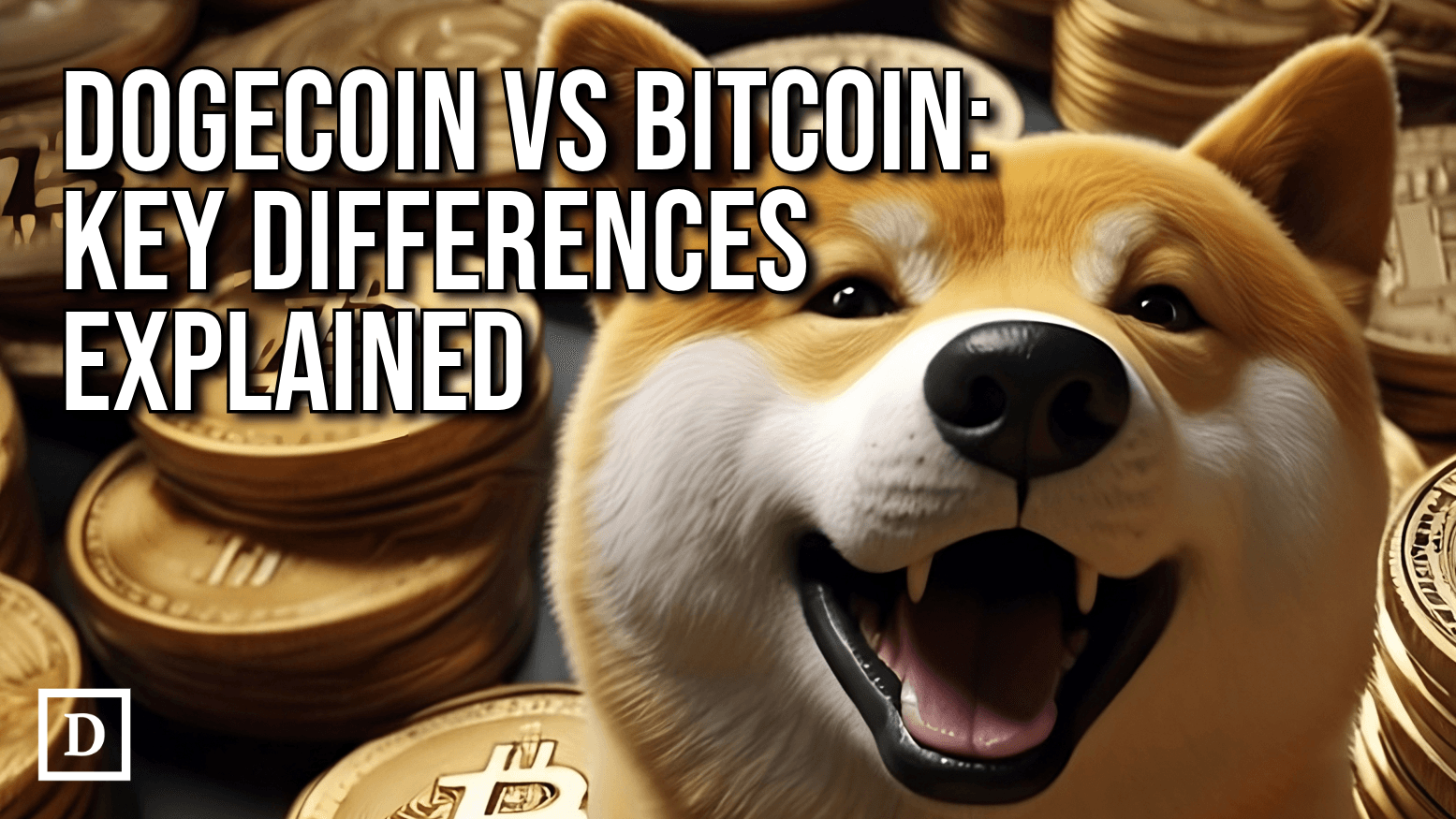
Dogecoin (DOGE) was created in 2013 by software engineers Billy Markus and Jackson Palmer as a joke based on the popular internet meme featuring a Shiba Inu dog. Unlike Bitcoin, Dogecoin was initially meant to be a fun digital currency for online communities.
Dogecoin operates on a blockchain similar to Bitcoin’s but with some technical differences. It uses the Scrypt algorithm, allowing for faster transactions and minimal fees. Over time, it has gained a loyal following and has been endorsed by celebrities, including Tesla CEO Elon Musk.
While its origins were comical, Dogecoin’s presence in the digital currency market has become more significant in recent years, with the coin being used for charitable donations, crowdfunding, and small transactions.
This has allowed it to build a strong community-driven ecosystem that helps fuel its popularity. Currently, the official Dogecoin account has more than 4.3 million followers on X, formerly Twitter.
Support for Dogecoin is also driven by the Dogecoin Foundation, a non-profit organization founded in 2014. The Foundation’s manifesto reads: “We are developing a currency for the people, and we strive to do only good everyday.”
2021 Boom and Celebrity Endorsements
Famously, Dogecoin recorded a massive surge in early 2021, jumping by 800% in January to reach $0.07. This spike was largely fueled by attention from Reddit users and tweets from Elon Musk in the wake of the GameStop short squeeze.
Other celebrities like Snoop Dogg and Gene Simmons also joined the hype on Twitter, further fueling Dogecoin’s visibility.
Two months later, in March 2021, Dallas Mavericks owner Mark Cuban announced his NBA team would allow the purchase of tickets and products with Dogecoin.
What’s a Better Investment: Bitcoin vs Dogecoin?
Bitcoin is widely regarded by experts as a better long-term investment due to its scarcity, security, and institutional backing. Bitcoin also has a long history of increasing in value over time.
Dogecoin, while having a strong community and frequent social media hype, is highly volatile and inflationary. Dogecoin’s value has largely depended on market cap trends and celebrity endorsements, making it a more speculative investment. However, experts noted that traders looking for short-term gains may find Dogecoin appealing due to its significant volatility.
How To Buy Bitcoin And Dogecoin
Bitcoin and Dogecoin are widely available on popular exchanges like Coinbase. Here's a simple guide on how to start investing in BTC and/or DOGE:
- Log in to your exchange If you don’t already have an account, you’ll need to create one. This usually takes just a few minutes, but identity verification can take 1-2 days.
- Verify your identity Once your account is set up, complete the identity verification process. This is a necessary step to comply with regulatory standards.
- Add a payment method Link a payment method to your account. This could be a bank account, debit card, or credit card, depending on the exchange’s options.
- Select the asset you want to buy Choose either Bitcoin (BTC) or Dogecoin (DOGE) from the list of available coins.
- Click ‘Buy’ Once you've selected the asset, click on the ‘Buy’ button to proceed.
- Review fees and confirm the transaction Review any applicable fees before confirming your purchase. After confirmation, the transaction will be processed, and the cryptocurrency will appear in your exchange wallet.
Bitcoin vs. Dogecoin remains a key topic for investors weighing their goals, risk tolerance, and belief in crypto. In the end, the choice comes down to how one views value, security, and long-term potential.
Advertisement
Free newsletters
Good reporting. Delivered.
Choose your coverage: crypto and DeFi, the future of finance, or both.
Free. Unsubscribe anytime.