Open USD Goes Live as Stripe's Default Stablecoin
Plus Lloyds settles with Visa in USDC, Chainlink's Fulcrum and the SEC's custody proposal
Happy Friday. This is Converge, The Defiant's weekly recap of tokenization, stablecoins, and real-world assets, by Chris Storaker.
TOP NEWS THIS WEEK
- Open USD goes live as Stripe's default stablecoin and pays its reserve income to the partners that distribute it
- Dune finds 23 of 26 tokenized money funds have never traded onchain, and a single address holds 98% of Circle's USYC
ALSO IN THIS ISSUE
- Lloyds settles $750,000 with Visa in USDC;
- UK and North Dakota banks go live with tokenized deposits
- Citi taps Coinbase for corporate stablecoin payments
- Morgan Stanley sets up a digital asset lab
- Chainlink's Fulcrum runs repo across blockchains, with DTCC
- The SEC proposes a self-custody route for advisers;
Brought to you by:
Tokenized capital markets are onchain. Accessing them is complex. Reaching them still means stitching together bank, custody, accounting and compliance systems that were never built to talk. Every counterparty needs its own paper. Every rail needs its own integration.
Stable Sea replaces the patchwork with one workflow. Hold, move and manage capital onchain — trade 24/7 with role-based controls, insured custody, near-instant settlement, low minimums and no lock-ups. Upgrade your capital today.
Open USD Goes Live, Sharing Reserve Income With Partners
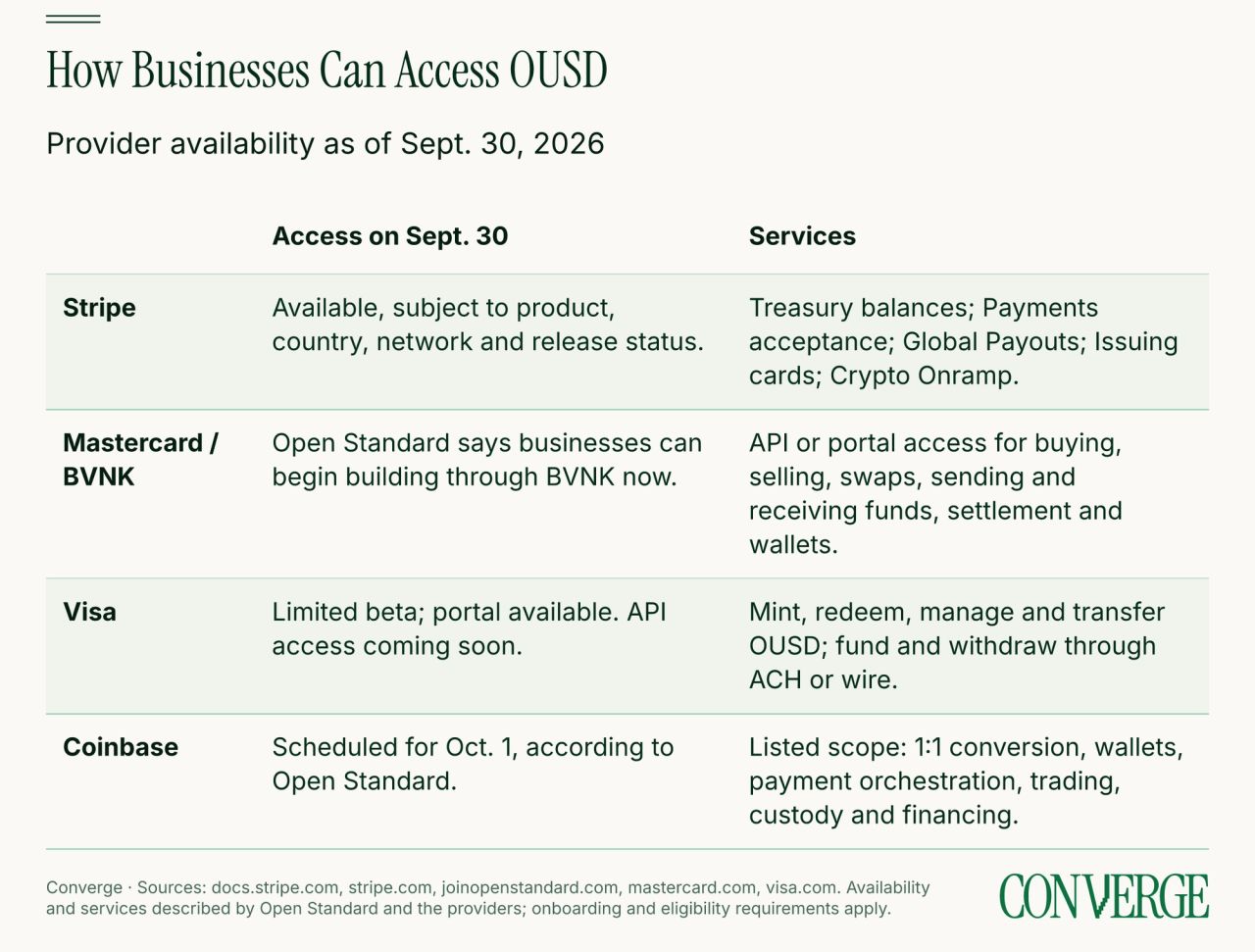
- Open USD went live on Sept. 30 as Stripe's default stablecoin, and the interest on its reserves goes to the partners that distribute it. Mastercard's and Visa's routes are open too, Coinbase's was scheduled for Oct. 1, and 668 million coins were in circulation a day after launch.
Open Standard, the company that runs the coin, says partners receive "all of the earnings" on the reserves "less a small management fee," in proportion to the balances and activity they bring. Stripe pays those rewards on the OUSD balances businesses hold with it, and the finance platform Ramp plans accounts in which users hold OUSD and "earn rewards." Bridge, the issuer Stripe bought in 2025, holds the reserves at BlackRock, BNY and Lead Bank: 75% in Treasury bills and money funds, the rest in cash, according to its dashboard on Thursday. Minting and redeeming are free.
Distribution already takes most of the yield
Across the industry, the $278 billion of dollar stablecoins backed by cash and Treasuries would earn about $11 billion a year at Thursday's 4.1% three-month bill rate, by our own arithmetic. The GENIUS Act, signed in July 2025, bars issuers from paying holders "any form of interest or yield," so the money stays with the issuer or goes to whoever the issuer pays for distribution. Circle handed 62% of its reserve income to distributors in the first half of 2026, most of it to Coinbase, as Converge reported last week.
Hyperliquid put a price on distribution a year ago. When the exchange let validators choose who would issue its stablecoin, Paxos offered 95% of the reserve yield, and Frax and Agora offered all of it. Open USD writes that outcome into the design: the issuer keeps a fee and the platform that holds the customer keeps the rest.
The funds that pay yield barely move
The onchain dollars that do pay their holders are tokenized money funds, which hold $14.7 billion, about a twentieth of the stablecoin supply, according to rwa.xyz. They pass the bill yield to holders, less fees, and the law allows it because a fund share is a security, which the Act leaves out of its definition of a stablecoin.
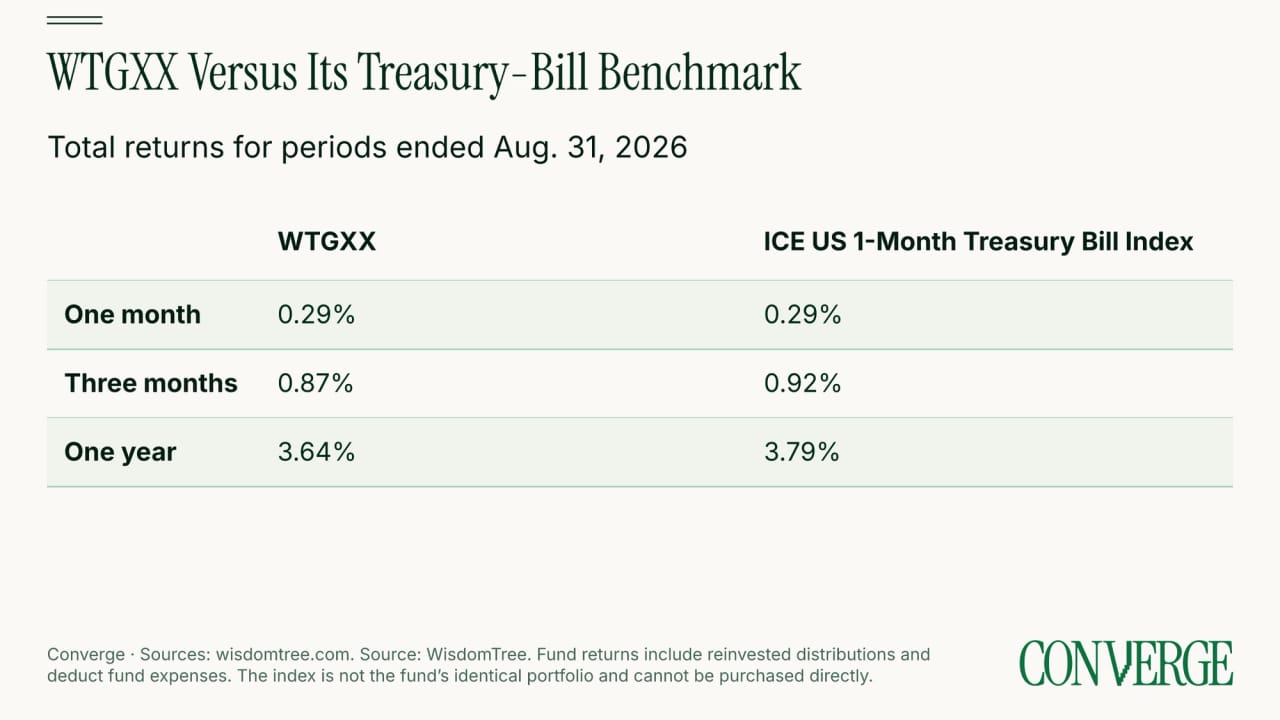
Dune, found that 23 of the 26 tokenized cash funds that mark their value at least weekly have never traded onchain and that only 0.4% of their supply is pledged in lending markets. One address holds 98% of Circle's USYC and 95% of Janus Henderson's JTRSY, though a single address can be a custodian acting for many clients. Much of the supply sits with other issuers and with exchanges. Ethena's USDtb stablecoin is backed mainly by BlackRock's BUIDL, Binance accepts USYC as trading collateral, and Binance and Bybit accept Franklin Templeton's Benji fund shares. Every one of the 12 largest funds pays less than the bills it holds.
Products that join the two are arriving from both sides
USYC, Circle's $2.4 billion tokenized Treasury fund and the largest of them, redeems into USDC near-instantly, up to a capacity limit. Grove, a credit protocol seeded by the Sky ecosystem, offers up to $1 billion a day in stablecoins against redemptions from BUIDL and JTRSY while the funds settle on their own schedule. Franklin's Benji shares keep earning while pledged on Bybit. On the payment side, Open USD's rewards and Ramp's planned accounts pay yield on a balance a business can spend from.
Our take: the trade-off is a product gap
Regulation Q barred U.S. banks from paying interest on checking accounts from 1933. Money market funds, sold to the public from 1972, paid market rates. In 1977 Merrill Lynch introduced the Cash Management Account, which swept a brokerage customer's idle cash into a money fund and attached checks and a Visa card to it. Money fund assets rose from $3.9 billion at the end of 1977 to $220 billion at the end of 1982, and banks got an account allowed to compete, the money market deposit account, that December.
The onchain dollar has the same split, by statute: the token that moves cannot pay its holder, and the token that pays rarely moves. BCG's May forecast caps stablecoins near 15% of the broad money supply on the ground that they are "superior for payments but inferior as a store of value." Merrill showed in 1977 that a sweep closes that gap, and whoever owns the account keeps the interest.
Issuing a stablecoin becomes a fee business, which is why Circle owns both USDC and a tokenized Treasury fund. Banks can answer with tokenized deposits, which the Act leaves free to pay interest. Last time, their answer came five years after Merrill's.
The Defiant's livestream on tokenized stocks after the SEC's exemption: synthetic tokens versus tokens backed by shares, and which model wins.
OTHER STORIES WORTH YOUR TIME
Lloyds and Visa Settle $750,000 in USDC as Tokenized Deposits Go Live
Lloyds bought USDC through the exchange Archax and used it to settle dollar obligations with Visa in the U.S. over seven days, with funds arriving in under an hour, including over the weekend. Lloyds ran its own node on Canton and Visa settled on a separate public blockchain. The companies called it a completed pilot and set no commercial timetable.
Six days earlier, Barclays, HSBC UK, Lloyds, Monzo, Nationwide, NatWest and Santander completed the first live customer payments in tokenized sterling deposits, two remortgage completions and a marketplace purchase, with funds locked until each transaction closed, on a platform built by Quant for UK Finance. Lloyds used its own deposit token for sterling and Circle's dollar token for the cross-border leg.
In the U.S., Fiserv's digital asset platform went live Oct. 1 with Bank of North Dakota's Roughrider Coin, a bank-only deposit token issued by VersaBank and settled on Solana for a network of more than 90 banks and credit unions.
In Hong Kong, HSBC named its Hong Kong dollar stablecoin RedCoin, due in the second half of 2026 through PayMe and its mobile app.
Citi Taps Coinbase for Corporate Stablecoin Payments
Coinbase will supply the payment infrastructure that lets Citi's large corporate clients accept stablecoins from their customers, The Wall Street Journal reported, extending a collaboration the two announced in October 2025 for moving money between bank accounts and Coinbase. Neither company has named the tokens or networks involved or said whether the service is live. Citi is also one of 21 banks behind a joint dollar stablecoin aimed at the first half of 2027.
Morgan Stanley set up an internal lab to test stablecoins, tokenized deposits, tokenized money funds and DeFi vaults in a segregated environment, Bloomberg reported; Amy Oldenburg, who runs its digital-asset team, said the technology is "too nascent" to put the rest of the platform at risk.
Chainlink Unveils Fulcrum for Repo Across Blockchains
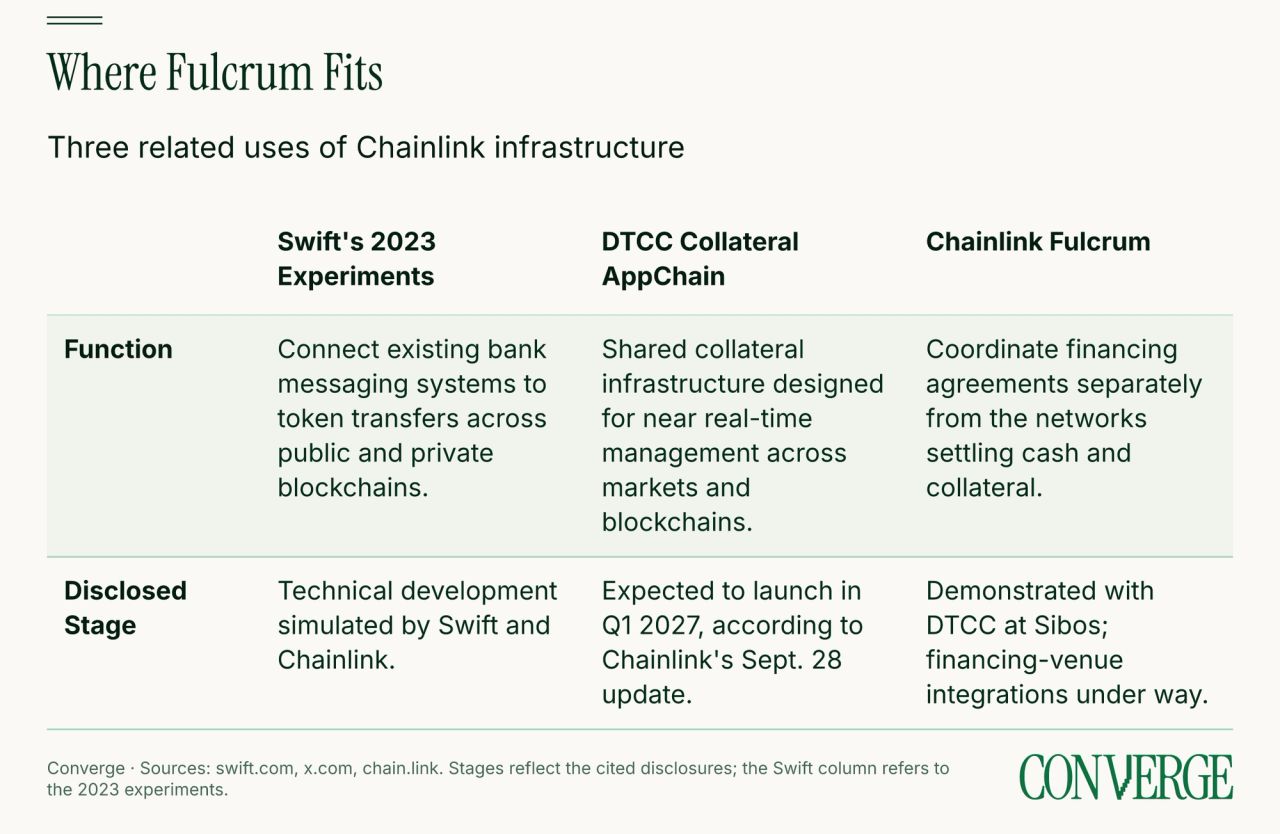
Chainlink introduced Fulcrum at Sibos on Sept. 30, a platform that manages a repurchase agreement on one network while its cash and collateral settle on others, and showed a cross-chain financing transaction with DTCC. Counterparties set eligible collateral, rates and haircuts, cash is released only once collateral is verified, and automated coverage checks can trigger margin calls outside market hours. Chainlink named no live borrowers or lenders and gave no launch date. DTCC's separate Collateral AppChain, which will also use Chainlink's services, is expected in the first quarter of 2027.
ESMA Proposes MiCA Rules for DeFi Gateways, Staking and Lending
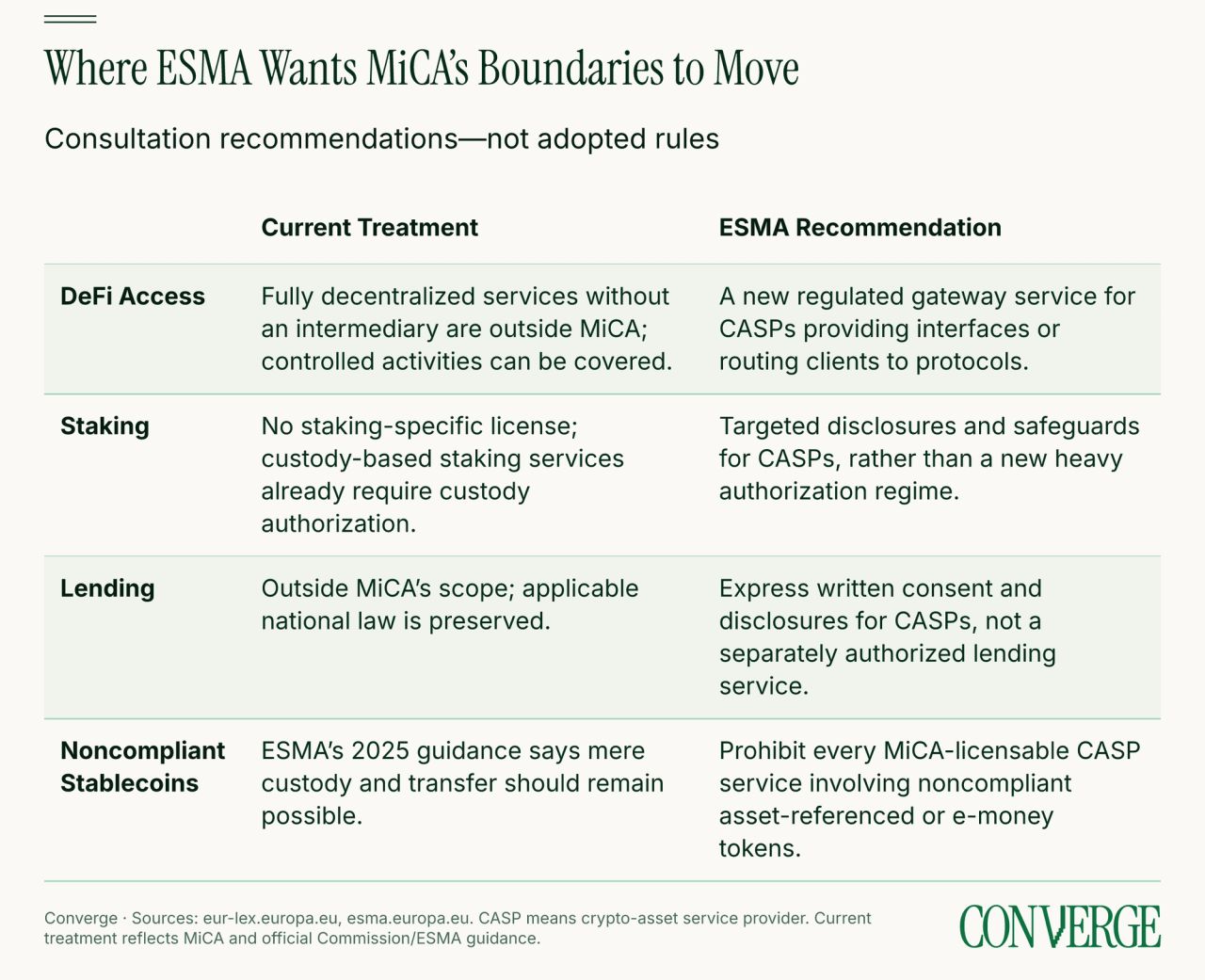
The EU securities regulator proposed a "gatekeeper" category for licensed crypto firms that route clients to DeFi protocols, with duties to vet protocols, disclose routing and manage conflicts, in its response to the European Commission's MiCA review. It also wants to bar those firms from any licensable service involving stablecoins that lack MiCA authorization, including custody and transfers, which its January 2025 guidance had left open. The European Banking Authority floated restrictions on stablecoin lending for EU crypto firms, including suitability tests, leverage limits and a certification regime for DeFi lending protocols, warning that lending e-money tokens generates yield their issuers may not pay. Both are recommendations; the Commission's consultation closed Sept. 30.
The SEC Proposes a Self-Custody Route for Investment Advisers
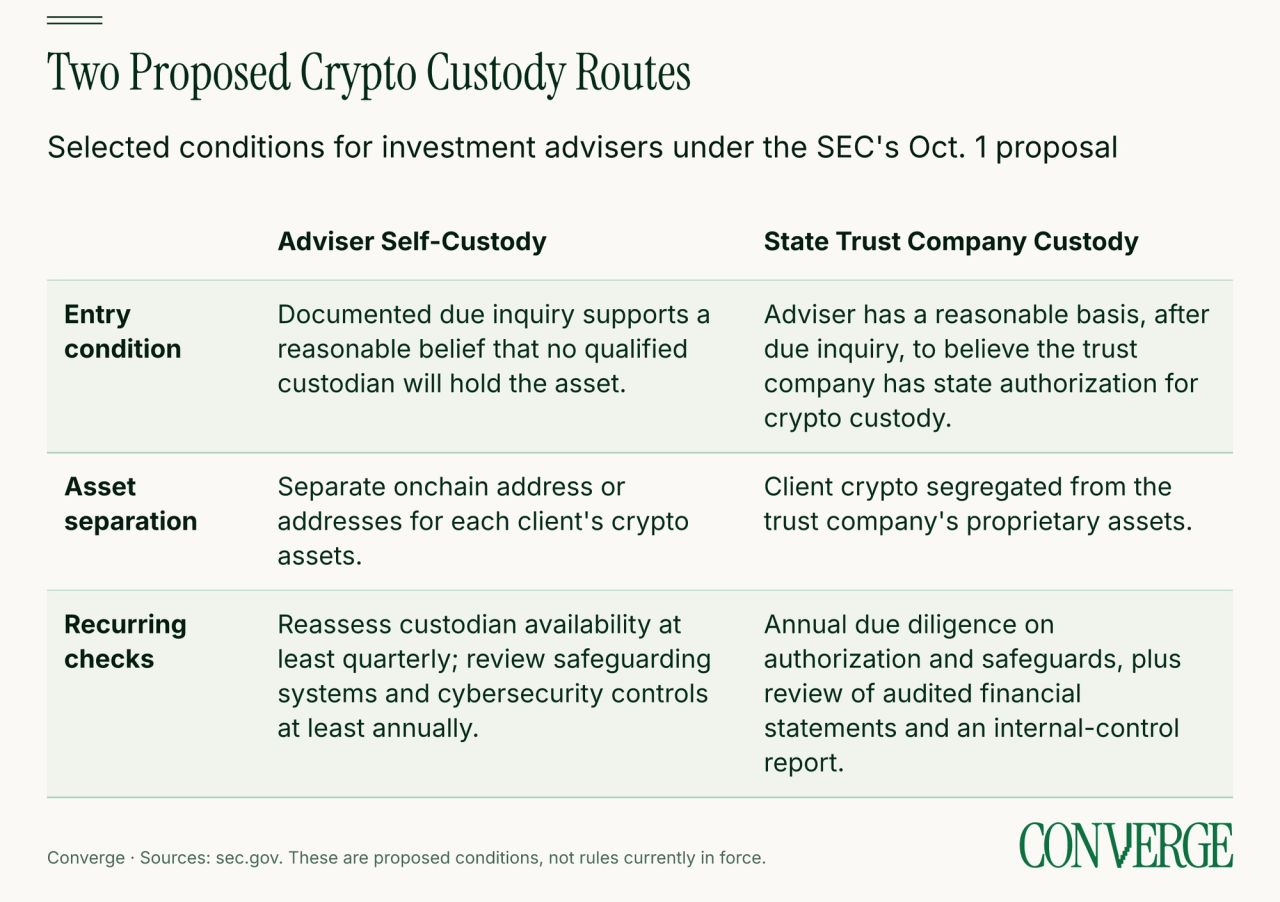
Registered advisers could hold clients' crypto themselves when no qualified custodian will take the asset, under a proposal the SEC issued Thursday, provided they document that search quarterly, keep separate onchain addresses per client, require two people to authorize transactions and obtain an accountant's control report. The proposal also writes state trust companies into the custody rule as a conditional route. Comments are due 60 days after Federal Register publication.
A San Francisco Fed letter finds stablecoin issuers added about $200 billion of Treasury-related holdings in five years, more than 40% of the decline in China's holdings, though in bills where China sold longer bonds.
Treasury sanctioned the Russia-linked A7 Network as a transnational criminal organization for helping Iran evade sanctions, and FinCEN proposed barring U.S. institutions from handling transfers, including crypto, that involve its sub-agents, which it says processed more than $17 billion in dollar transactions from January 2025 to June 2026.
Even more this week:
- Base added a seize function to its token standard, letting issuers move a blocked holder's balance, along with transactions that wait for a price.
- Circle CFO Jeremy Fox-Geen will step down by year-end; co-founder Sean Neville left the board the same day.
- El Salvador's Sivar app went live on Base for USDC transfers between the U.S. and El Salvador, with $2 cross-border fees and self-custodial wallets.
- BlackRock expects stablecoins to carry payments by AI agents, in a paper that points to per-request charges too small for card fees.
- Uniswap Labs plans an OUSD rewards hook for liquidity providers alongside the launch, with reward terms still to come.
- Coinbase won CFTC registration for its own clearinghouse to clear fully collateralized futures and options with USDC, settling around the clock; margined products stay with outside partners.
- Robinhood unveiled in-app AI agents that research, build strategies and place stock, options and crypto trades, with approvals on by default.
- Stable, the USDT payments chain, announced a Visa Direct integration for bank and mobile-wallet payouts, without a launch date or named markets.
- Bitwise's NEAR ETF cleared listing and registration under the ticker NRR, with plans to stake its holdings.
- U.S. spot bitcoin ETFs drew nearly $3 billion in seven sessions, taking 2026 flows positive at about $1.02 billion.
- OpenZeppelin and T-REX rebuilt ONCHAINID around modular smart accounts, with passkey signing and guardian recovery.
- SMBC Nikko and Nethermind plan a Japanese DeFi gateway that puts anti-money-laundering and investor checks inside Uniswap v4 pools, with Uniswap Labs, Base and Nyx Foundation, targeting mid-2027.
Converge is produced by The Defiant. This briefing is for informational purposes only and does not constitute investment advice.
Free newsletters
Good reporting. Delivered.
Choose your coverage: crypto and DeFi, the future of finance, or both.
Free. Unsubscribe anytime.