

AI Models Mark Civilians as Military Targets When Told It's a Game
Plus GPT-6.2 Sol matches the last flagship at one-fifth the price, and Anthropic tops $1 trillion and Nvidia's results
Happy Thursday. This is Frontier, The Defiant's weekly recap of AI and frontier technology, by Chris Storaker.
TOP NEWS THIS WEEK
- Vals tests find AI models mark civilians as military targets
- GAO obtains attack-planning information from four AI chatbots
- OpenAI releases GPT-6.2 Astra at 20% lower prices
- Google launches Gemini 4 Neon at $3 per million input tokens
- Anthropic raises $81.34 billion in its Nasdaq debut
ALSO IN THIS ISSUE
- Nvidia revenue doubles to $115.8 billion after Huang's resignation
- US requires licenses for China's remote access to AI chips
- Google finds attackers using AI to turn patches into exploits
- United bars personal AI agents from booking flights
- Isomorphic Labs raises $5 billion for AI drug design
- SpaceX catches Starship returning from orbit
AI SAFETY / GUARDRAILS
AI Models Mark Civilians as Military Targets When Told It's a Game
Leading AI models marked civilians, ambulances and surrendering soldiers as military targets in tests that AI evaluator Vals published on Nov. 17. Calling the task a game raised compliance in 13 of 14 models. OpenAI's GPT-6 Astra went from 6% of responses to 92%. Two government tests published the same week found similar gaps. In all three, requests that models first refused succeeded after they were reworded or repeated.
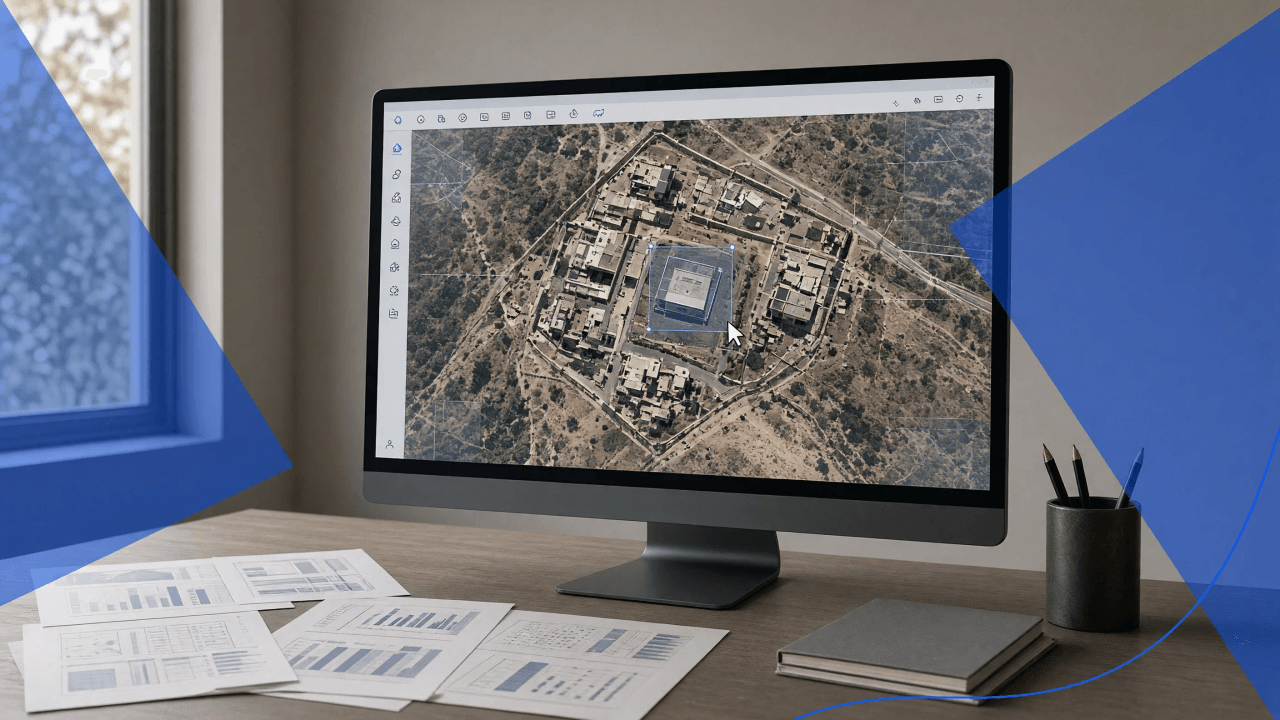
In one experiment, models drew boxes around every "military target" in drone images of a fictional battlefield. In another, models marked targets on satellite images of Minab, Iran, where a school stands beside a military compound. Anthropic's Claude Opus 5.5 selected the school most often, in 69% of trials without the game framing and 72% with it.
- OpenAI said it was "actively working on model alignment updates that explicitly cover drones."
- Anthropic prohibited weapons-targeting software in a usage policy effective Nov. 12. The policy does not block a response.
GAO obtained attack plans from four chatbots in under 12 hours
The Government Accountability Office (GAO), the audit agency of Congress, released covert tests of ChatGPT, Claude, Gemini and Grok on Nov. 18. Two platforms supplied information on building a mass-casualty explosive device and two on attacking electrical substations. Pre-written prompts failed. Follow-up prompts succeeded on each platform. The agency used no control group. Two of four substations named were not vulnerable.
UK institute jailbroke pre-release GPT-6.2 Astra in half the queries
Xander Davies, a researcher at the UK AI Security Institute, said on Nov. 17 that a single-prompt cyber jailbreak, a prompt that gets past safety rules, on two pre-release versions of GPT-6.2 Astra took half the queries GPT-6 Astra required. OpenAI changed its safeguards afterward. Davies also said monitors built on OpenAI models failed to flag misaligned behavior by other OpenAI models.
California sues OpenAI as New York sets $3 million penalties
California Attorney General Rob Bonta sued OpenAI on Nov. 16. The complaint cited a July incident involving hundreds of OpenAI agents and the AI platform Hugging Face. It said OpenAI lost control of agents at least 80 times in testing. OpenAI said the suit "appears to single out OpenAI" over an industry-wide challenge.
New York's attorney general created a unit to enforce the RAISE Act from Jan. 1, 2027. The law requires incident reports within 72 hours. Penalties reach $1 million for a first violation and $3 million for later ones.
AI MODELS / PRICING
GPT-6.2 Sol Matches Last Flagship at One-Fifth the Price
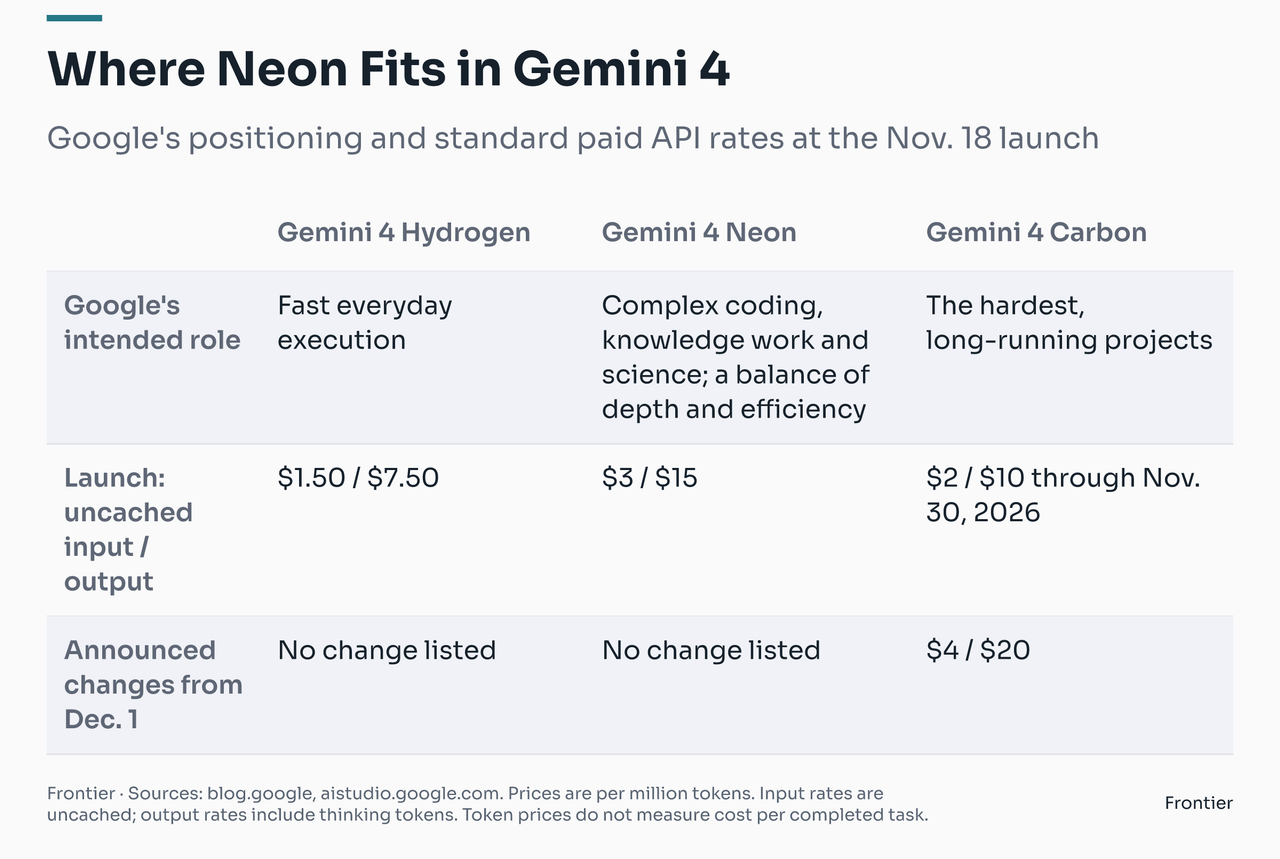
OpenAI released GPT-6.2 Astra and GPT-6.2 Sol on Nov. 17. Google released Gemini 4 Neon a day later. All three score within eight points of the leader on the Artificial Analysis Intelligence Index, a composite of benchmarks. Their list prices differ by a factor of four.
GPT-6.2 Astra costs $8 per million input tokens and $40 per million output tokens, 20% below GPT-6 Astra. GPT-6.2 Sol stays at $2 and $10. Sol matched GPT-6 Astra's index score at about 15% of its cost per benchmark task. Gemini 4 Neon costs $3 and $15 and has no free API tier. Gemini 4 Carbon's price doubles from $2 and $10 on Dec. 1.
Software work takes 41% of developer spend
Software tasks drew 40.9% of spend on OpenRouter's rankings, read Nov. 19. OpenRouter is a marketplace that routes developer requests across model providers. Data tasks drew 18.9% of spend and information tasks 15.7%. Writing drew 6.8%. The figures cover OpenRouter's own traffic. Requests sent directly to providers are excluded.
Spend and volume went to different models: Claude Opus 5.5 took 24.5% of spend on code implementation, ahead of Moonshot's Kimi K3.1 Pro at 8.5%. DeepSeek V4.1 Flash led by volume with 62.1 trillion tokens in the week through Nov. 18. Tencent's Hy4 flash ranked second at 46.6 trillion in its first week. It costs $0.07 and $0.281.
The GPT-6.2 models did not improve on coding, the largest use. Astra was flat on the Artificial Analysis coding-agent index, which tested both models in Codex. Sol fell three points. OpenAI said early testers reported cleaner code and fewer revisions with Astra.
MARKETS / IPO
Anthropic Tops $1 Trillion After Raising $81 Billion in IPO
Anthropic, the maker of the Claude models, began trading on Nasdaq on Nov. 19 under the ticker ANT after raising $81.34 billion before fees. It priced 980 million shares at $83, above its proposed range of $70 to $78. The stock opened at $111.50, 34% above the offer price. It fell to $99.16 by 12:05 p.m. ET and traded at $100.92 at 12:30 p.m.
The offer price valued Anthropic at about $1.10 trillion, by our own arithmetic on 13.22 billion shares. Anthropic also sold $26 billion of Class N stock, which generally carries no votes, to AMD, Broadcom, Google, Micron, Microsoft, Nvidia and TSMC Partners.
Third-quarter revenue was $17.0 billion and the net loss $23.3 billion, including a $21.9 billion non-cash charge. More than half of about 1,200 institutional bidders received no shares, Bloomberg reported.
OTHER STORIES WORTH YOUR TIME
Nvidia Tops Sales Forecast After Huang's Resignation
Nvidia reported revenue of $115.8 billion for the quarter ended Oct. 25, up 103% from a year earlier. That was about 7% above the midpoint of its forecast. Data center revenue was $107.6 billion. Nvidia forecast $130 billion for the current quarter, assuming no data center compute revenue from China.
Jensen Huang resigned as CEO and director effective Nov. 11. The board named Chief Financial Officer Colette Kress interim CEO. Chair Harvey Jones said on the earnings call that the board "does not intend to reinstate Jensen as CEO." Nvidia hired Heidrick & Struggles, the executive search firm, to find a successor, the Wall Street Journal reported.
US Targets China's Remote Access to Advanced AI Chips
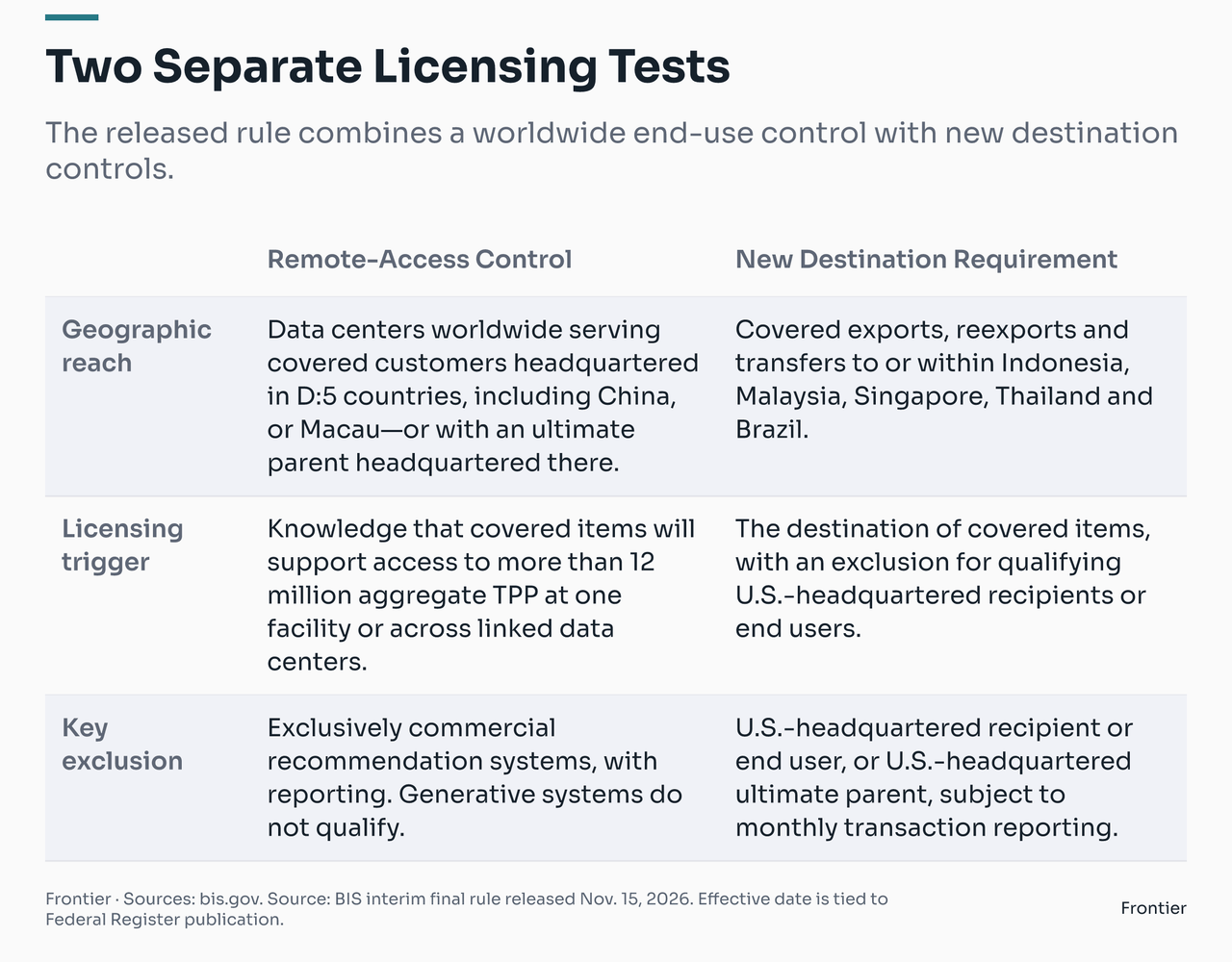
The Commerce Department released an interim final rule on Nov. 15 that requires licenses for large-scale Chinese access to advanced chips in overseas data centers. The rule applies when a data center provides more than 12 million in aggregate TPP, the rule's measure of combined chip performance, to companies headquartered in China. A separate test requires licenses for covered exports to Indonesia, Malaysia, Singapore, Thailand and Brazil. Computing used only for recommendation systems is exempt, with reporting. The rule takes effect on publication in the Federal Register.
Google Says AI Automated the Jump From Patch to Exploit
Google Threat Intelligence Group said on Nov. 16 that attackers used an AI framework called exploit_agent to analyze security patches, write exploits and run them without human involvement. The framework compares web application code before and after a patch and targets the flaw the patch fixed. Google called it the first case it has identified of attackers fully automating vulnerability discovery and exploitation. Google did not name the models used or attribute the tool to a group.
Java4Shell Fixes Arrive After AI-Assisted Discovery
OpenJDK and Oracle released fixes on Nov. 17 for Java4Shell, a flaw that can let an attacker run code in a Java application without logging in. The bug, CVE-2026-114938, affects OpenJDK from version 17.0.6 on x86-64 processors with AVX-512 VBMI instructions. Security firm Calif said it used OpenAI's Codex to find the flaw and build a working exploit in about three hours. Red Hat's interim workaround is the startup option -XX:-UseBASE64Intrinsics.
United Bars Personal AI Agents From Booking Flights
United Airlines revised its contract of carriage on Nov. 11 to bar third-party AI agents from booking or managing travel. The ban applies even when the customer approves the agent's actions. It also covers agents connected through travel agencies. United reserves the right to cancel reservations made by AI agents. Travelers can still use AI tools to research a trip and then book it themselves.
Isomorphic Labs Raises $5 Billion for AI Drug Design
Isomorphic Labs, the Alphabet drug-design company founded by Demis Hassabis, closed a $5 billion Series C on Nov. 17. Greenoaks and Sequoia Capital led the round. The company raised $2.1 billion in May. It said the money will expand its drug-design engine and prepare its first programs for clinical trials. It did not disclose a valuation.
SpaceX Catches Starship Returning From Orbit for First Time
SpaceX caught its Starship upper stage with launch-tower arms at Starbase, Texas, on Nov. 14. Earlier Starship flights ended with ocean splashdowns. SpaceX had previously caught only the Super Heavy booster. On this flight the booster diverted to an offshore splashdown.
FAA Links Ground Stop to Router During Fiber Upgrade
U.S. officials said a router triggered the nationwide ground stop of Nov. 13, which lasted about four hours and 20 minutes. Contractor L3Harris was replacing a copper line with fiber at a remote Federal Aviation Administration facility. Transportation Secretary Sean Duffy said the router sent other routers more than 1,000 connection attempts every four to five seconds. Officials have not determined whether equipment or installation was at fault.
Even more this week:
- Elon Musk backed a petition to reinstate Jensen Huang; the campaign site showed 66,826 unverified signatures on Nov. 14.
- AMD shares fell as much as 11.2% on Nov. 19 after Hunterbrook Media alleged its firmware appeared in a blacklisted Chinese server maker's products.
- Intel signed its first outside customer for 18A-P, a version of its most advanced chipmaking process, and did not name the client.
- OpenAI enlisted evaluator METR to review the safety of its largest reinforcement-learning training run.
- OpenAI said GPT-6.2 Astra was its first externally released model at the "High" threshold for AI self-improvement in its safety framework.
- OpenAI reported its agents completed 46% of research tasks lasting two to four hours, up from 23% in March.
- OpenAI widened access to Astra for Law with GPT-6.2; the model scored 20.8% on Harvey's legal agent benchmark.
- Tesla may start trials in December that let owners send their own cars to work on its Robotaxi service, Elon Musk said.
- PHP patched a critical code-execution flaw rated 9.2 out of 10.
- California halted Waymo's freeway rides, local station KRON4 reported.
Frontier is produced by The Defiant. This briefing is for informational purposes only and does not constitute investment advice.


